
Digital privacy tools often struggle to balance advanced anti-censorship features with an interface that remains approachable for everyday users.
Over successive development cycles, browser projects must periodically overhaul their core architectures to stay aligned with upstream security patches while modernizing how users interact with configuration menus.
These structural updates help streamline multi-platform deployments, ensuring that privacy-preserving technologies continue to function smoothly across diverse desktop and mobile environments without sacrificing performance or core anonymity guarantees.
The Tor Project recently introduced Tor Browser 16.0, a major stable release built on top of the Firefox ESR 153 base.
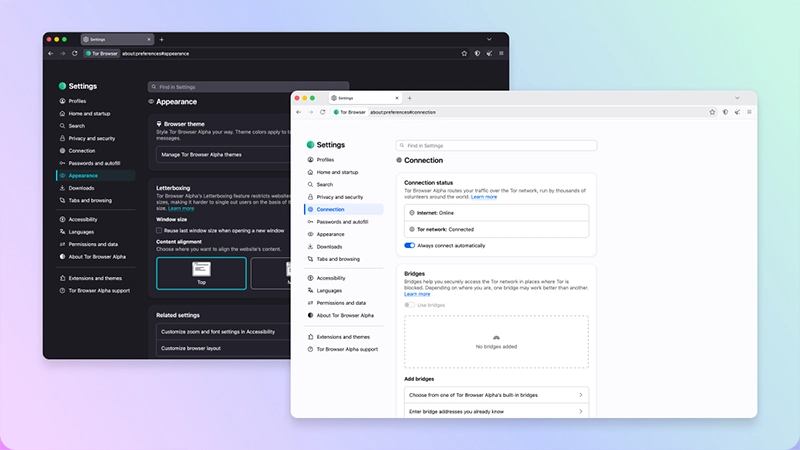
The update incorporates a complete redesign of the desktop Settings experience, modeled after layout changes rolled out upstream in Firefox.
The traditional General page has been retired, redistributing its contents into dedicated sections for Appearance, Downloads, Tabs and browsing, Accessibility, and Languages.
Components unique to the browser, such as Connection and Security Level settings, have been rebuilt from scratch using Firefox's new components to maintain visual and functional consistency across the menu.
Configuration items that could potentially compromise anonymity or make the browser easier to fingerprint have either been hidden or paired with clear user warnings, while legacy user preferences are safely preserved during the migration.
Under-the-hood additions include an optional setting for generic window titles, designed to prevent external desktop applications or operating systems from passively reading active web page titles through open window enumeration APIs.
While currently opt-in to prevent potential conflicts with screen-readers or specialized window managers, the option addresses longstanding local snooping vectors and has even been upstreamed to Firefox as part of the Tor Uplift Project.
Additionally, the built-in offline manual has been completely overhauled, replacing older documentation files with synced content directly from the project's updated support portal to assist users troubleshooting network connections.
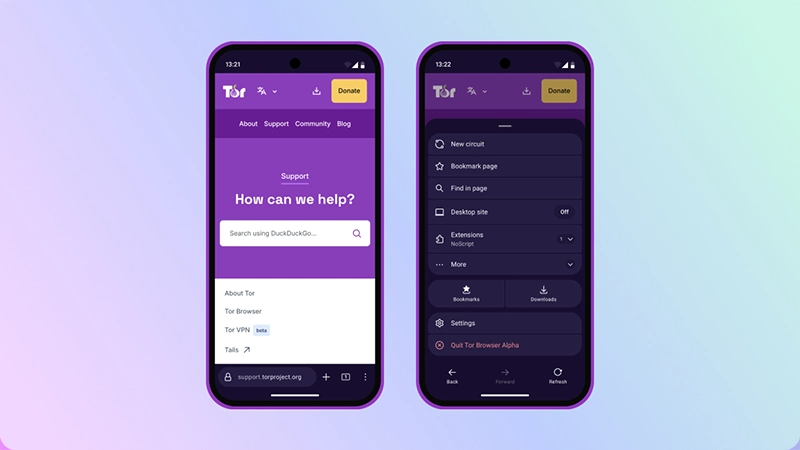
On the mobile side, Tor Browser for Android transitions to a modern user interface powered by Jetpack Compose alongside GeckoView 153, complemented by the introduction of native Linux ARM64 support for desktop users.
Underlying library updates further reinforce the release, bumping Tor to version 0.4.9.15 and NoScript to 13.6.37.1984 alongside various bug fixes and security-related adjustments.
These structural modifications illustrate an ongoing effort to harmonize upstream browser architecture with rigorous privacy protections.
By modernizing configuration layouts and cleaning up legacy components, the latest stable release maintains strong anonymity guarantees while adapting to changing desktop and mobile ecosystems.






















































































































































































































































































