In the long history of video game adaptations, certain casting decisions manage to capture the internet's attention not just for their accuracy, but for the unexpected ways they blur the line between a performer's public image and the character they inhabit.
The live-action Street Fighter film (directed by Kitao Sakurai) has done exactly that with country singer Orville Peck's turn as Vega, the narcissistic and sadistic Spanish fighter known for his mask and claw, his manic obsession with beauty and destroying the ugly, and theatrical blend of bullfighting and ninjutsu.
Fans who grew up selecting the character in arcades have spent months circulating behind-the-scenes images and training clips, debating how a masked musician would translate the role's particular mix of elegance and menace.
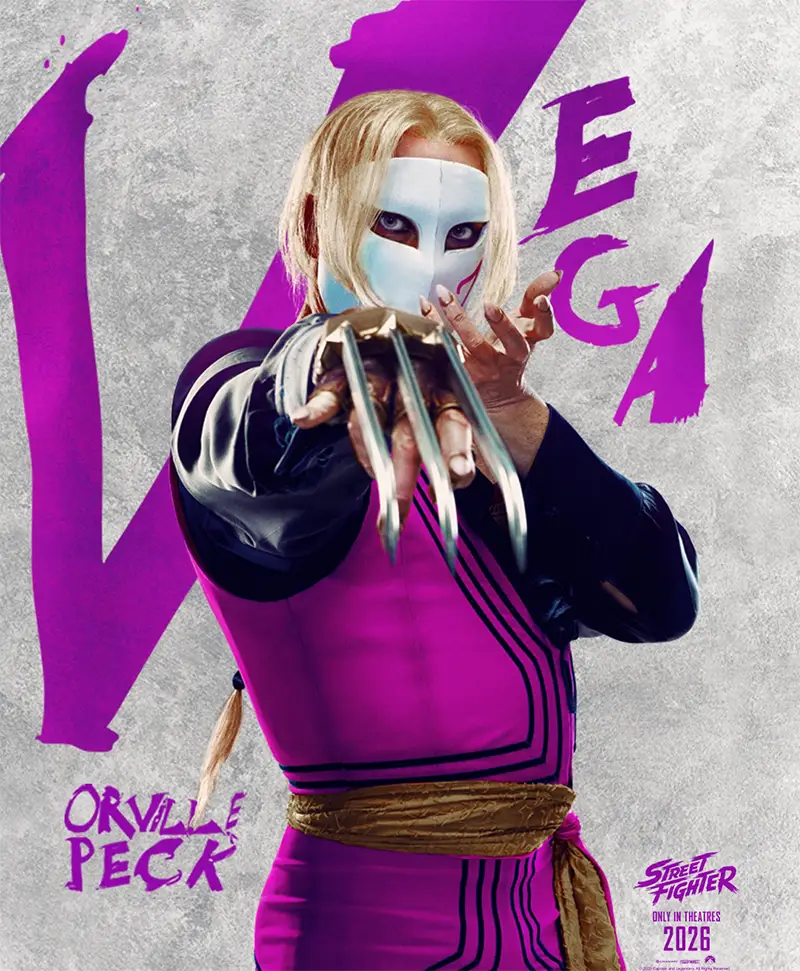
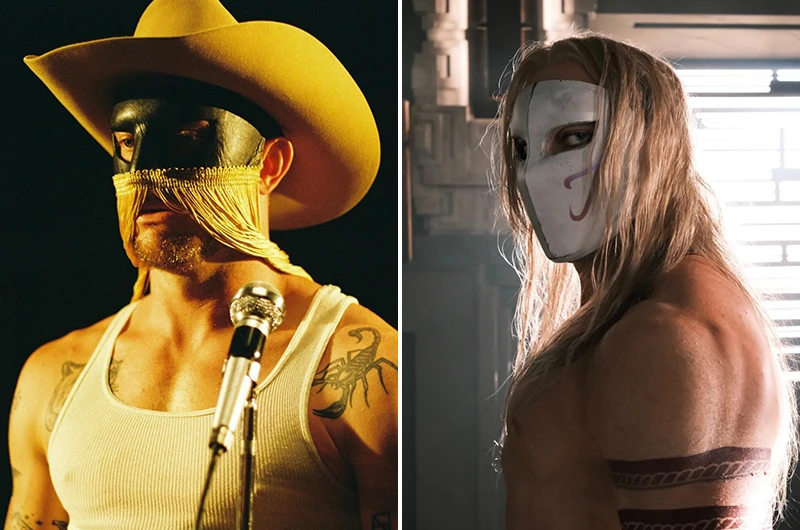
At this time around, the conversation has been especially lively because Peck has built his own career around never showing his full face in public, always appearing in fringed or decorative masks that turn his performances into a kind of living mystery.
That parallel was noted almost immediately when the casting was announced, and it only grew louder once Peck began sharing looks from the Australian set.
Peck, whose real name is Daniel Pitout and who was born in Johannesburg before moving to Canada, developed the Orville Peck persona around 2017 after years in punk bands and some acting study.
He has spoken about the mask as a way of creating distance while still revealing something emotionally raw in his music, drawing on influences from classic country artists while remaining openly queer in a genre that has not always welcomed that.
For many fans, the choice to cast him as Vega felt almost too perfect on paper.
Vega has long been read by players as queer-coded or at least sexually ambiguous, with his long hair, vanity, and fluid fighting style leading some to assume he was a woman when the character first appeared.
Peck has said in interviews that he always picked Vega or Chun-Li as a child for exactly that reason, calling it "the rules as a gay boy."
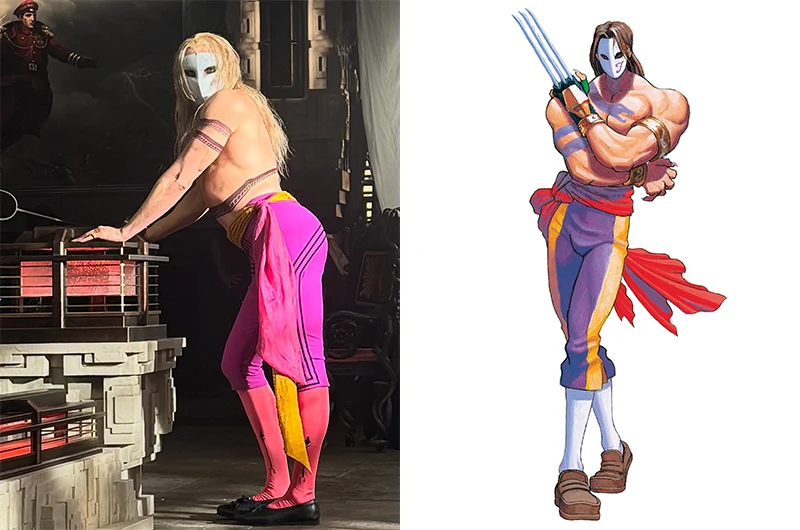
When promotional images and shirtless training videos surfaced, showing him with long blonde hair, the porcelain-style mask, a prominent snake tattoo, and a noticeably more muscular build, the reaction online was immediate and largely thirsty.
Comments under Instagram posts ranged from straightforward admiration of his physique to jokes about wanting to be on the receiving end of one of his roundhouse kicks.
Some fans who had been skeptical about the casting purely because of the mask similarity later posted that the on-screen version exceeded expectations, describing him as beautiful and surprisingly effective in the fights he performed himself, with acrobatic elements handled by a stunt double.
The film itself opened to a solid if not spectacular $31 million domestic and roughly $51 million globally in its first weekend, taking the top spot despite mixed reviews
Set in 1993, it follows Ryu and Ken as they are drawn into a tournament by Chun-Li, with Vega appearing as one of the more stylized antagonists.
After all, the two characters have long portrayed as adversarial. Vega as a Shadaloo asassin and Chun-Li as an Interpol investigator means their relationship is famous for being dynamic, if not brutal.
And in this live-action film, Vega and Chun-Li maintain their classic enemy dynamic as they clash during a high-stakes confrontation orchestrated by M. Bison.
Peck has described playing the character as deeply self-obsessed, almost asexual in the sense that no one else can compete with his own beauty, and he incorporated his earlier ballet and flamenco background into the flourishes of the fighting.
He has also noted that co-star Cody Rhodes, playing Guile, improvised moments of confusion and unspoken tension when the rigid military character encounters Vega's more elegant presence.
Early audience comments on social media have praised Peck's physical commitment and the way the mask stays on, preserving the mystery both of the character and of the actor.
A few viewers who saw the film more than once specifically singled out his sequences as highlights and expressed hope for more screen time in a potential sequel.
What stands out in the fan discussion around Peck specifically, is how the pre-existing masked persona removed one barrier that often appears in these adaptations.
Viewers who might otherwise have focused only on whether a musician could handle the action were instead comparing the real-life performance style to the fictional one, noting the shared theatricality and the decision to keep the face largely hidden.
Peck himself has said he told the director early on that the matador-style outfit and the emphasis on the lower body should be shown, because that is part of how the character has always been presented in the games and anime.
The resulting clips and stills traveled quickly through queer media outlets and Street Fighter communities alike, creating a feedback loop where the actor's existing fan base and the game's longtime players found common ground in the same images.
As the movie continues its run, those conversations have shifted from speculation about the casting to reactions from people who have now seen the finished sequences, with a notable number of posts expressing surprise at how well the combination worked on screen.
The parallel between the two masked figures, one real and one fictional, remains the element that keeps drawing new viewers into the discussion even after the opening weekend.
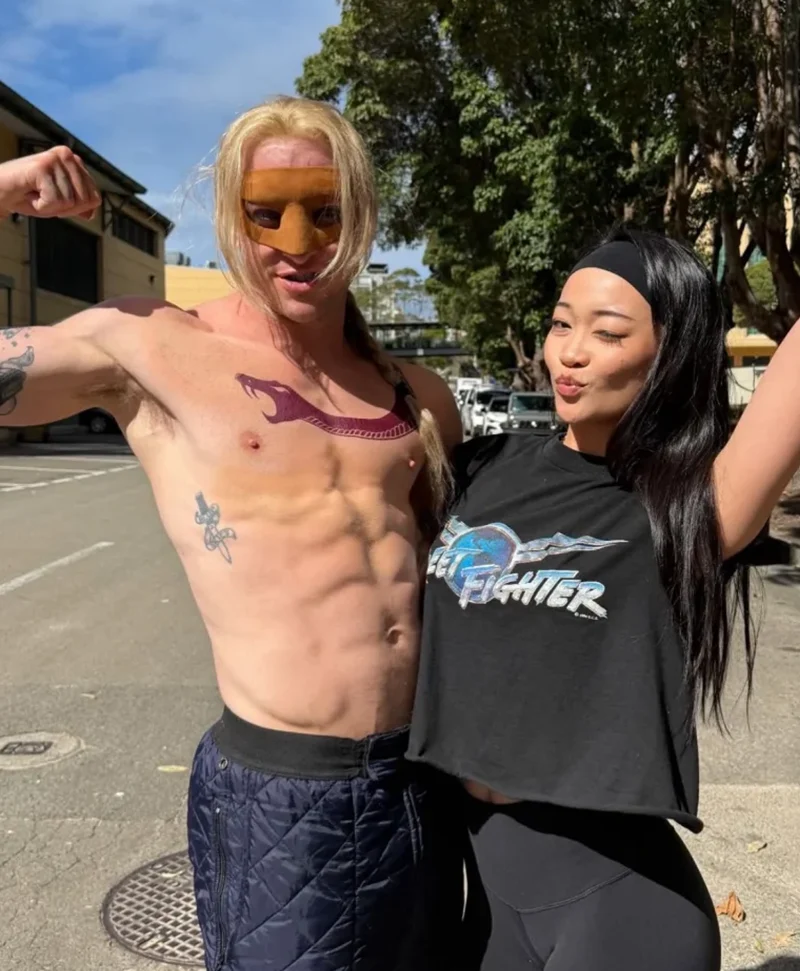
It's worth noting that previously, a similar cycle of fan scrutiny and eventual appreciation has played out around Callina Liang's portrayal of Chun-Li, another role that generated considerable online discussion long before the movie opened.
Shortly after her casting was announced, Liang came across a Reddit thread questioning whether her thighs matched the iconic muscular proportions of the character.
Her promotional images and behind-the-scenes looks generated the highest engagement of any character, with multiple posts of her as Chun-Li hitting tens of thousands of likes.
The story of her training also spread widely: she publicly talked about the pressure from Reddit comments questioning her thighs compared to the character, then shared that she trained in taekwondo, Muay Thai, and wushu while eating 12 eggs a day and grew each thigh by about 6.5 cm.
As for Jason Momoa, he plays Blanka in the 2026 Street Fighter movie (and is also an executive producer).
He actively wanted the role, calling it "the easiest job I got but also kind of the scariest" because he wasn’t sure how to play the character. He has described Blanka as a "big beast" and said he mainly wanted to bring heart and energy to the performance.
Momoa is a longtime fan of the game (one of the few he played growing up and still plays with his kids), and he has joked about repeatedly ending up with Brazilian characters (Blanka follows his role as Dante in Fast X).
A clip of his Blanka fighting Andrew Koji’s Ryu circulated widely earlier in the year and became one of the more discussed pre-release pieces of footage. Reactions were mixed.
But compared with Chun-Li or Vega, Momoa's Blanka generated solid attention due to his star power, but much less sustained viral discussion overall.
Other characters (Ryu, Ken, Guile, Blanka, etc.) received even less standalone viral attention by comparison.






















































































































































































































































































