Google is one of those companies that aggressively try to curb down carbon emission.
It knows how huge its data centers are, and how hungry for electricity they are. Being so polluting, the company has employed a variety of strategies and mechanisms to address and offset its carbon emissions.
From renewable energy initiatives, to investing in data centers that are more energy-efficient, Google also purchase carbon offsets to neutralize its remaining carbon emissions. Google also supports various sustainability projects and initiatives that aim to reduce carbon emissions and promote environmental conservation, and uses internal carbon pricing to factor the cost of carbon emissions into its business decision.
As a result of this, Google has been carbon-neutral since 2007, meaning that it managed to offset its carbon emissions with an equivalent amount of carbon reduction efforts.
In 2020, Google announced its goal to run its data centers and offices on carbon-free energy 24/7 by 2030.
But this can be at risk of not happening, due to AI.

According to its own reports, carbon emissions from Google have surged nearly 50% in just five years.
The company said that its emissions rose to 14.3 million metric tons of carbon equivalent in 2023, which is an increase of up to 48% from its 2019 baseline, and a 13% increase from the previous year.
The company said its 2023 energy-related emissions rose 37% year-on-year, in which its overall represented 25% of its total greenhouse gas emissions.
That amount of emission Google is emitting, is equivalent to the gas emission from a small European nation such as Latvia.
According to the research firm Digiconomist, AI-generated answers and all of Google searches could approach the energy usage of the entire country of Ireland.
If each search requires three watt-hours of electricity, Google that averaged 8.5 billion searches per day in 2023, or 98,379 searches per second, means that if each AI-generated search requires 3 watt-hours of electricity, that’s a usage rate of 295,138.88 watt-hours, or 295.14 kilowatt-hours.
The average electric vehicle sold in 2023 had a 40 kilowatt-hour battery onboard, meaning the electricity used by AI search for a single second could have been used to power about seven and a half average electric cars.
These numbers only account for Google’s electricity use related to AI-generated search results.
Google attributed the surge primarily to electricity consumption by its data centers and emissions from its supply chain, which includes the third-party production of hardware and equipment for these centers.
Both are which, linked to the use of AI, as the technology requires more computing power than regular internet operations, all of which is derived from data centers.
Another way of saying this, Google is blaming AI for the increase in data center energy consumption and supply chain emissions.
Read: To Create The Future Of Work That Is Green, 'There Will Be Sacrifices'
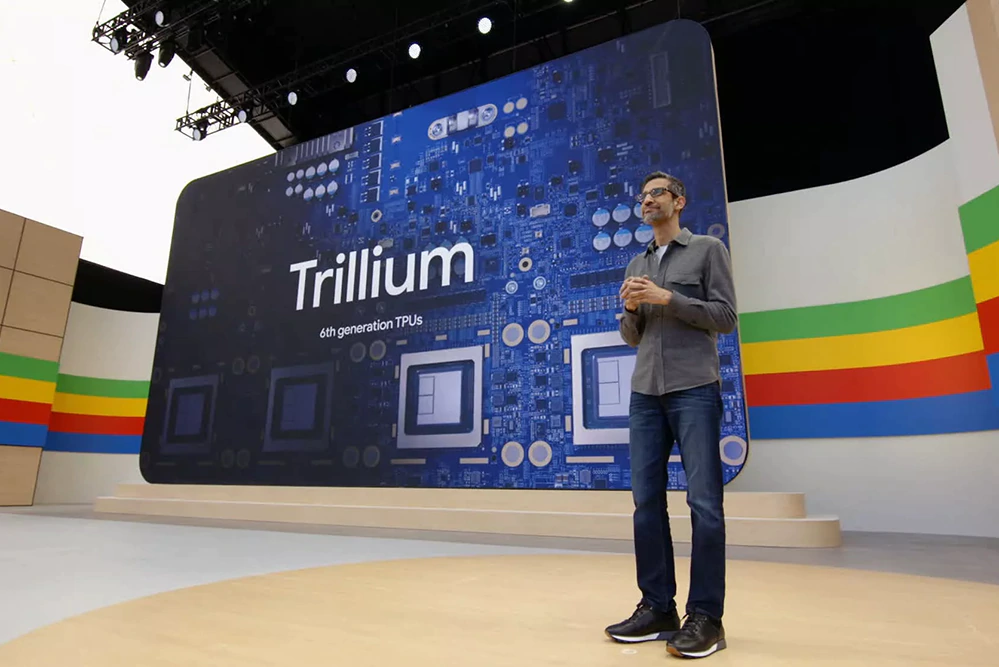
"As we further integrate AI into our products, reducing emissions may be challenging due to increasing energy demands from the greater intensity of AI compute, and the emissions associated with the expected increases in our technical infrastructure investment," the report reads.
Threatening its commitment to reach "net zero" by 2030, the company also discussed ways the company is using AI to cut emissions elsewhere across the world, such as by implementing fuel-efficient routing for cars in Google Maps.
Google estimates this feature has helped to reduce global emissions by 2.9 million metric tons since its launch in 2021.
At the report, these numbers aren't included in its overall emissions data.
So here, instead of letting its AI system consumes energy like never before, Google is making use of the AI to help it find ways to also reduce emissions.
"We know that scaling AI and using it to accelerate climate action is just as crucial as addressing the environmental impact associated with it," Google said in the report.
In other words, in a blog post, Google is trying to keep using AI for its business sustainability, by also making it drive positive environmental changes.
Besides that, Google aims to continue its initiatives to reduce these emissions, which include buying even more renewable energy and building more efficient computing infrastructure.
The impact of AI on electricity demand is well documented, as electricity demand is forecast to grow as much as 20% by 2030, with AI data centers alone expected to add ~323 TWh of electricity demand in the U.S. alone, reports said.
"Our approach will continue to evolve and will require us to navigate significant uncertainty – including the uncertainty around the future environmental impact of AI, which is complex and difficult to predict," said Google.
"In addition, solutions for some key global challenges don't currently exist, and will depend heavily on the broader clean energy transition."
If ever it fails to meet its target, the report suggests that there will need to be external technological breakthroughs.
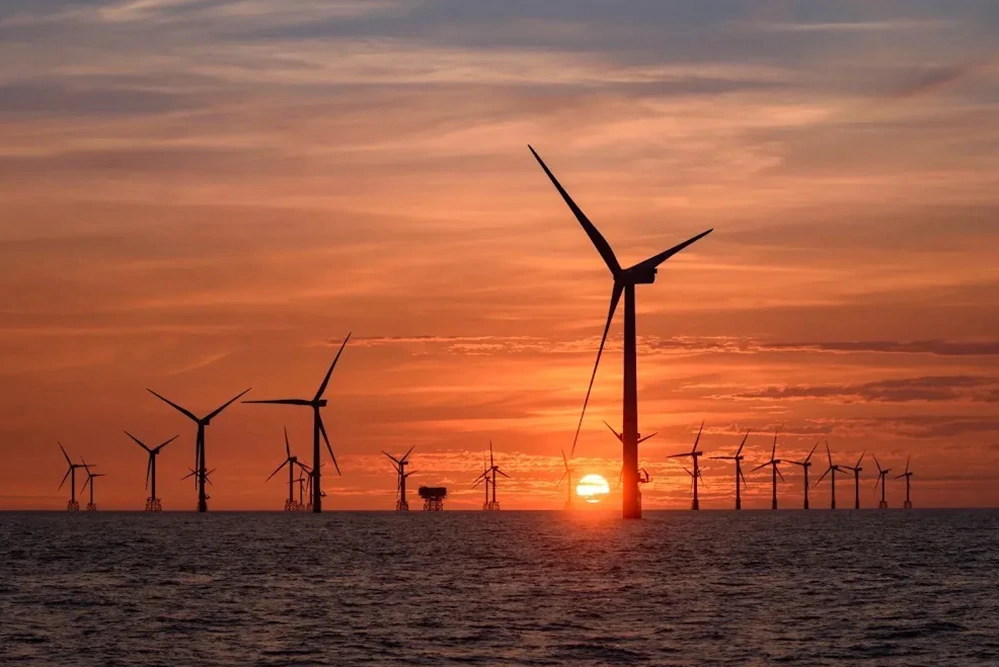
Experts have for warned how AI and its fast development would require an "eye-watering" amount of resources, which in turn would pose threats to climate goals.
Google is not the only tech titan to acknowledge rising emissions due to AI demand; Microsoft said in May that its emissions rose nearly a third since 2020 largely due to the construction of data centers.
It the World Economic Forum earlier this 2024, OpenAI CEO Sam Altman said that to meet the energy demands of future AI, a breakthrough in nuclear fusion was needed.
Microsoft has also reported a rise in emissions in its sustainability report, while Amazon and Meta have reported an influx.
After all, most of the world's largest data centers in the world are either owned by Google, Microsoft and Amazon.
Further reading: The 'Achilles Heel Of AI' Is Energy. Fusion Is Needed To Solve The 'Energy Puzzle'














































































































































































































































































