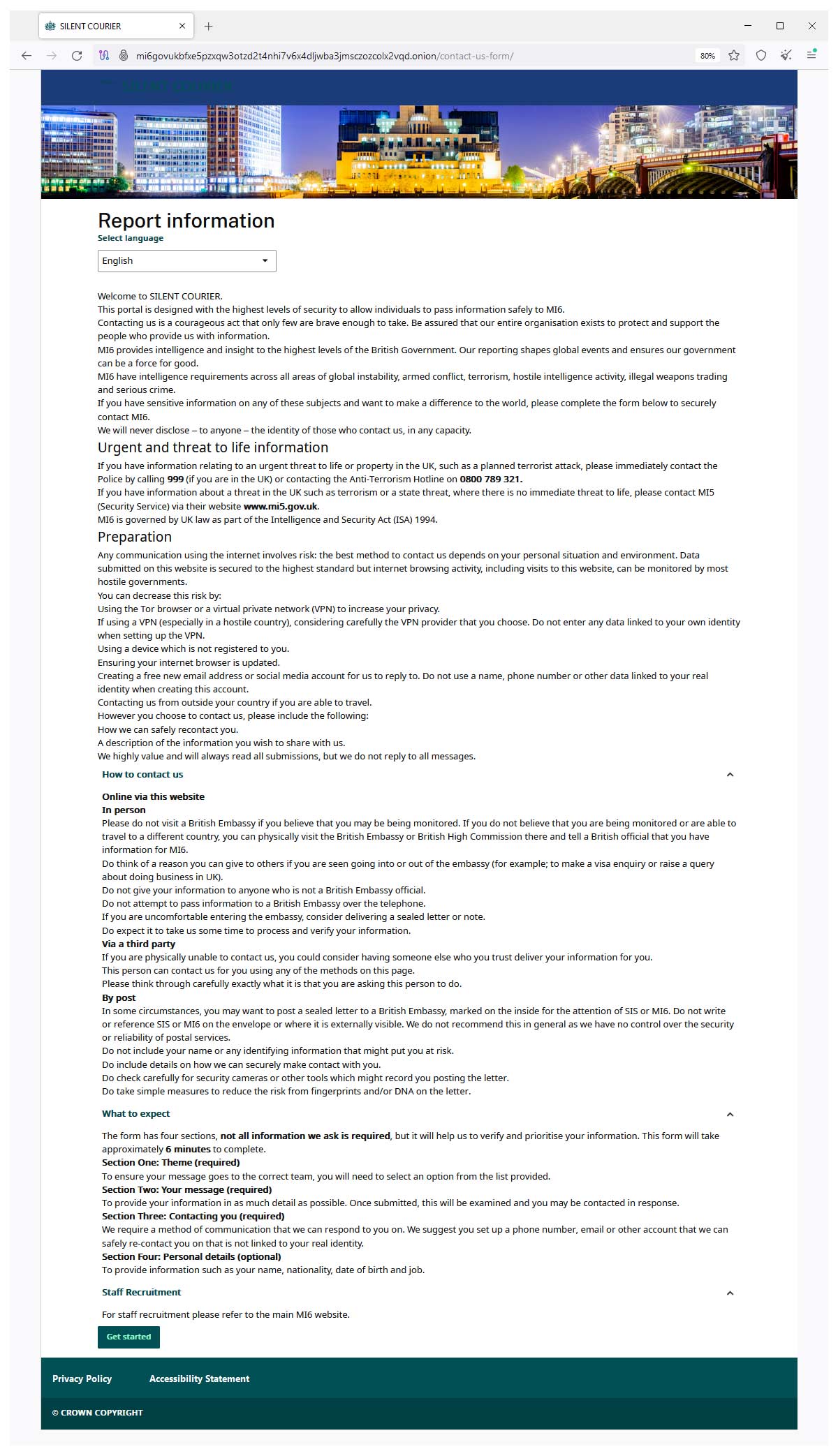
The United Kingdom’s foreign intelligence agency MI6 has quietly opened a new front in the world of espionage, with a digital portal on the dark web called 'Silent Courier.'
Launched on 19 September 2025, this platform aims to let individuals anywhere in the world with sensitive information on terrorism, global instability, or hostile state intelligence contact the UK securely and anonymously.
In a ceremony held in Istanbul, outgoing MI6 chief Sir Richard Moore made a public appeal aimed especially at potential informants in Russia, China, Iran, North Korea and other hostile or surveillance-heavy states.
"Our virtual door is open to you."
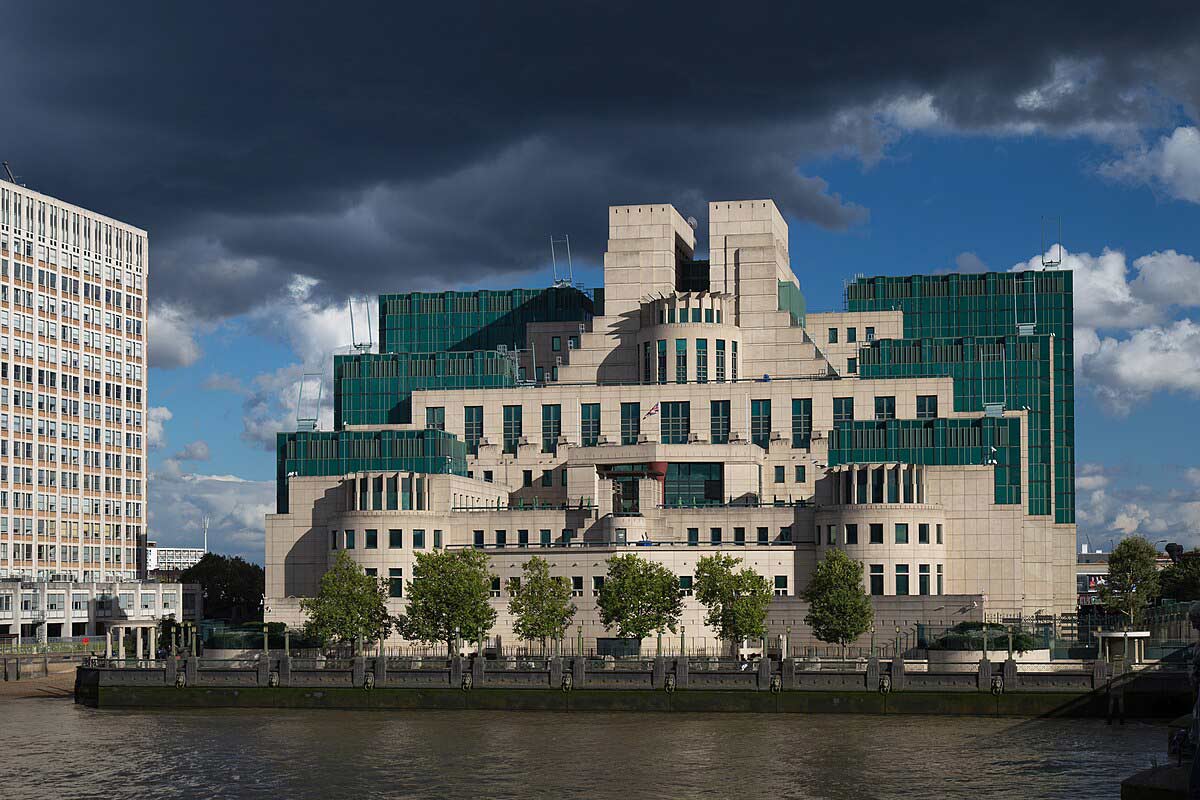
Before the internet, espionage was almost entirely a human-driven trade, in what intelligence officers romantically called tradecraft.
MI6, formally known as the Secret Intelligence Service (SIS), operated in the classic world of spies, dead drops, invisible ink, and double agents. Communications were slow, meetings risky, and information gathered through a mix of charm, manipulation, bribery, and sometimes sheer luck.
In the early 20th century, MI6 was founded in 1909 to counter German espionage.
During World War I, it focused on German naval intelligence, tracking fleet movements and codebreaking efforts.
By World War II, MI6 became central to Allied strategy. Its officers recruited spies inside occupied Europe, managed networks of resistance fighters, and worked closely with Bletchley Park, where Enigma was cracked. One of its most famous feats was Operation Double Cross, where captured German spies in Britain were “turned” into double agents who fed disinformation back to the Nazis, helping mislead Hitler about the D-Day invasion.
After World War II and into the Cold War, MI6 shifted to countering the Soviet Union.
It became known for running covert operations across Europe, Asia, and the Middle East, often in competition with the CIA and the KGB.
MI6’s reputation was scarred by betrayals from the infamous Cambridge Five (Philby, Burgess, Maclean, Blunt, and Cairncross), Soviet moles who exposed countless operations.
Regardless, MI6 played crucial roles in monitoring Soviet military movements, supporting anti-communist factions, and providing intelligence that shaped Western policies.
With the internet, many parts of the espionage have gone online.
Nevertheless to say, it's like a shift from James Bond to web browsers. The world is not enough.
No longer should the agency send agents behind enemy lines to gather information. Instead, they can sit in launch espionage through computer screens, practically from anywhere around the globe, targeting anyone.
With this portal, the MI6 literally makes its agency open to anyone who has information to share.
However, the government stresses that using the portal will require caution.
MI6 and the Foreign Office advise prospective users to access Silent Courier via the Tor browser, use trustworthy VPNs, and especially to use devices not linked to their real identities—no phones, computers, or connections that can be traced. These precautions are meant to ensure user anonymity and safety, particularly in states where surveillance, reprisals, or legal dangers are high.
To help users navigate access safely, MI6 has published multilingual guidance (in languages including Russian, Arabic, Urdu, Hindi, French, Spanish) via its verified YouTube channel.
These guides explain how to reach the dark web portal, how to submit information, and how to protect one’s identity during the process.
In other words, Silent Courier isn't just a small tweak in MI6’s strategy. It literally translates to a sign of change in espionage.
For decades, intelligence work depended heavily on face-to-face meetings and personal tradecraft. But with advances in digital surveillance, authoritarian states’ control of borders, and the risks involved for field agents, agencies like MI6 are increasingly turning to secure online tools.
The announcement also comes as Moore prepares to hand over leadership to Blaise Metreweli, who will become the first woman to lead MI6.
Critics might raise questions about the risks, like how secure is anonymity in practice? Could state actors infiltrate or surveil these channels? What protections exist for people who come forward? But the UK government’s position is that threats are evolving too fast not to use modern tools.
Foreign Secretary Yvette Cooper said that bolstering national security with "cutting-edge tech" is essential as threats multiply.
Silent Courier marks a bold move by MI6, in an attempt to finally recognize would-be informants, as an alternative to the traditional shadowy face-to-face meeting that is, in certain circumstances, no longer feasible.
At this time, whether the portal can be a game-changer in intelligence gathering or whether it raises new dangers remains to be seen. But what's certain, it does show that espionage, once rooted in physical tradecraft, is now deeply entwined in protocols, code, and digital shadows.
According to UK's Foreign Secretary Yvette Cooper:
"Now we're bolstering their efforts with cutting-edge tech so MI6 can recruit new spies for the UK - in Russia and around the world."






















































































































































































































































































