Virtual reality (VR) is there to trick its users' senses by making them feel that they're somewhere else.
By altering what the eyes see and what the ears hear, VR technology provides an experience that can be so immersive.
While the technology that powers and provides the VR is still under heavy development, in which the experience is still virtually virtual, Palmer Luckey is taking things to a whole different level.
Luckey made headlines when he sold Oculus to Facebook in March 2014, the company before Mark Zuckerberg changed it to Meta.
This time, Luckey 'enhances' the experience of VR, by creating a custom headset that is designed to explode when its user dies in the game they're playing.
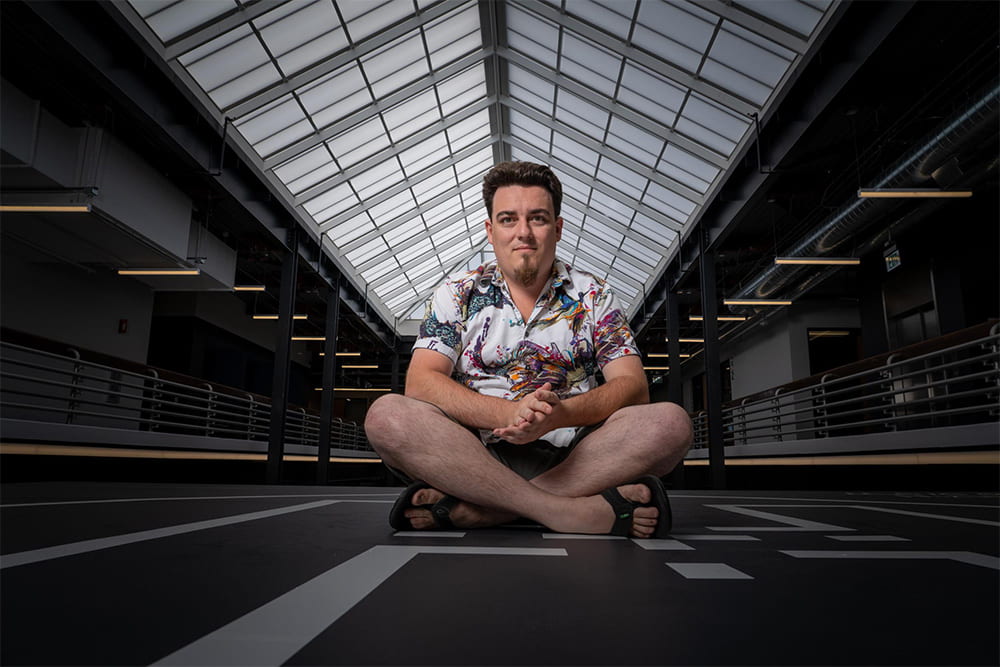
According to Palmer Luckey in a blog post:
"The idea of tying your real life to your virtual avatar has always fascinated me [...] you instantly raise the stakes to the maximum level and force people to fundamentally rethink how they interact with the virtual world and the players inside it."
It's similar to The Matrix films, where the people going into the virtual world and die there, would also die in real life.
Somehow, it also resembles the 1990s cartoon Jonny Quest, which sees its characters entering a virtual world using a futuristic contraption, and can also experience bodily harm if their avatar is harmed in the virtual world.
But Luckey's intention is to create something that is more like what's found in the comic Sword Art Online, where people are dropped into a world where they have to fight to the death, and those who dies in the virtual world, also dies in the real world.
According to the fiction, an "SAO Incident" took place on November 6, 2022, in which 10,000 players were trapped in a VRMMORPG, 4,000 of whom died in real life after their characters perished in the game.
In the comic, the characters' minds and souls are transported to Aincrad, the primary setting of Sword Art Online, using virtual reality head-mounted-display called the NerveGear.
But instead of using microwave emitter that is set to lethal, like in Sword Art Online's NerveGear, Luckey's iteration of the custom headset uses a small set of explosives positioned in front of a wearer's forehead.
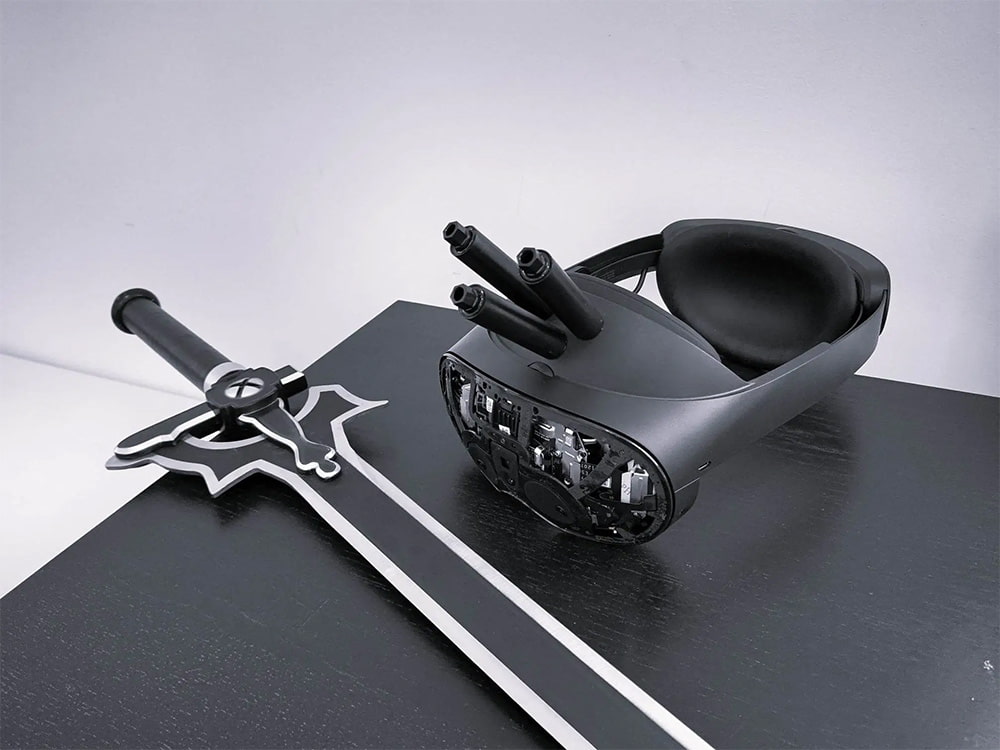
VR has shown a lot of promises.
From its use to enhance the experience of gaming, to its use in the so-called "metaverse," to how it can simulate battlefields to train military personnel. VR can also be used in real life war, like on drones to triangulate and attack.
But somehow, the technology also allows people to manipulate users into something inhumane.
In the past, experts and scholars have noted how the intersection of the war and media industries — a realm in which VR often operates — can turn both weaponry and violence into a spectacle.
And by introducing the possibility of a game in which death may seem so real in first person, people like Luckey "improve" the experience by making death in the game, a death in real life.
Another way of saying it, the "feature" overlaps virtual reality to reality more than ever.
This prompts questions about the ethics of VR itself.
How far should we go just because it's possible?
"Virtual reality may also create risks of disconnection from the authentic; a loss of reality from education, work, and society, a loss which Baudrillard described as simulacra… [he] warned of the risks of mistaking the map for the territory as simulacra replace the simulated and become treated as reality," notes one study on how the metaverse impacts people’s experience of socialization.
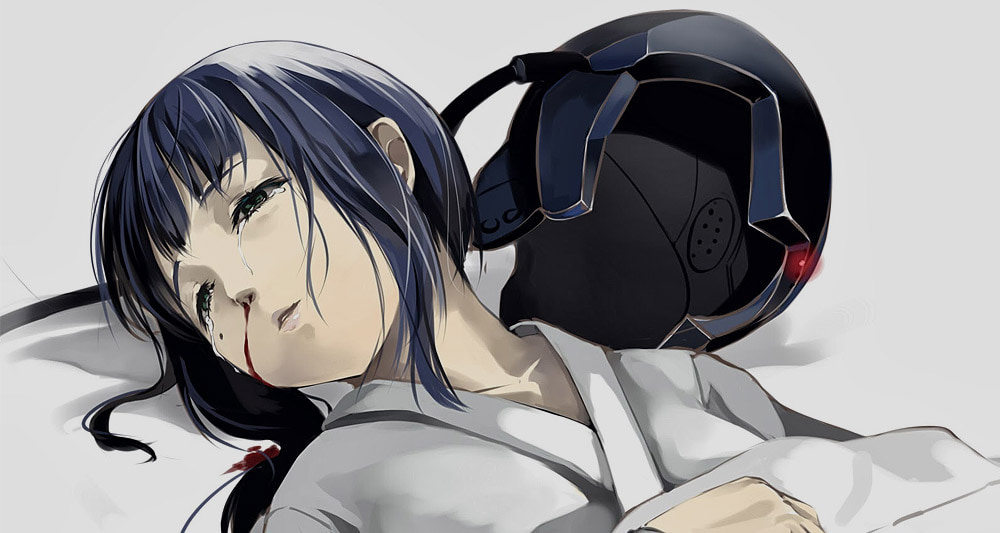
At this time, Luckey and his team is still perfecting the headset.
"The good news is that we are halfway to making a true NerveGear. The bad news is that so far, I have only figured out the half that kills you. The perfect-VR half of the equation is still many years out,” he said.
"I have plans for an anti-tamper mechanism that, like the NerveGear, will make it impossible to remove or destroy the headset."
While Luckey's device is a step towards creating something beyond the boundary for consumer-grade devices, Luckey is only using it as a way to spend some of his time and money following the acquisition of Oculus.
"At this point, it is just a piece of office art, a thought-provoking reminder of unexplored avenues in game design," Luckey clarified.
It's worth noting though, that Nervegear headset has been in discussion in Oculus's forum since 2015.






















































































































































































































































































