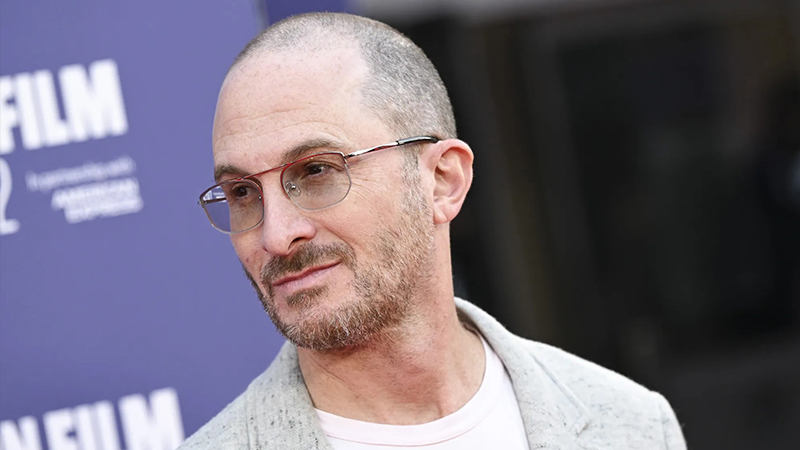
When Darren Aronofsky, the director behind Black Swan, Requiem for a Dream, and The Whale, announced his latest project, the internet didn't quite know what to expect.
What arrived instead was On This Day… 1776, a historical series that attempts to dramatize pivotal moments from the American Revolution.
Unlike a conventional narrative, On This Day… 1776 doesn't follow a continuous plot. Instead, the series unfolds as short, dramatized snapshots of specific days in 1776, with each episode running under five minutes.
The first two installments establish the format. “January 1: The Flag” depicts George Washington at Prospect Hill as he rallies colonial forces and raises the Grand Union Flag, an early symbol of emerging independence. “January 10: Common Sense” centers on Thomas Paine's arrival in the colonies and his collaboration with Benjamin Franklin, leading to the publication of Common Sense, the pamphlet that helped galvanize revolutionary sentiment.
There’s a reason the series is structured this way: On This Day… 1776 is generated using AI rather than produced through traditional filmmaking methods.
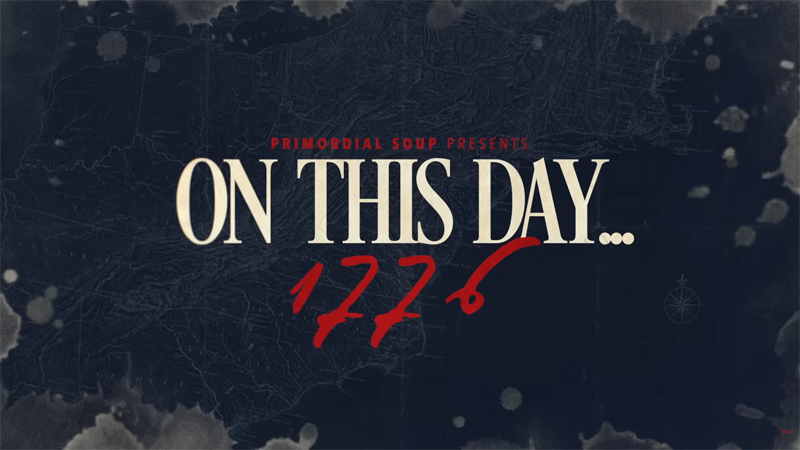
Released on Time magazine's YouTube channel and produced by Aronofsky’s AI-focused venture Primordial Soup in partnership with Google DeepMind and Salesforce, the series drops new episodes on the 250th anniversary of each event it portrays.
In theory, it’s a fascinating experiment: blending AI visuals with human voice acting from unionized SAG-AFTRA performers and historically grounded writing to create episodic narratives about George Washington raising the Grand Union Flag or Thomas Paine penning Common Sense.
It’s an ambitious attempt to rethink how history can be told in the digital age and to show how AI might expand creative possibilities beyond what small teams and limited budgets could traditionally achieve.
Creators say the series aims to “reframe the Revolution not as a foregone conclusion but as a fragile experiment shaped by those who fought for it,” capturing the uncertainty, debate, and everyday decisions that contributed to the birth of a new nation.
The idea is to lean into agency and contingency rather than mythologizing the familiar historical narrative.
But in practice? Many viewers feel On This Day… 1776 looks like little more than AI slop, a term critics and commenters have used again and again to describe the uncanny, unfinished quality of the visuals.
Faces flicker awkwardly, expressions seem lifeless, and backgrounds often betray nonsensical AI hallmarks that throw off immersion rather than enhance it.
Even simple elements, like text on a pamphlet, can warp into unreadable gibberish, and terrible mouth-syncing makes scenes that should feel dramatic seem jarringly fake.
Then, since each is about 5 minutes long, the plot moments often struggle to emerge clearly through the production. And since each episode is so short and visually jumpy, many viewers find it hard to follow narrative beats or emotionally connect with the characters.
Rather than being immersive, the sequence of scenes feels like historical postcards stitched together rather than a living drama.
Reaction across social platforms has been overwhelmingly negative not just about how the story is told but about what it feels like to watch it.
Viewers describe struggling to parse plot details, with rapid cuts and stubby scene lengths destroying narrative cohesion. Instead of watching Washington or Paine come alive on screen, many feel they'’re watching an uncanny highlight reel of events without emotional depth or clarity.
Reddit threads and social posts reflect the broader sentiment: what was meant to be a bold experiment often feels like a half-baked preview of AI’s limitations rather than a compelling piece of storytelling.
Users describe the project as “cringe,” “embarrassing,” and “uncanny valley content that makes the American Revolution look like it happened in a glitching simulation.”
Some even argue that the project undermines Aronofsky’s legacy, turning his status as a serious auteur into the punchline of AI backlash jokes.
This isn’t just low-quality aesthetics; it touches on deeper debates about AI in creative industries.
Critics argue that projects like this raise uncomfortable ethical questions about the role of technology in storytelling: when AI replaces traditional actors, cinematographers, and visual effects artists, what happens to craft? And as legal battles over likeness and voice rights continue to surface in Hollywood, the prospect of AI generating human actors at scale adds another layer of concern.
Some defenders of the series point out that Aronofsky and collaborators aren’t trying to replace artists but experiment with new tools, and that short history vignettes could open doors for creators without big studios backing them.
But the disconnect between that ideal and what most viewers see on screen is stark.
As one critic put it, even “high-end AI slop is still AI slop”, indicating that no amount of prestige branding can mask the current limitations of generative visuals when compared with the richness of human craft.
In the end, On This Day… 1776 may be remembered less as a successful piece of media and more as a cultural moment that laid bare the anxieties of an industry caught between fascination with and fear of artificial intelligence.
Whether future episodes improve in quality or simply prolong the debate, the internet has already made its verdict clear: the series is creepy, unsettling, and far from the dignified tribute to history that its title suggests.

















































































































































































































































































