Porsche announced that it is ending its Web3 project and the PIONΞERS CIRCLE community, closing an experiment that had run for nearly four years and leaving the associated tokens in holders' wallets while the surrounding community infrastructure is archived.
The announcement stated that the effort had begun as an exploration of new ways to connect the Porsche spirit with the digital world and had grown into a space for experimentation, exchange, and shared discovery.
It thanked participants for their feedback and contributions, noted that the Discord server would become a read-only archive.
In all, the 2,363 PORSCHΞ 911 NFTs will remain with their holders and continue to exist on the blockchain, but with no burn, redemption, or migration planned.

The collection itself was unveiled at Art Basel Miami in December 2022, and the public mint opened in late January 2023.
Each NFT cost 0.911 ETH, roughly $1,400 to $1,500 at the time. Porsche initially planned a supply of 7,500 pieces. Buyers could later choose one of three roads, Performance, Heritage, or Lifestyle, that influenced visual traits and rarity.
Lead artist Patrick Vogel, working with studio Alt/Shift, and partners including VEXX and Chris Labrooy designed the traits.

The collection offered more than 150,000 possible combinations and was framed as turning a white 911 into unique digital art.
Then-deputy chairman Lutz Meschke described the commitment as one made for the long haul, citing potential uses around metaverse experiences, purchasing journeys, and even supply-chain ideas.
In practice the main delivered utility was community access rather than direct car-related benefits or on-chain vehicle ownership.
Holding an NFT granted entry to a holders-only Discord that Porsche described as having over 1,000 members and more than 90,000 messages in the main channel, along with co-creation discussions, exclusive updates, promised limited merch and airdrops, and in-person events.
Porsche reported that more than 350 holders met in person in 2023, with additional gatherings and racetrack experiences in later years.
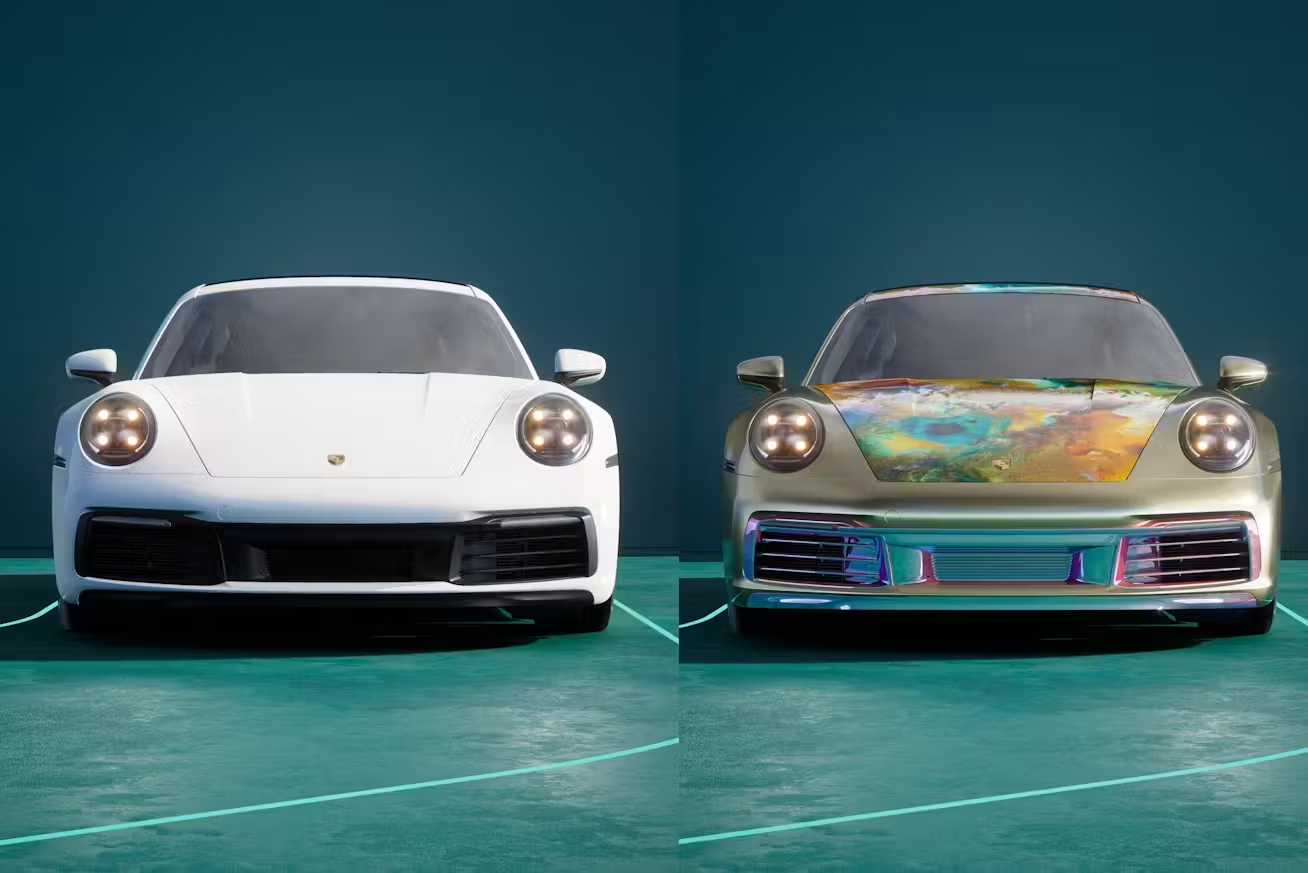
While the project was backed by an iconic car brand to represent an insanely iconic car model, the launch struggled immediately.
Sales were slow, secondary-market prices briefly fell below the mint price, and critics called the cost high relative to the utility. Porsche halted minting within just days, ending with 2,363 NFTs, about 18% of the planned supply, and saying holders had spoken.
The reduced supply briefly pushed the floor above 3 ETH, around $5,000, in early 2023.
Over subsequent years the market cooled sharply.
Lifetime trading volume reached roughly $20 million, but activity fell to about $38,000 over the past year and roughly $2,900 in the most recent month.
One report put the floor near 0.077 ETH, around $200, by early October 2026, roughly 85% below the original mint price and more than 96% below the early peak.
The October announcement therefore arrives after years of declining secondary activity, separating the durable on-chain artwork from the events, Discord conversations, and official programming that had defined the project for most of its life.
NFTs first drew wide attention as a way to prove ownership of digital items on a public blockchain, and for a short period they looked disruptive enough to redraw parts of art, gaming, and membership.
Collections such as CryptoPunks and Bored Ape Yacht Club turned profile pictures into status objects that traded for large sums, while the surrounding culture treated tokens as tickets to clubs, events, and online identity.
That momentum pulled in celebrities, auction houses, and eventually large consumer brands that wanted a share of the attention and the new customer relationships.
Nike, Adidas, Gucci, and others launched their own drops or partnerships, and Porsche joined the same wave with its 911 collection.
Many of those corporate experiments followed a similar arc: early curiosity, uneven utility, and a later retreat once trading volumes fell and the broader market lost heat.
Porsche's decision to archive the community while leaving the tokens on chain is one more example of that pattern, in which the technology outlasted the brand-led enthusiasm that once surrounded it.






















































































































































































































































































