Sarah Khalifa is a familiar face in Egyptian entertainment. Her name echoes in social media, and her accomplishments preceed her.
Born in Cairo, the 39-year-old woman built a public life that mixed television presenting, event production, a beauty clinic, and a large Instagram following of about 2.5 million people.
Showcasing fashion, parties, and promotions for her businesses, she is viewed by many as a lifestyle figure as much as a TV host.
However, all of those came long before her name became attached to one of the country's most closely watched criminal cases.

Khalifa stared her career early.
She presented "Min Cairo" on the ART network for about three years, then spent several years on Iraq's Al Sharqiya channel hosting entertainment programs and interviewing Arab celebrities.
Back in Egypt, she appeared on shows such as "Trend" and the crime and security program "Mission Impossible" on Al-Mehwar, a format built around police work, investigations, and interviews with officers and suspects.
In 2021 she launched Sarah Production, an events company that organized parties and media gatherings in Egypt and the Gulf.
In 2024 she returned to screens with "Sarah and Bika," a comedy-entertainment show with mahraganat singer Hamo Bika that featured celebrity guests.
She also appeared at festivals and industry events and cultivated a wide circle of contacts in entertainment.
Her private life occasionally made headlines too.
In June 2016 she said she married Egyptian footballer Mahmoud Abdel Moneim, known as Kahraba, while he was playing in Saudi Arabia. The relationship ended after about six months. He later denied or distanced himself from parts of that story. She has no children and, according to statements attributed to her during the investigation, lived for years with her parents after the marriage ended.
She has a brother, Mohamed, and a sister, Shorouk.
And those family details later became part of the case itself, because Mohamed was convicted alongside her.
The criminal case began in April 2025, when the Egyptian authorities said they had been watching a group for about 40 days before issuing arrest warrants on 17 April.
Khalifa was arrested at her home in Agouza.
Prosecutors later described a 28-person organization accused of importing chemical materials from abroad, turning residential apartments in Cairo into manufacturing sites, and producing synthetic narcotics for sale.
The narcotics is called indazole carboxamide, a class of synthetic cannabinoids. On the streets of Egypt, it is sold as "strox" or "powder hashish."
It is literally a cheaper version of hashish with an effect more potent than cannabis.
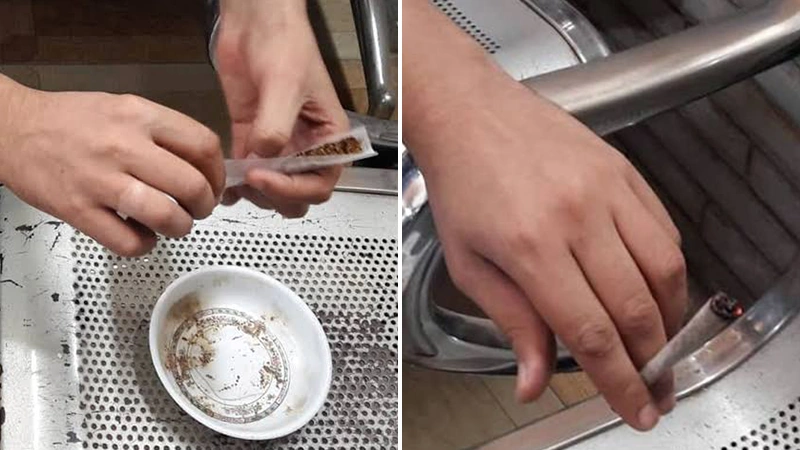
Investigators said more than 750 kilograms of the finished drugs and raw materials were seized, along with equipment, unlicensed firearms, and ammunition.
Two apartments were treated as laboratories.
Some Egyptian reports also mentioned gold, cars, and phones among confiscated items. The case file is commonly cited as case 6838 of 2025, First Settlement felonies.
The prosecution's theory of her role was not that she mixed chemicals on site.
Officials said members of the group split tasks: some imported materials, some manufactured, some distributed.
Khalifa, they alleged, helped finance the operation and traveled abroad to meet two alleged leaders, identified in Egyptian reporting as an Iraqi man and an Egyptian man who remain at large, in order to coordinate purchases and contact with others in the network.
Her brother Mohamed was described as playing a central part in bringing materials in and running production.
Other named figures in local coverage included an import-office owner and a contractor. A technical committee later told the court that seized compounds could be used as precursors for synthetic narcotics listed under Egyptian drug schedules.
Twenty witnesses, plus chats, photos, and videos, formed the core of the state's evidence.
Khalifa denied everything.
She told investigators she had never even smoked a cigarette. In court, she also said she had never seen drugs until she was photographed with seized material at anti-narcotics offices.
"I have never smoked a cigarette in my life! I swear to Almighty God, with the strongest oath, that I have been wronged!" she said.
Regarding her relationship with the other defendants, she said that she met one of them while he was visiting her private beauty clinic, and that the relationship between them developed into an emotional connection, before she became suspicious of his behavior and decided to distance herself from him, stressing that this relationship was the reason for her name being dragged into the case, and she denied managing or establishing any criminal organization.
However, investigations proved, according to the case file, that the accused had injected huge sums of money to finance the gang's activities, and held meetings with defendants outside the country to agree on importing the chemicals used in the manufacture of narcotics.
During sentencing, she wept and asked for mercy, saying her parents were religious people who raised her well and that she did not need money from drugs.
She stressed that her monthly income amounted to about 500,000 pounds, and that her company's profits ranged between 30,000 and 50,000 dollars.
Defense lawyers challenged the seizure reports, the handling of her phone, the chain of evidence, and whether the substances had been proven to be narcotics rather than chemicals that could theoretically be used in production.
One report said she also presented medical papers claiming a cervical tumor while asking the court for leniency. The court was not persuaded.
But the prosecution continues.
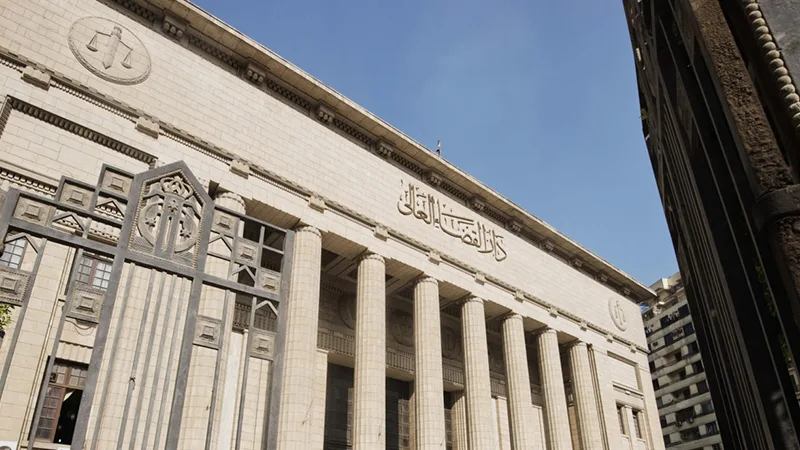
On September 5, the Cairo Criminal Court, sitting in New Cairo, confirmed death sentences for Khalifa, her brother Mohamed, and 10 other defendants. Hanging is the standard method of execution for civilian criminal convictions in Egypt, including drug-trafficking cases.
The defendants were also ordered to pay a fine of 500,000 Egyptian pounds each, following the referral of their cases to Egypt’s Grand Mufti, a required procedural step in capital cases. The Mufti’s opinion, however, is advisory rather than binding on the court.
Nine defendants received life sentences. Seven were acquitted.
The court also ordered confiscation of seized drugs, cars, equipment, jewelry, and phones.
The ruling however, is not final.
Death sentences in Egypt go to the Court of Cassation, and her lawyer said she would appeal. Under current procedure there is also a path toward retrial in an appeals court. Until those reviews finish, the sentence is not carried out.
Then, things got even worse.
During this period, when things couldn't get any worse, more cases came against her.
Egyptian outlets reported a separate conviction for assaulting and filming her driver, with sentences described in some accounts as three years and in others as part of a five-year term tied to the detention and assault of a young man inside her apartment.
Investigations revealed that officials, after seizing Khalifa's phone, found videos stored on a private app depicting the sexual assault and torture of a man in her bedroom.
The victim, identified as "M. Sh.," who worked as her driver, appeared naked with visible injuries and wounds.
The accused admitted during the investigations that the videos were indeed filmed inside her bedroom, and that the female voice appearing in the clips belonged to her, but she gave a different account of the circumstances of the incident.
She said that the driver took advantage of having a key to her apartment while she was traveling to Alexandria, and entered the house without her knowledge. When she confronted him and threatened to report him to the police, he begged her, before the matter escalated with the arrival of people from his new place of work, and a fight broke out that ended with the filming of the clips under investigation.
Those files ran alongside the main narcotics trial and added to the sense that her legal troubles were not limited to one indictment.

What made the story travel so far, and beyond the Egyptian borders, was the contrast.
A woman who hosted a show about crime, posed in luxury settings, ran a clinic and an events firm, and spoke to millions online was convicted of helping finance a synthetic-drug network in a country where trafficking can carry the death penalty.
Egypt issued hundreds of death sentences in 2025, according to rights groups, and carries them out in a smaller number of cases.
While she waits for the certainty of the case, one thing is already certain: a television presenter and influencer from Cairo, arrested in April 2025, convicted with 11 others in September 2026, insisting she is innocent while the state says she helped bankroll one of the larger synthetic-drug files the capital’s courts have seen in years.






















































































































































































































































































