Drones and autonomous machines are complex machines. They can move and maneuver, and equipped with an array of technologies to help do whatever their dispatcher's intention.
And according to researchers, the key to improving swarms of AI-powered machines may lie within video games.
Here, the research team at University of Buffalo’s Artificial Intelligence Institute has received a $316,000 federal grant to study the decisions people make - as well as biometric information such as their eye movements and brain waves - while gaming.
The researchers want to use this data to build a better AI with improved coordination among teams of autonomous air units and ground robots.
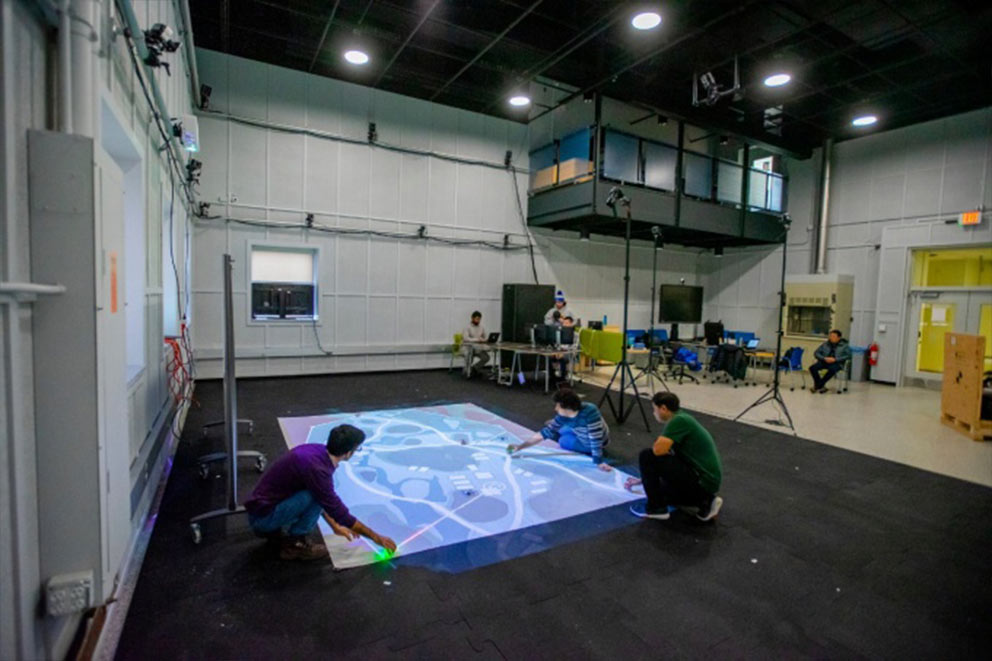
According to the grant’s principal investigator, Souma Chowdhury, an assistant professor of mechanical and aerospace engineering, School of Engineering and Applied Sciences, as reported by a post by UBNow, the internal communications tool for the university's faculty and staff:
Swarm robotics research is inspired by many sources: from ant colonies to and schooling fish, for example.
By having humans to train the AI systems, the advantages should be enormous, that according to Chowdhury, a member of University of Buffalo's Sustainable Manufacturing and Advanced Robotic Technologies (SMART) Community of Excellence.
The idea here is to eventually scale up the swarm to 250 aerial and ground robots, working together in highly complex situations.
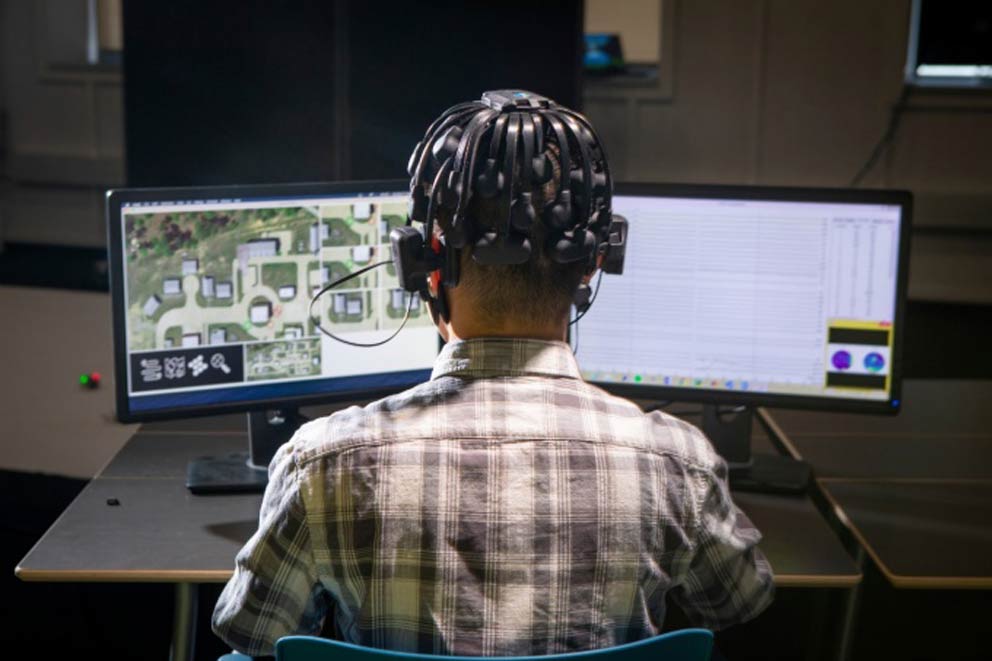
In the research, the team has been permitted to have gamers train the AI.
The study, which is funded by the U.S. Defense Advanced Research Projects Agency (DARPA), is meant to center on real-time strategy games. As these games are time-based (as opposed to turn-based), real-time strategy games involve using resources to build units and defeat opponents.
To do this, students are meant to play a specially designed real-time strategy game created by the research team, that’s comparable to the likes of StarCraft and Company of Heroes.
While playing the game, the researchers want to record the decisions the gamers make along the way. Wearing a specialized headgear, the researchers can also track the gamers' eye movements using mounted high-speed cameras and their brain electrical activities through electroencephalograms monitoring tools.
The data gathered will then be used to train autonomous robots.
"We don’t want the AI system just to mimic human behavior; we want it to form a deeper understanding of what motivates human actions. That’s what will lead to more advanced AI," said Chowdhury.
"This project is one example of how machine intelligence systems can address complex, large-scale heterogeneous planning tasks, and how the University at Buffalo Artificial Intelligence Institute is tackling fundamental issues at the forefront of AI," added Doermann.
Eventually, the team wants to integrate and evaluate the AI it develops into more sophisticated virtual environments developed by DARPA’s partner organizations.






















































































































































































































































































