Telegram vanished from the Apple App Store late on Monday evening without warning, leaving would be users unable to download the messaging service in several countries including the U.S., India, Australia and Singapore.
Those who already had the app installed continued using it without interruption, but for roughly 40 minutes the platform simply was not available for new installations.
Reports of the disappearance spread quickly on social media, and by just after people began wondering, the app had suddenly reappeared.
Apple later confirmed the brief removal stemmed from a review that uncovered content violating its strict guidelines against child sexual abuse material.
Once Telegram removed the offending material and banned the user responsible, Apple restored the app.
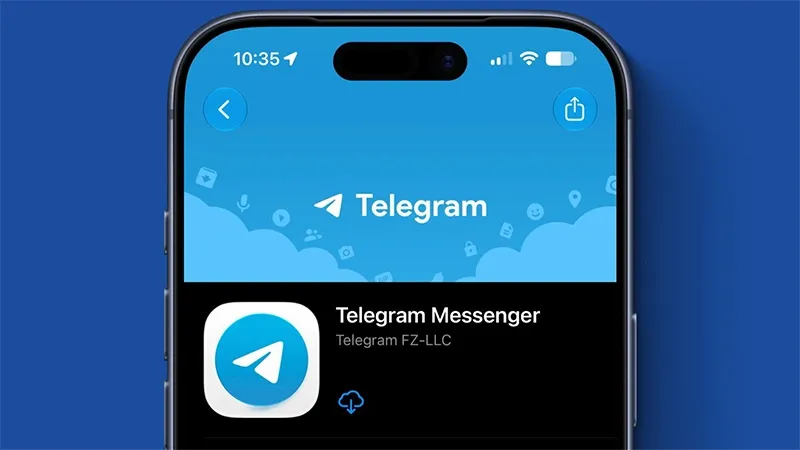
In its statement the company said it had acted after finding the prohibited content and reinstated the service as soon as the developer took prompt corrective steps.
Telegram itself responded on its official account with a wry note that reports of its demise were greatly exaggerated, accompanied by an Apple emoji, and followed up by asking whether the same stance would be applied equally to every other app in the store going forward.
The episode quickly drew criticism from those who see Apple's App Store as an overly powerful gatekeeper.
Epic Games chief Tim Sweeney called the action capricious, arguing that yanking a widely used communication and privacy tool from a billion potential users over a single user’s illegal post illustrated the risks of monopoly control.
He described such enforcement as creating an atmosphere of fear among developers who depend on the store for distribution.
Telegram has long positioned itself as a privacy focused alternative to mainstream messaging services, offering optional end to end encryption and a decentralized approach that appeals to users wary of corporate or government surveillance.
That same openness has repeatedly invited scrutiny. Russian authorities have accused the company of enabling terrorism, Australian officials have complained about failures to curb violent content, and the platform has faced ongoing questions about the effectiveness of its moderation practices.
Apple's rapid response fits a pattern of swift action when child sexual abuse material surfaces on apps distributed through its store, though observers noted the contrast with earlier cases in which other platforms remained available despite similar problems.
The short duration of the blackout limited practical disruption, yet the incident underscores the leverage platform operators hold over apps that millions rely on daily.
For Telegram the episode served as both a reminder of the constant tension between open communication tools and the content rules imposed by the stores that distribute them, and a public demonstration of how quickly those rules can be enforced when the material in question is among the most serious violations.




















































































































































































































































































