When someone hides something valuable from a world that already knows it exists, the hiding place can only do so much.
Put gold inside a locked room, build a wall around it, place guards at the door, and eventually someone will wonder what is behind the wall. If the prize is valuable enough, some people will not simply wonder. They will try to get inside.
For years, Grand Theft Auto VI has been one of the most heavily guarded pieces of entertainment on the planet.
Rockstar Games has revealed almost nothing compared with the enormous appetite surrounding the game, carefully controlling trailers, screenshots, announcements and gameplay footage while millions of people wait for its November 19 release.
Now, less than a week before Rockstar's next major gameplay showcase, that carefully sealed container has been cracked open again.
This time, however, the story is considerably stranger than another collection of leaked screenshots.
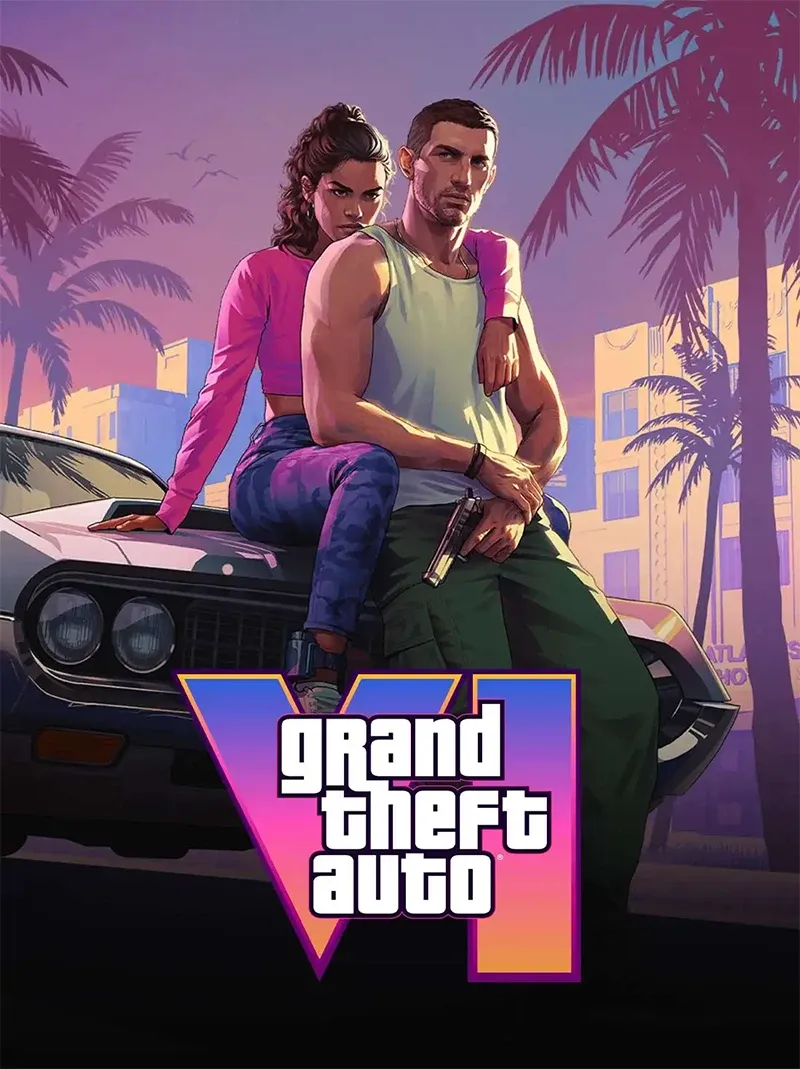
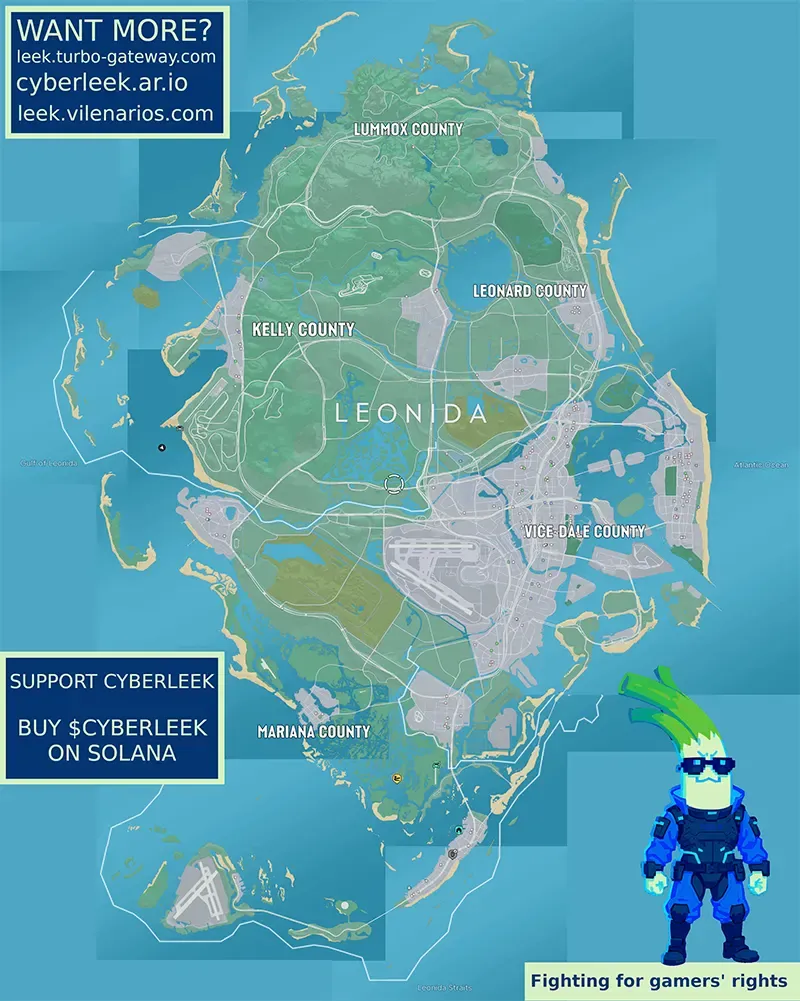
A group calling itself "CyberLeek" has been releasing what appears to be genuine GTA VI material online, including gameplay footage, screenshots and an image claiming to show a much larger view of Leonida, the fictional state where the game takes place.
The first clips began circulating on August 18, and Rockstar and Take-Two have been aggressively pursuing takedowns of the material.
Those copyright removals do not independently prove every piece of material is genuine, but the rapid response has strengthened the case that at least some of the footage is legitimate.
Then the situation escalated.
What initially looked like another leak became a confrontation.
CyberLeek says it is not simply interested in embarrassing Rockstar or spoiling GTA VI. It claims the leak is part of a broader campaign against what it considers increasingly anti-consumer practices in the video game industry.
The group published what it calls the "CYBERLEEK Edict," laying out three demands aimed at publishers.
It objects to digital pre-orders before independent reviews, argues against selling single-player content that is allegedly already contained within a game's files, and demands that single-player games eventually receive an offline fallback so that they remain playable after online services disappear.
On paper, those are arguments that will sound familiar to anyone who has followed the growing debate around digital ownership and game preservation.
The problem is the way CyberLeek has chosen to make them.
Instead of writing an open letter or organizing a consumer campaign, the group appears to have obtained access to GTA VI material and is using the world's most anticipated game as a megaphone.
It has threatened to continue releasing material until Take-Two and Rockstar publicly apologize and commit to changing their practices. The group has also warned other publishers that they could become targets.
"If CyberLeek can reach Rockstar, no one is safe," the group has warned, turning what might otherwise have been a debate about digital ownership into something much more threatening.
And there is an uncomfortable irony in the choice of GTA VI.
Rockstar is not just another game developer.
GTA VI is arguably the most anticipated entertainment product in the world right now. Every tiny piece of information about the game can attract enormous attention. A basketball mini-game, a vehicle interaction, a few seconds of Jason Duval walking around a property, even a blurry map image can become the subject of thousands of posts within hours.
The leaked footage appears to show Jason playing basketball, with the game displaying a Focus mechanic and other interface elements.
Another clip reportedly shows Jason driving before getting into a violent confrontation with a delivery driver.
Other reports have described mechanics such as an honor or morality system, vehicle interactions and other details that Rockstar has not officially presented in this form.
There is also the map.
Images circulating online claim to show a much broader view of Leonida, including roads, rail lines, counties and areas that had not previously been shown publicly.
Some outlets have cautioned that the map's authenticity is harder to establish than the gameplay footage, and at least some of the leaked material may come from an older development build.
That distinction matters.
A development build is not necessarily representative of the final game, particularly when Rockstar still has months before release.
But perhaps the most important development came when the leaker appeared to demonstrate that this was not simply a collection of videos obtained from somebody else.
A later clip showed Jason inside what appears to be the game itself, with CyberLeek making its presence known inside the virtual world.
In one particularly bizarre taunt, the word "LEEK" was apparently sprayed onto a wall using bullet holes. That is the sort of detail that makes the entire episode feel less like a conventional leak and more like a hacker group deliberately staging a performance for the internet.
That distinction is important because there is still uncertainty about exactly how CyberLeek obtained the material.
The group has presented itself as a kind of digital-rights crusader, but its campaign has also been intertwined with cryptocurrency fundraising.
yberLeek promotes a Solana-based token while insisting that the money is intended to fund a secret project rather than simply enrich its operators.
That has understandably caused skepticism.
The combination of a high-profile game leak, ideological demands, threats against publishers and a cryptocurrency appeal makes it difficult to treat the group's stated motives at face value.
That does not mean every complaint it raises is meaningless.
The question of what consumers actually own when they purchase a digital game is becoming increasingly difficult to ignore.
A physical game sitting on a shelf is tangible. A digital license is different. Games can depend on authentication servers, online infrastructure and services that may not exist forever.
The shutdown of Ubisoft's The Crew became one of the clearest examples of how even a game described and sold as a product can eventually become inaccessible when its supporting infrastructure disappears.
CyberLeek has taken that concern and pushed it to an extreme conclusion: if a game contains single-player content, publishers should eventually make sure that content can survive independently of their servers.
Its argument is essentially about preservation, ownership and the difference between buying something and merely buying permission to access it.
But stealing the thing you are demanding people respect is where the argument becomes difficult.
There is also the question of who ultimately pays the price for the leak.
Rockstar is a massive company. Take-Two is a massive publisher. Neither is going to disappear because some footage escaped onto the internet.
The people who can actually be affected include developers who spent years working on the game, marketing teams preparing a carefully timed campaign, and ordinary players who deliberately want to experience GTA VI without having major portions of it spoiled months or days before launch.
And the timing could hardly be worse.
Rockstar is reportedly preparing an extended GTA VI presentation for August 27, with the showcase tied to Netflix as part of the company's increasingly unusual marketing strategy.
The leaked material has therefore arrived just as Rockstar is preparing to reveal more of the game on its own terms.
Instead of waiting for Rockstar to open the door, somebody has kicked a hole through the wall.
The response so far has largely been silence from Rockstar and Take-Two, at least publicly, while their legal machinery appears to be doing the talking through copyright takedowns.
Leaked posts and videos have repeatedly disappeared from social platforms, only for copies to return elsewhere. That is the familiar internet problem: once something as valuable as GTA VI footage escapes, deleting the original does not mean deleting the information.
The internet does not need the original file.
It only needs one person to have saved it.
That is why this incident could become much more serious if CyberLeek really has access to a functioning build rather than a limited collection of captured footage.
If the leaked material does demonstrate a working version of the game, and that the leak is really an actual build, the biggest danger for Rockstar may not be the map or the basketball footage or even the strange "LEEK" message carved into a virtual wall.
It is what remains behind them.
A working build could potentially contain far more than the public has seen.
Characters, missions, locations, mechanics, dialogue, unfinished content, development assets and story information could all exist somewhere inside it. Even if much of that material is outdated, the possibility of future releases creates an enormous problem for Rockstar's carefully controlled campaign.
And CyberLeek appears to understand exactly how much leverage that creates.
The group has suggested that it will continue releasing material until its demands are met. It has also positioned the attack as a warning to the rest of the industry. In other words, GTA VI may be the target, but the intended audience is much larger.
That makes this more than another GTA leak.
It is a collision between two very different ideas about who gets to control a game.
On one side is Rockstar, whose entire business depends on controlling when, where and how GTA VI is revealed. On the other is a group arguing that publishers have exercised too much control over games, digital ownership and the consumer relationship for too long. CyberLeek believes it can force the industry to listen by taking something it cannot easily replace: secrecy.
There is something almost perfectly GTA-like about the whole situation.
A gigantic vault. A valuable target. A heavily guarded operation. Someone gets inside. The stolen goods are immediately scattered across the city, copied, reposted and traded faster than anyone can collect them.
Except this time, the robbery is happening outside the game.
And the strange part is that the people who broke into Rockstar's vault are now asking the company to admit that the vault itself was wrong.
And now, nobody can make the internet forget what it has already seen.
With GTA VI still months away from release, the most uncomfortable question is no longer whether another leak will appear. Instead, it is how much is still inside the box.
Following the leaks, independent research write-ups, like the one detailed in a GitHub breakdown, catalog the videos, map claims, technical checks, hosting details, token timeline, and warnings about fakes/scams, by sourcing the material back to Cyber but the original drops trace back to the CyberLeek's website and Telegram.






















































































































































































































































































