When the world first experienced 1 Gbps (gigabits per second) internet connection, people were astonished by the speed.
With it, they could download large software, including one full HD movie in just a few seconds, and an entire season of their favorite TV shows in just minutes. Streaming videos in 4K and even 8K also become easy without hiccup.
People can also download even the most graphical-intense video games without having to wait for ages, and launch virtual reality content almost instantly.
In China however, things get extravagant, and a lot speedier.
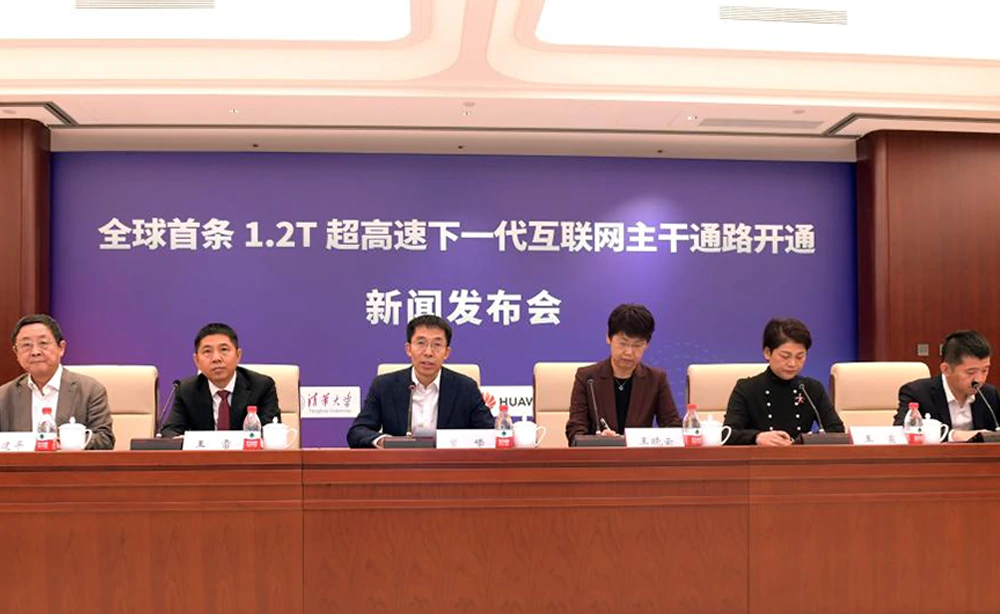
Thanks to a project that spans 3,000 kilometers of optical fiber cables across three cities: Beijing, Wuhan, and Guangzhou, the country is able to launch the world's first 1 terabits per second internet connection.

Or to be exact, the next-generation internet service is capable of transmitting data at 1.2 Tbps.
The project is part of the Future Internet Technology Infrastructure (FITI), which is a collaboration between Tsinghua University, China Mobile, Huawei Technologies, and China Education and Research Network (Cernet) Corporation.
The network, which uses next-generation IPv6 routers that support multi-optic line aggregation of 3x400G, allows instantaneous downloads of literally any software, movies and games, if not only a matter of seconds.
Real-time 8K streaming is also possible, uploads would be much faster, VR and AR experience and content can become instantly accessible, instantaneous collaboration and remote work.
Such speed can also supercharge AI development, help with scientific research, improved trading, instantaneous Internet of Things, effortless 3D printing, unrestricted cloud computing, next-level cybersecurity, and more.
In this case, the project claims that users can transfer 150 HD movies in just one second.
This China's achievement in wired data transmission come shortly after the country boasted about the installation of 3.19 million base stations, demonstrating 5G dominance in wireless telephony.
These helps China outpace all nations on Earth in terms of sheer numbers, helping the eastern country transform its industrial sector to engage in high-tech manufacturing.
It's worth noting that the U.S. has only completed its transition to fifth-generation internet, capable of delivering 400 Gbps.
What this means, China is having 3x the speed the U.S. is having at the moment.
China here beats experts prediction, which though that 1 Tbps connections would not arrive before 2025.
With this mind-boggling speed powering the backbone network, China is aims to use the network capacity for national education and research as well as to support its 5G networks and connected electric vehicles whose usage is on the rise in the country.
Tsinghua University compared the network to a superfast train that replaces 10 regular tracks when transporting goods and people. Similarly, a 10x faster internet connection can carry larger amounts of data, but also cheaper, and in a way that is much easier to manage.
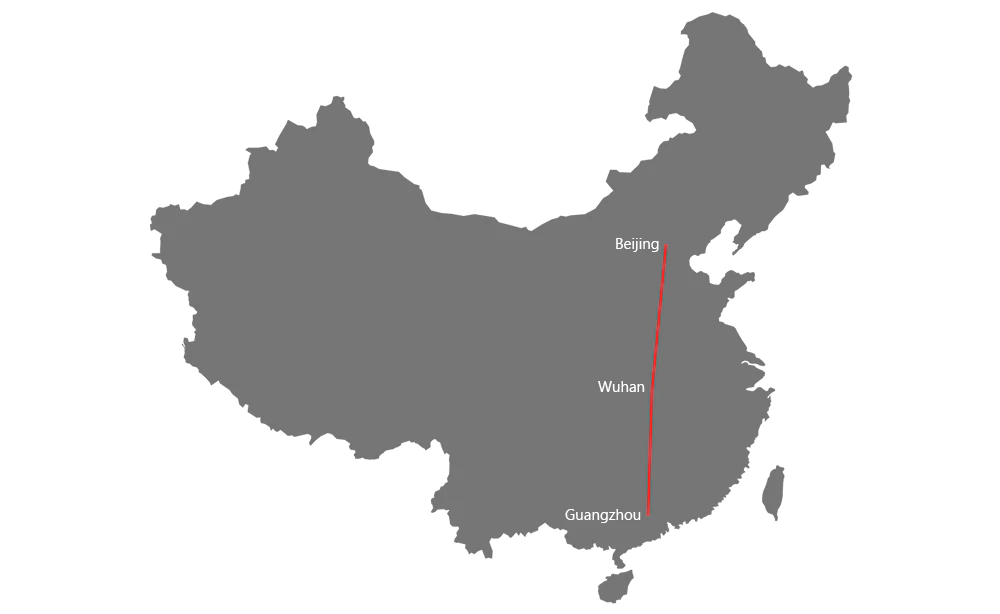
The launch of this network came after the cabling work that connects the three cities was completed in July 2023.
The network was launched only after all operational tests were completed and systems operated reliably.
It's also worth noting that all the software and hardware used to make this project happen, have been domestically produced.
For years, China has relied on Japan and the U.S. for components to advance its internet infrastructure. But for FITI, the country began developing all components locally, including switches, optical fiber connections as well as routers.
Looking forward, the Tsinghua University is also working with 40 other universities, and is expecting the project to be at full capacity by the end of 2023.






















































































































































































































































































