Most of us scroll past thousands of pages every week without ever thinking about where they go when the servers shut down or the links break. The internet produces new content at a pace that feels almost infinite, yet the same medium erases itself just as quickly, leaving only fragments behind for anyone who arrives too late.
That tension between creation and loss has always defined the web.
From its earliest days as a research tool to the global network of shops, forums, news sites, and personal stories it has become, the online world thrives on constant change.
World Wide Web Day, observed each year on the first of August, offers a brief pause to recognize how thoroughly this invention has reshaped daily life while also reminding us how fragile its history remains.
And this year, the day coincided with a quiet but historic announcement from the Internet Archive.
Their Wayback Machine, the free public service that has been systematically capturing snapshots of websites since 2001.
The Internet Archive is a nonprofit that has spent years quietly capturing snapshots of the living web through its Wayback Machine, a free public service that lets anyone travel back in time to see how a particular page looked on a particular day.
Launched in 2001, the project has grown into one of the largest digital preservation efforts ever undertaken.
And it has now preserved more than one trillion web pages.
One trillion is a number so large it almost loses meaning until you picture the decades of design trends, political debates, cultural moments, and everyday posts that sit inside it.
That number represents decades of online life, from the early personal homepages of the 1990s to the social media posts, government documents, and creative experiments of the present.
Each archived page is a frozen moment from a living site, complete with the layout, text, and images that once greeted visitors on a specific date.
Each archived page is a small act of resistance against forgetting, a way of saying that the digital record matters even when the original creators have moved on.
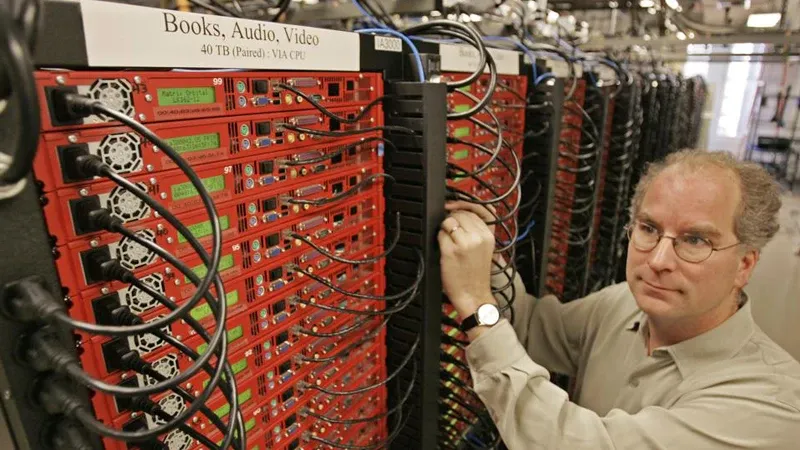
The project began as a modest effort to keep the early web from vanishing and has grown into one of the most ambitious digital libraries ever built.
Researchers turn to those stored pages to reconstruct how events unfolded online.
Journalists recover stories that were later revised or removed.
Ordinary people dig up old versions of their own sites or rediscover pages that no longer exist anywhere else.
Reaching one trillion captures is not merely a technical achievement. It marks a point where the volume of preserved material begins to match the scale of the web itself, giving future generations a far denser record of how we lived, argued, and created online.
Anyone can wander through that collection at web.archive.org.
Enter an address, choose a date from the calendar, and the past loads almost as if the original site never changed.
In a medium that constantly overwrites itself, the simple fact that more than a trillion of those earlier versions still exist feels both improbable and essential.




















































































































































































































































































