Humans and their society knew a lot of genders.
From cis males and cis females, of course, to transgenders, who are people who identify differently from their assigned sex at birth, and not forgetting those who identify as nonbinary, genderfluid, genderqueer, and agender folks, among others.
While there is no definitive answer, but in all, there are more than 100 gender identities listed in 2024.
But based on reproductive cells, there are only two primary sexes: female, which is capable of producing ovules, and male, which is capable of producing spermatozoa.
Then, comes intersex, which is a a rare variation of human reproductive anatomy that don’t neatly fit into the binary.
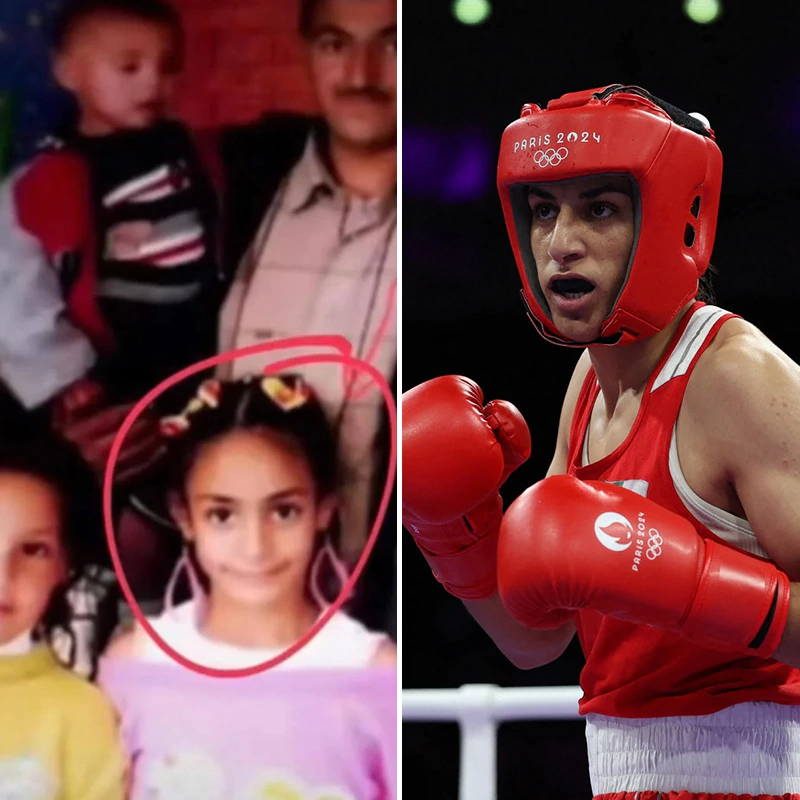
Imane Khelif, an Algerian boxer who competes at the 2024 Olympic Games in Paris, received the internet's hate, after it was speculated that she is a man in a women competition.

It all began when Khelif won a fight in the 66-kilogram women’s division at the Paris Olympics on Thursday.
She managed to defeat Italy’s Angela Carini after Carini abandoned her match.
The entire fight only lasted 46 seconds, before Carini went to her cornermen to call off the fight.
Soon after, Khelif celebrated her win, while Carini fell on her knees, crying.
After the fight Carini, was heard yelling to her coaches, speaking in Italian, questioning the fairness of the match.
There is a reason for that, and this was revealed after her fight, when Carini broke her silence.
"I got into the ring to fight," she said. "I didn't give up, but one punch hurt too much and so I said enough. I'm going out with my head held high."
As a boxer, Carini knows exactly how a punch should feel like when it landed on her body or face.
But that punch she received, was unlike the punches she received throughout her career.
Things felt different, and that's for sure.
Carini’s coach, Emanuele Renzini, said that quitting the match wasn’t a part of the plan ahead of time.
"It would have been easier not to show up, because all of Italy had been asking her not to fight for days," Renzini said. "But Angela was motivated and wanted to do it."
"Of course, when she met her opponent at the draw, she said 'it's not fair.’ But there was no premeditation here today She quit after taking one punch, she told me she didn't feel she could fight."
"Her blows hurt me a lot," Carini added.
The devastating punch she took to her face not only dislodged her helmet, but also shattered any illusion of fairness in this Olympic competition.
This is where Khelif starts receiving barrages of controversies, and so does the Olympics.
The issue stems from the controversy regarding a failed gender eligibility test Khelif had in 2023.
Khelif was disqualified for failing to meet eligibility criteria shortly before her gold medal bout at the 2023 IBA Women's World Boxing Championships.
The Algerian Olympic Committee said Khelif was disqualified for medical reasons. It was later reported that the disqualification was due to high levels of testosterone.
This was revealed by IBA president Umar Kremlev, who explained the decision at the time, with reports suggesting that Khelif tested positive for having abnormally high levels of testosterone to be considered a female.
At that time, both Khelif and Taiwan’s Lin Yu-Ting failed to meet gender eligibility standards.
"Based on DNA tests, we identified a number of athletes who tried to trick their colleagues into posing as women. According to the results of the tests, it was proved that they have XY chromosomes. Such athletes were excluded from competition," Kremlev said.

Crumpling Carini's to her knees, Khelif received the harsh brutality of the internet's hate.
"Only cowards identify as women just to beat up a female opponent in front of a million spectators. I would pay good money to see Imam Khelif face a real man in a real boxing match and get the same treatment he dished out."
"Wokeness is truly the cancer of society!"
One suggests that Khelif should face a "real man," like Mike Tyson, and see whether she would even last 46 seconds.
Some even sent their disappointment to the Olympics Committee, suggesting that fairness in competition is now dead.
The incident has gone wildly viral on social media, where the likes of J.K. Rowling and Elon Musk are also decrying the Olympic organizers.

But Khelif and the Algerian Olympic Committee (COA) both denied the claims.
The Olympics, the International Olympic Committee cleared Khelif to compete in the Games, as a woman.
The COA called the claims that Khelif is a man is "baseless."
"COA strongly condemns the unethical targeting and maligning of our esteemed athlete, Imane Khelif, with baseless propaganda from certain foreign media outlets," the committee said Wednesday.
"Such attacks on her personality and dignity are deeply unfair, especially as she prepares for the pinnacle of her career at the Olympics. The COA has taken all necessary measures to protect our champion."
"Everyone competing in the women’s category is complying with the competition eligibility rules," IOC spokesperson Mark Adams said. "They are women in their passports and it’s stated that this is the case, that they are female."
And following the fight where Carini lost, the Italian team expressed their disappointment.
But things start to slowly reveal itself, when Khelif is actually not a man, but also not a woman entirely.
She is an intersex, which means that she is not a transgender like what she was originally accused of by the media.

People who are intersex have genitals, chromosomes or reproductive organs that don't fit into a male/female sex binary. Their genitals might not match their reproductive organs, or they may have traits of both.
Being intersex may be evident at birth, childhood, later in adulthood or never.
This explains why Khelif has a high-level of testosterone, which happens because she has the Y chromosome found only in males.
Rosario Coco, the president of Gaynet Communications in Italy, is quoted as saying that he learned Khelif was intersex and not transgender.
"In contrast to the reports that have been circulating, the Algerian athlete Imane Khelif is not a trans woman," Coco said.
"From the information we have about her, she is an intersex person, who has always socialized as a woman and has a sporting history in women's competitions."
Intersex isn’t a disorder that happens, a disease that is caught, or condition that is received.
Instead, it’s a natural variation in human biology.
Some people who are intersex may choose gender affirmation options if their gender doesn’t align with the one assigned at birth. So, in short, intersex individuals can identify as female, male, both, or neither.
Intersex is considered part of disorders of sex development (DSDs), which can be described as a group of conditions that can be caused by genetic changes, hormonal differences, or developmental issues. These conditions that mostly happen due to atypical gene expression, can cause a mismatch between a person's chromosomes and the appearance of their genitals.
In this case, Khelif was assigned and raised as a girl, and matured as a woman, despite being an intersex.
In other words, Khelif identifies herself with her birth-assigned sex.
Khelif is also identified as a female on her passport.
Khelif's DSD condition is hyperandrogenism, where individuals have elevated levels of male hormones (androgens) in the body.
In her case, she looks like a girl before puberty. But onset puberty, her male chromosome becomes more dominant, and this explains her man-like appearance.

The IOC and the International Boxing Association (AIBA) follow guidelines similar to those applied in athletics for intersex athletes.
These guidelines are aimed at maintaining a level playing field in terms of physical advantages, but with a decision that is mostly based on hormone levels, particularly testosterone.
Athletes with DSDs are usually required to have their testosterone levels below a certain threshold (often 5 nmol/L) for a specified period before and during competition in the female category, which is usually in a 6 months time. If they cannot lower their testosterone to that limit, they have to compete in the male category.
This is to ensure no unfair advantage is gained.
Regardless, there is ongoing debate and scrutiny regarding the ethical and medical implications of these rules.
Balancing fair competition with the rights and well-being of intersex athletes remains a complex issue.
Following the bout, Carini wished her opponent well.
"I wish her to carry on until the end and that she can be happy. I am someone who doesn’t judge anyone. I am not here to give judgements," she said.
Following Carini's loss, people began a fiery edit war on Wikipedia, where Khelif's page received hundreds of edits per day.
Further reading: An Olympic Shooter From Türkiye Wins Silver, And Becomes An Internet Sensation
‘Someone with a DSD cannot help the way they were born but they can choose not to cheat; they can choose not to take medals from women; they can choose not to cause injury.’ @suzanne_moore https://t.co/p6Qdb4lXcx
— J.K. Rowling (@jk_rowling) August 1, 2024
After the commotion that happens, Carini had something to say to clarify things.
"All this controversy makes me sad," Carini said. "I'm sorry for my opponent, too. If the IOC said she can fight, I respect that decision."
Both Khelif and Carini are 25-year-olds, and that Carini realized that abandoning the fight was immature.
Carini also regretted at not shaking hands with Khelif after the match.
"It wasn't something I intended to do," Carini said. "Actually, I want to apologise to her and everyone else. I was angry because my Olympics had gone up in smoke."
She added that if she met Khelif again, she would "embrace her".
Khelif is one of two athletes who have been cleared to compete in the women's boxing in Paris, despite having been disqualified from last year's Women's World Championships for failing to meet eligibility criteria.
Taiwan’s Lin Yu-Ting, who previously failed a sex test, was stripped of a Bronze medal from the IBA Women’s World Boxing Championships. But for the Paris Olympics, both Lin and Khelif have complied with all rules to fight, regardless of their status in previous International Boxing Association (IBA) competitions.






















































































































































































































































































