Indonesia is the vast archipelago country in Southeast Asia.
Just like almost everywhere else, people in Indonesia welcomes cryptocurrency with warm greetings.
Since cryptocurrencies entered the country, and also with the country having its own exchanges, an increasing number of people became enthusiasts. Not only that the people were caught in the craze of cryptocurrency trading and mining to earn profit, as they are also doing it because others are doing it.
However, the population in Indonesia is mostly Muslims, and one of the largest Islamic organizations in the country has declared that cryptocurrency is "haram."
The Indonesian Ulema Council (MUI), which is the national council of Islamic scholars in the country, said that the digital coins are forbidden under the Islamic religious law. Not just MUI, as Indonesia's Nahdlatul Ulama (NU), which is one of the world's biggest Islamic organizations in terms of number of members, has also declared cryptocurrencies as haram.
What this means, trading of cryptocurrencies like Bitcoin has been declared forbidden for the Muslims in the country.
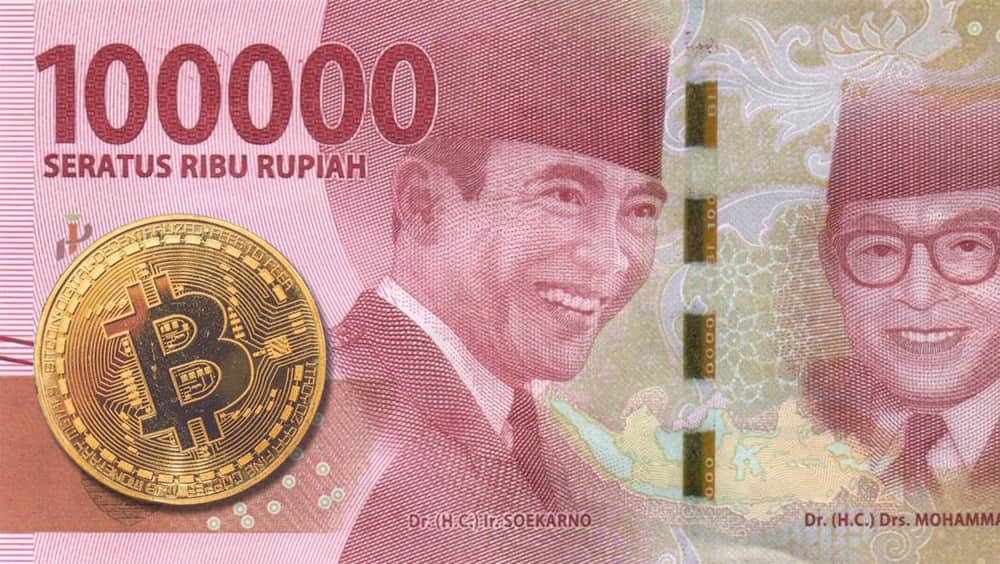
According to the ulemas, the Muslim scholars who are recognized as having broader knowledge in Islam, the Islamic law requires transactions to follow certain criteria, like for example, having a physical form and definite value.
"Cryptocurrency as currency is forbidden because it has elements of uncertainty, harm and doesn't meet the Islamic requirement according to Shariah [law]," said KH Asrorun Niam Sholeh, the council's head of religious decrees, said in the forum.
"Cryptocurrencies as commodities or digital assets are unlawful for trading because they have elements of uncertainty, wagering and harm,"
"It's like a gambling bet," he said.
And according to Deputy Chairman of the East Java NU, Ahmad Fahrur Rozi, known as Gus Fahrur, the fatwa was based on the results from a forum discussion of issues on Islamic jurisprudence.
One of the conclusions that came from the discussion, attended by both cryptocurrency and Islamic legal experts, was that cryptocurrency trading tends to involve "fraudulent practices and gambling".
"Just like it's not allowed for a person to buy indistinct objects, like 'fishes in the sea' or 'birds in the air'," Gus Fahrur explained.
He went on to explain that trading using cryptocurrencies is similar to gambling because people speculate about the value without knowing the cause. Practices such as gambling are not allowed in Islam, because the value and price are indefinite and could financially and physiologically harm whoever is involved.
Because digital currencies are not tangible assets and their value can fluctuate wildly so they violate Islamic law, he added.
"It can increase by 1,000% or 5,000%, but it can also be zero. It's not an investment."
Due to the huge elements of speculation over the value of cryptocurrencies, the ulemas agreed to consider cryptocurrencies as "inappropriate to be used as an investment instrument", he said.
Fatwa is another word for a religious edict.
In Indonesia, fatwas have no legal effect, but the declaration could potentially convince many people in the world's forth most populous country avoid cryptocurrencies.
At this time, there are more cryptocurrency investors in Indonesia than share market investors.
According to Indonesia's Ministry of Trade data, the number of cryptocurrency investors in the country had grown from 4 million people at the end of 2020, to 6.5 million people by the end of May 2021. This number exceeded the number of investors in the share market, which is around 2.4 million according to Indonesia's central bank, Bank Indonesia.
Cryptocurrency trade has been soaring tremendously in the country. Based on the data from the 13 domestic exchanges authorized by the country’s Futures Exchange Supervisory Board, there has been a healthy 40% increase in transactions during the first five months of 2021.
Indonesia's cryptocurrency-based transactions amounted to some Rp 370 trillion rupiah ($26 billion) in the first five months of 2021, soaring from a year earlier, as explained by Indonesia's Trade Minister Muhammad Lutfi in June.
It is reported that the trend was mostly brought to Indonesia through social media networks, particularly TikTok.
And this fatwa came after Indonesia's Central Bank said it was considering issuing its own digital currency.
While trading and investing using cryptocurrency are considered haram, it was added cryptocurrencies as a currency is the main reason for the fatwa.
If and only if cryptocurrencies can meet certain criteria, that they can then be considered halal (opposite of haram), and can be traded as a commodity.

Islam is one of the most popular religion in the world.
In numbers, Islam comes second only to Christianity. With about 2 billion Muslims around the world, discussing whether cryptocurrencies are haram or not are still in heated debates.
From countries that are mostly Muslims, Indonesia included, to Egypt, Turkey, Malaysia and Saudi Arabia, as well as scholars from the Europe, like in the UK.
While some suggested that cryptocurrencies are haram, some took the opposite view, including those in South Africa, Pakistan, Qatar and United Arab Emirates.
Cryptocurrency is a "hot topic" in the Muslim world, and opinions regarding the decentralized digital money have varied among Islamic scholars, experts, and ordinary Muslims throughout the years.
However, due to the fact that cryptocurrencies are extremely popular, the numerous opinions by scholars, kiais, and other religious bodies, any new Islamic decree would less likely impact the decision of cryptocurrency investors.
But instead, they could act as an eye-opener for investors or those who are about to enter the market.
It should be noted that fatwa is dynamic. At any given time, fatwa is made and meant to protect the community.
If cryptocurrencies can prove themselves to no longer contain an element of speculation, for example, and that there is an official regulation from the state that can protect them from speculators, cryptocurrencies may no longer considered haram.

In response to the fatwa, Indodax CEO Oscar Darmawan emphasized that cryptocurrency-based assets are not used as currency within Indonesia at any ways.
Indodax, Indonesia's largest cryptocurrency asset exchange by the number of users.
Its CEO said that cryptocurrencies aren't what the ulema's are speculating.
"In Indonesia, crypto assets are indeed not for currency as Bank Indonesia regulations align with MUI deliberations which forbid crypto as a currency. In Indonesia, the Rupiah is the only recognized currency," he said. "At Indodax, we trade many types of crypto assets. The largest trading volume at Indodax comes from crypto assets that have physical assets as underlying assets," Oscar said.
He went on to explain that almost all cryptocurrency assets do have their own underlying assets.
"All crypto assets have an underlying. There are only those whose underlying is easy to understand in physical assets such as USDT, LGold, LSILVER, XSGD, but there are also those with underlying in the form of issuance fees such as Bitcoin."
What's more, there are mining fees, and that have their own verification process and Bitcoin issuance, which requires electricity costs of 150 TeraWatt per hour.
"This is technological innovation. Now, money doesn't have a physical form, just digital like e-money. So because there is a production cost, bitcoin doesn't just appear, so don't be surprised if the price of bitcoin keeps going up," Oscar said.
Read: Cryptocurrency Mining, And How You Can Be Part Of It, In A Good Way




















































































































































































































































































