Intel and AMD are two American multinational corporation and technology company working on semiconductor and developments of computer chips.
Their rivalry can be traced back to the late 1960s, making the two companies compete in Silicon Valley's longest-running battle. Usually if not mostly, Intel leads the way in creating more advanced chips, forcing AMD to be happy with second place.
Intel has long dominated the market for processors that power desktop PCs, with AMD close behind.
But on May 26th, 2019, AMD's CEO Lisa Su took the stage at the Computex computer expo in Taipei to unveil the third generation of the company’s Ryzen microprocessor, a result of more than 5 years of development.
Su said that the new chips, which are based on AMD’s Zen architecture, outperformed a comparable processor from Intel by more than 16 percent in its internal tests. Coming on sale on July 2019, the Ryzen chips have a price tag of $500, or half the price of Intel’s competing offerings.
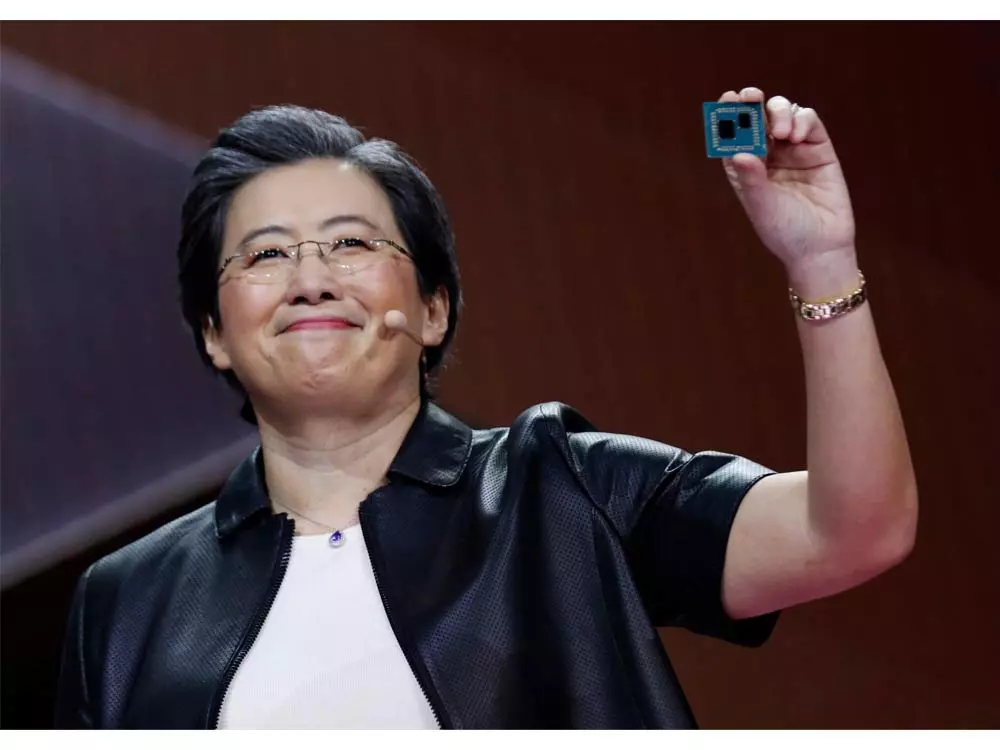
Here, Su highlighted the AMD Ryzen 3000 desktop CPUs with a live on-stage demonstration of their Intel-crushing ability.
AMD’s innovations have surpassed Intel in the past. But the announcement by Su, made some Wall Street analysts to anticipate the opportunity for AMD to get more market share, stealing more from Intel in the PC processor market.
The Ryzen chips have already helped AMD’s CPU market share to jump to 17 percent in the first quarter of 2019, or up from 12 percent a year earlier (with Intel holding the remaining share), due to a shortage of CPU processors at Intel.
"This announcement represents the first time AMD has taken the desktop CPU lead process technology and performance lead from Intel in its 50-year history," said Stifel Financial analyst Kevin Cassidy.
“We expect AMD to accelerate its PC market share gains due to higher performance, lower power usage, lower cost and ease of upgrade.”
Despite usually at second place, and significantly rivaling Intel in the market for x86-based microprocessors, AMD and its competitor Nvidia have maintained a duopoly in the graphics processing unit (GPU) market.
Related: Rather Than Sheer Performance, Intel 'Ice Lake' Focuses On AI Applications






















































































































































































































































































