Some films settle into history once the reviews are written and the awards are given.
Others leave a residue that keeps circulating years later, not because of the plot or the performances in any ordinary sense, but because something in the way they were made refuses to resolve itself.
The question of what an audience is actually watching, and what the people on screen were actually doing, can outlast almost everything else. Few movies of the past two decades have kept that particular question alive as stubbornly as Ang Lee's Lust, Caution.
The film is not a pornographic work, and there was never any intention that the scenes would be unsimulated.
Yet the realism of the performances, the closed set, and the sheer physical and emotional commitment of the actors made the distinction difficult for many viewers to accept at face value.
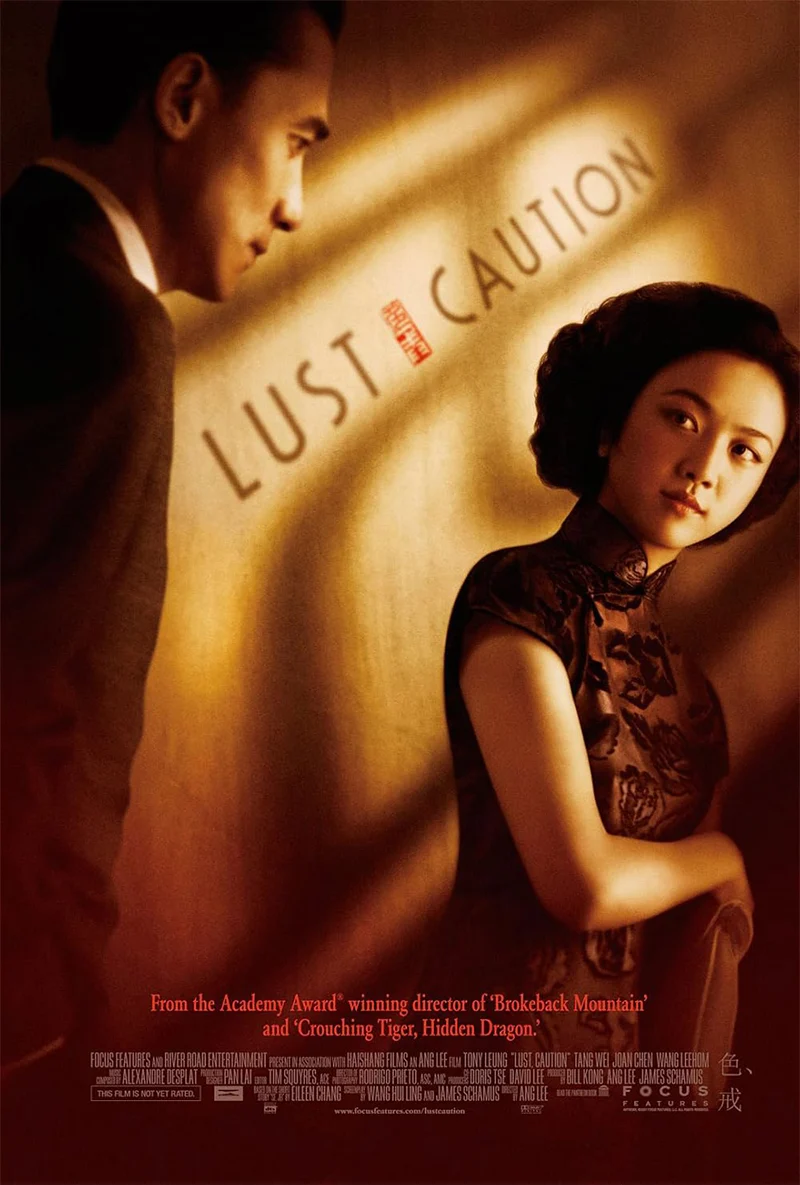
Adapted from Eileen Chang's 1979 novella, the film follows a young woman drawn into a resistance plot in Japanese-occupied Shanghai and Hong Kong.
She is assigned to seduce a high-ranking collaborator in the puppet government, a task that gradually blurs strategy and genuine feeling. Tony Leung Chiu-wai plays the official, Mr. Yee; Tang Wei, then largely unknown, plays the student-turned-spy Wong Chia Chi.
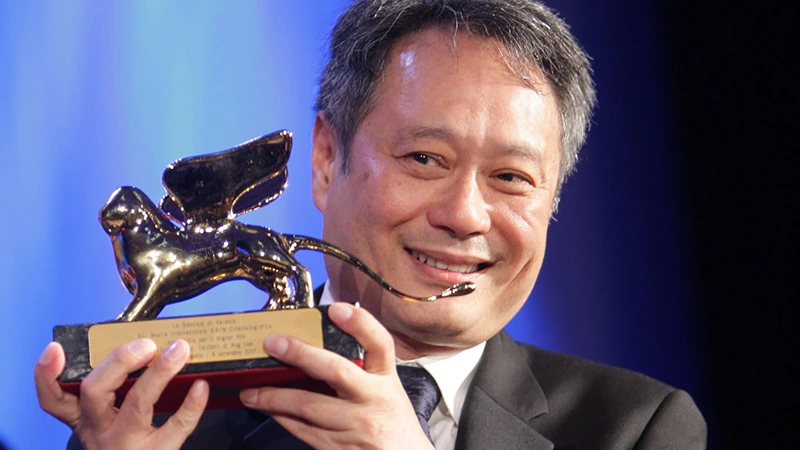
The film won the Golden Lion at Venice and became the highest-grossing NC-17 title of its time.
While critics praised the acting and the story, the film is best known for three prolonged, graphic sexual encounters that occupy roughly seven minutes of its 158-minute running time.
Debates about whether the intimacy remained strictly performed or crossed into something that felt, and perhaps briefly became, more real began almost immediately after the 2007 release and have continued with surprising persistence.
On set the sequences were shot over many days, accounts place the work between 11 and about 20, with each day cut short because the strain proved too great.
Only Lee, the two actors, and the cinematographer remained inside for the most intimate moments.
Both performers refused body doubles. Lee has described the process as more difficult than staging the wire-work fights in Crouching Tiger, Hidden Dragon. He approached the material as neither pornography nor obvious softcore.
The sex had to read as genuine body language between two people who cannot trust each other, yet the camera could not simply record unmediated intercourse.
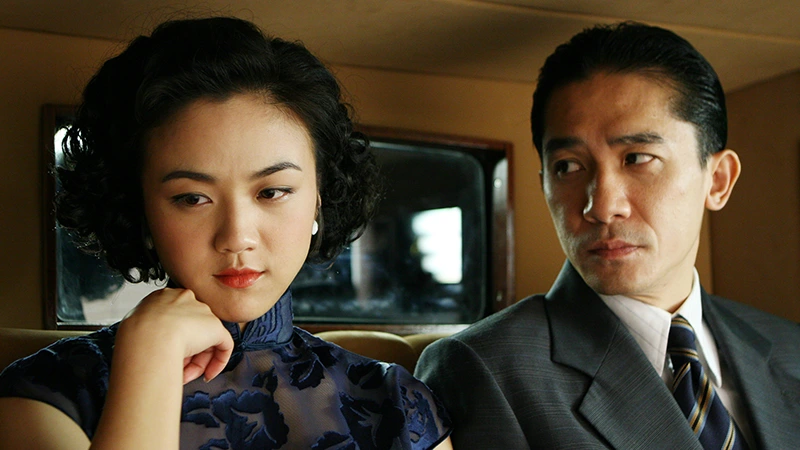
Hours of footage were later shaped in the editing room, with positions carefully blocked so that intertwined limbs and partial views suggested more than they fully revealed.
Skin-colored tape, prosthetics, and precise camera angles were used to create the appearance of penetration where the story required it; other shots show enough anatomical detail that viewers still argue over what the frame actually captured.
The first encounter is deliberately rough. Mr. Yee, already hollowed by years of collaboration and violence, treats the reunion almost like an interrogation. On set Leung, usually mild-mannered, improvised grabbing Tang Wei's hair and striking her head against the wall. The gesture surprised Lee and steered the sequence toward something that borders on assault before it turns sexual. Later scenes grow more complex. One arrangement, often called the paperclip position, locks the actors so tightly that their bodies form a single twisted shape. Lee has said the image was meant to convey both beauty and distortion, and also to echo Wong Chia Chi's need for a father figure by placing her in a fetal posture. Some overhead framing drew from French Impressionist paintings and, in one case, Tibetan religious art.
Throughout, the actors remained nude, and the physical contact was real even when full penetration was not the aim of every shot.
Critics have noted how Lee treated these sequences as the actual turning points of the story: the sex evolves from aggressive, power-assertive, borderline-violent survival into an entangled, vulnerable intimacy.
The bedroom is where the espionage warfare is fought.
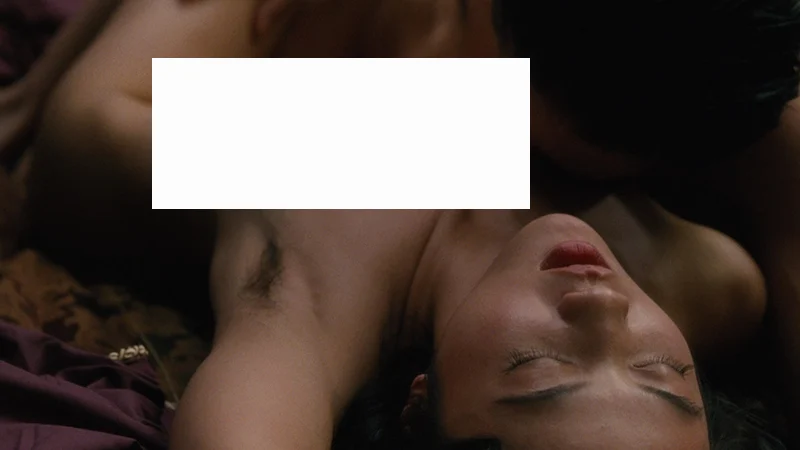
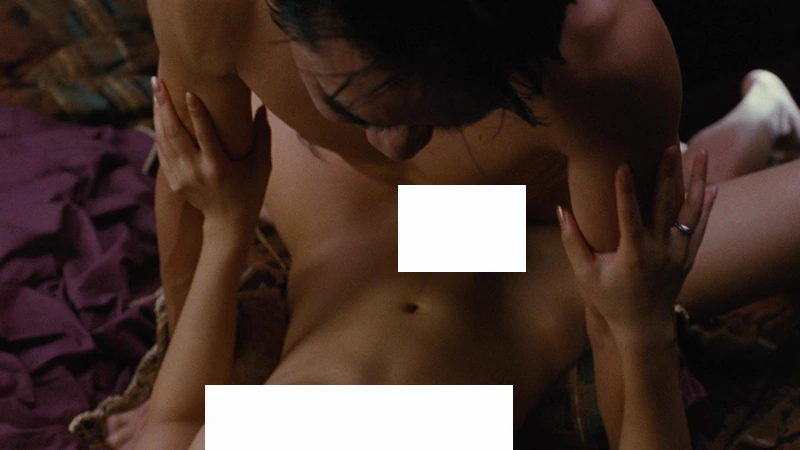
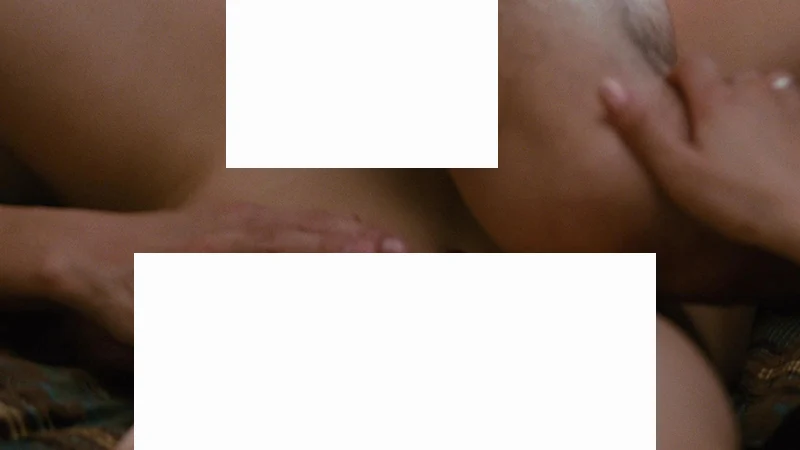
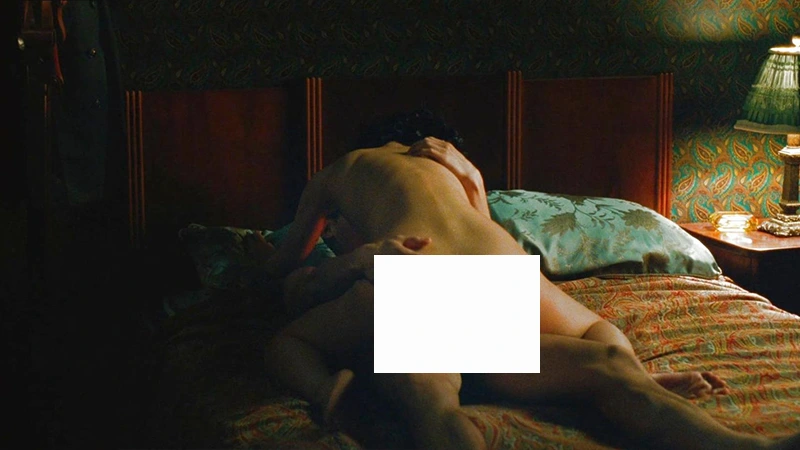
The psychological toll was immediate and severe.
After the most difficult takes, both actors broke down in tears. Tony Leung emerged from the set close to collapse. He later said the role left a psychological shadow that took considerable time to shake off. At one point Ang Lee had to intervene, calling Leung's wife, Carina Lau, to ask her to encourage her husband to continue. Tang Wei has spoken of crying through much of the filming of these scenes. Her boyfriend at the time ended their relationship after seeing the footage. Even Lee himself broke down at least once and had to be comforted by Leung. One assistant director later described the period as eleven days of hell.
Yet both performers have also described moments of complete immersion.
When asked whether the scenes were real, Leung noted that it felt "like fake play turning real." Tang Wei said they did "what’s needed to have a baby."
These two short answers have been quoted and debated ever since.
As for Lee, he refused to settle the matter one way or the other.
Any definitive statement, he has explained, would break the illusion the audience needs. Pure pornography lacks drama, obvious softcore faking destroys credibility, and pure torture would misrepresent the characters' search for comfort amid fear.
According to his account. the scenes therefore occupy an uneasy middle ground.
Because the final sequences were cut together from dozens of takes, frame-by-frame examination has never produced a single uncontested answer.
Lee's own remarks sometimes lean toward the idea that once the actors fully believed the moment, the distinction between performance and reality became secondary.
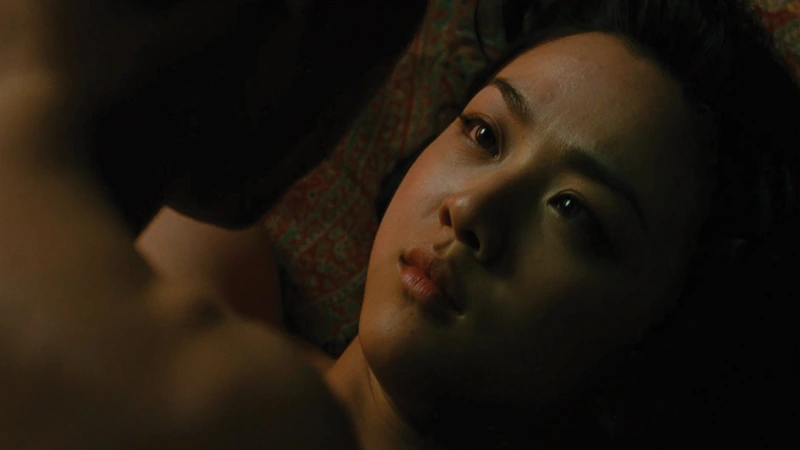
This stance sets Lust, Caution apart from other films that have placed explicit sex at their center without claiming to be pornography.
In comparison, Gaspar Noé's Love features unsimulated sex between its leads, including an ejaculation shot. Noé has been relatively open about the decision, arguing that adult films lack feeling and that cinema should show the ordinary physical realities of passion and intimacy. He has noted that some scenes in Love are real and some simulated, but he has also criticized other productions for clarifying that their sex was faked, saying such admissions spoil the illusion. Similar frankness appears in films like Michael Winterbottom's 9 Songs, which uses unsimulated intercourse between the two actors. Vincent Gallo's The Brown Bunny, which includes confirmed unsimulated oral sex with Chloë Sevigny, and Patrice Chéreau's Intimacy, also features real sex.
In each case the production either confirmed the acts or allowed the confirmation to circulate without sustained contradiction.
But Lust, Caution occupies a narrower space.
It never claims unsimulated sex, relies on technical measures to construct the appearance of penetration, and still generates persistent rumors precisely because the performances and the director's silence refuse to close the question.
The film's thematic interest in performance and authenticity only sharpens the effect. Tang Wei is herself an actress recruited to play a role so convincingly that she begins to lose the boundary between the part and herself; the audience’s inability to decide what the actors were doing on set mirrors the characters' inability to decide what is genuine between them.
The film premiered at the Venice Film Festival on August 30, and as soon as Western and Asian media began focusing on the explicit sex scenes and the question of whether they were simulated, the first peak happened in November that year.
At the time of its mainland China release, the heavily cut version of Lust, Caution triggered an immediate online surge.
A Variety report noted that the film had already drawn 1.5 million comments on Sina.com alone, the highest total for any film on the site at the time, with new comments arriving at roughly 100,000 per day after its China opening.
Chinese censors removed or shortened the sex scenes for the mainland cut, but uncut pirated copies circulated widely. Doctors in China publicly warned viewers against trying the more contorted positions at home. Over the years, online forums, Chinese entertainment media, and Western interviews have repeatedly circulated the same quotes and stills. Anniversaries and new interviews regularly revive the rumor that Leung actually had unsimulated sex with Tang Wei and even finished inside her, with some referring to particular frames as evidence.
China's State Administration of Radio Film and Television (SARFT) had ordered a media ban on Tang Wei because of her scenes in the film. All print ads and featuring her were all removed. Even endorsements were discontinued. It took her three years to relaunch herself and reenter the industry for her next film.
In the end, the scenes remain the film's emotional core, the point at which power, fear, desire, and betrayal become visible in physical form. Their realism continues to provoke argument. Lust, Caution endures less because of any single claim about what happened on the closed set and more because the film itself treats the boundary between acting and reality as something that cannot be cleanly drawn. The actors' own words only deepen that unresolved tension.
Unlike films that openly stage unsimulated sex while insisting they are not pornography, Lust, Caution keeps the question alive by never fully answering it. That refusal is what allows the debate to continue.






















































































































































































































































































