Commercial aviation depends on trust as much as technology.
Every day, millions of passengers board aircraft with the expectation that the pilots in the cockpit have undergone rigorous training, recurring medical examinations, and extensive background screening.
The safety of everyone on board depends on their judgment, competence, and fitness to fly.
That trust rarely becomes the subject of public attention. It is simply assumed, forming one of the foundations of modern air travel.
The assumption was challenged on 29 July 2026, when Indonesian customs officers arrested a Malaysia Airlines co-pilot after discovering more than 26 kilograms of ecstasy tablets and a quantity of methamphetamine inside his luggage at Jakarta's Soekarno-Hatta International Airport.
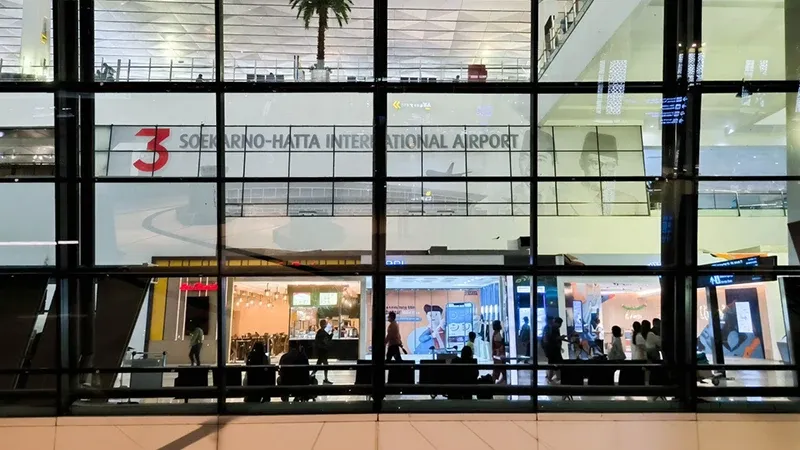
Pilots and cabin crew often use dedicated security lanes and baggage procedures designed to keep airport operations efficient after international flights. Those arrangements function smoothly almost all of the time, but they also require continuous monitoring to ensure they are not abused.
The events at Terminal 3 of Jakarta's Soekarno-Hatta International Airport illustrate both the resilience of those security systems and the exceptional nature of the alleged attempt.
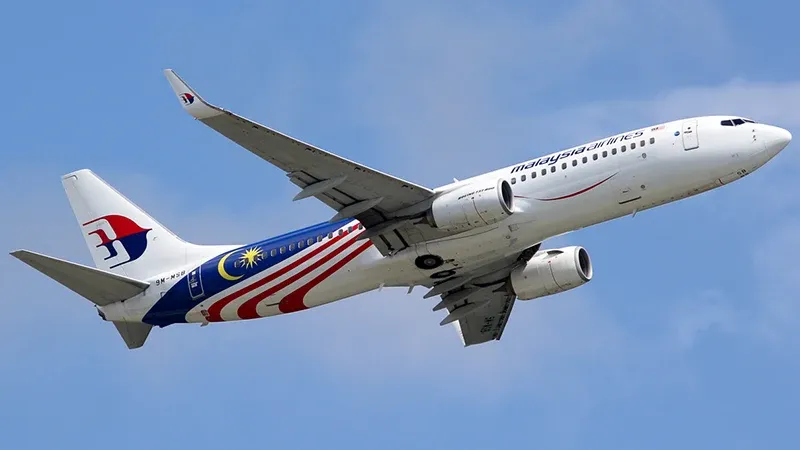
A 39-year-old Malaysian co-pilot identified by the initials MS or MSO had just operated a Malaysia Airlines flight from Kuala Lumpur.
According to the official chronology released by Bea Cukai Soekarno-Hatta, the airport’s customs authority, closed-circuit television recordings tracked his movements from the moment he left the aircraft.
He completed the electronic customs declaration through the All Indonesia website and was initially directed toward the special crew lane known as the fast track.
Despite the initial clearance, customs officers relying on risk assessment and behavioral profiling selected his baggage for further inspection.
Inside the suitcase, officers discovered 26 kilograms of ecstasy tablets, totaling 70,114 pills, together with four grams of methamphetamine. Officers also recovered a small bottle believed to contain clean urine, apparently intended to help defeat a drug test.
Subsequent testing found the co-pilot positive for methamphetamine, MDMA, and cocaine, indicating that he had just operated a commercial passenger flight while under the influence of multiple controlled substances.
Customs officials, including Soekarno-Hatta Customs chief Hengky Tomuan Parlindungan Aritonang, said the seizure resulted from continuous risk analysis rather than any single checkpoint. Even after the traveler had been directed to the crew fast-track lane, officers continued monitoring through observation, X-ray screening, and physical inspection.
The case was subsequently transferred to Indonesia's National Police Criminal Investigation Agency, which is continuing to investigate whether the co-pilot was acting as part of a wider trafficking network.
The co-pilot is reported to have admitted receiving 50,000 ringgit for the delivery and that this was not his first involvement in such activity.
Indonesia’s strict narcotics laws mean he faces the possibility of the death penalty.
The case attracted even wider attention because of how quickly official footage and supporting details spread online.
Within days, footage and commentary spread across social media platforms, with one aviation professional’s post alone attracting well over 150,000 views and generating thousands of engagements.
Official accounts, including the detailed thread and accompanying video published by Bea Cukai Soekarno-Hatta on 3 August 2026, provided the primary source material that news outlets and individual users amplified.
The image of a uniformed airline pilot, combined with the large quantity of narcotics, the bottle believed to contain clean urine, and the positive drug test, quickly turned the case into an international story.
The unusual nature of the case amplified public interest.
Commercial airline pilots rarely appear as drug couriers on scheduled passenger flights.
When incidents involving commercial pilots do occur, public reaction is often intense because they challenge fundamental assumptions about who can be trusted in the cockpit.
International air travel has long been exploited by drug trafficking organizations because it allows narcotics to move quickly across borders. The overwhelming majority of drug couriers have been ordinary passengers rather than airline crew.
Some swallow tightly wrapped pellets of cocaine or heroin, a method known as body packing that carries severe medical risks if a package ruptures. Others conceal the packages inside body cavities, a practice that carries significant health risks if the wrapping fails. In other cases, mules conceal packages in clothing, shoes, or false bottoms of suitcases.
Airport authorities worldwide routinely intercept such attempts through scanners, drug-sniffing dogs, and behavioral observation.
During the 1970s and 1980s, another type of aviation smuggler emerged. Rather than using commercial airlines, traffickers employed private pilots to fly small aircraft loaded with marijuana or cocaine across remote borders, often landing on isolated airstrips under the cover of darkness.
Those dedicated drug pilots operated outside the commercial system and accepted high personal risk for substantial payment.
More recent cases involving private jets have demonstrated that aviation assets continue to be attractive to organized crime, although the methods have evolved over time.
Within the commercial airline environment the pattern has more often involved ground staff or cabin crew rather than the pilots who command the aircraft.
Baggage handlers have been prosecuted for retrieving packages hidden in cargo holds or avionics compartments.
Flight attendants have occasionally been charged with carrying cash proceeds or smaller quantities of narcotics while using crew privileges to move through security with reduced scrutiny.
However, a commercial airline pilot or co-pilot acting as a personal drug courier remains so uncommon that each documented case attracts significant public and media attention.
Professional licensing requirements, recurring medical examinations, background investigations, and random drug testing create multiple layers of deterrence that most travelers never encounter.
When those barriers are breached, the resulting case tends to dominate headlines and social media feeds precisely because it is exceptional rather than routine.
The Soekarno-Hatta seizure therefore stands out because it combined several unusual factors in a single case.
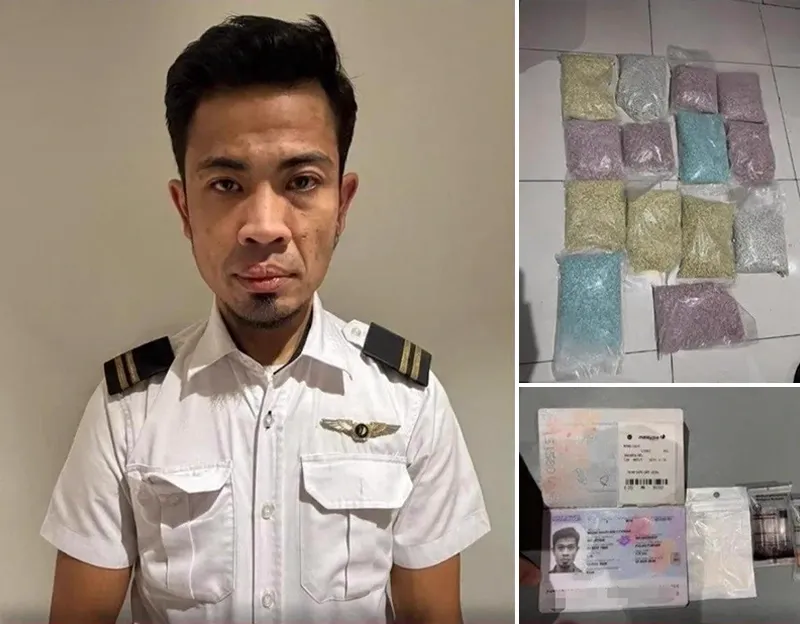
The alleged use of crew baggage privileges, the presence of a bottle believed to contain clean urine, and the allegation that the co-pilot operated a passenger flight while under the influence together make the incident highly unusual.
Officials have underscored that the dedicated crew lane is not a free pass and that risk-based monitoring continues regardless of uniform or flight status.
The rapid online dissemination of the customs video and supporting statements has ensured that the lesson reaches far beyond the airport itself.
Commercial aviation relies on trust, but it also relies on verification.
The Soekarno-Hatta case demonstrated that airport security systems continue to monitor even those granted operational privileges, and that a pilot's uniform does not exempt anyone from scrutiny.
For Indonesian authorities, the interception prevented a large quantity of narcotics from entering the country.
For the aviation industry, the incident serves as a reminder that public confidence depends not only on the professionalism of flight crews, but also on the systems designed to verify that trust whenever necessary.




















































































































































































































































































