Few games have the rare ability to endure through the relentless march of time. Only a handful manage to remain etched in the hearts and the minds of gamers across generations, transcending trends and technological shifts.
The Metal Gear franchise is one of those rare gems. Its name carries weight across decades, resonating with players who grew up alongside its stealth-action innovations and those discovering it for the first time. From its humble beginnings in 1987 with the original Metal Gear, the series has evolved, adapting to new technologies while retaining the signature blend of tactical espionage and cinematic storytelling that defined it.
Now, Konami has returned to one of its most revered chapters with Metal Gear Solid Δ: Snake Eater, a faithful remake of the 2004 classic, developed in collaboration with Virtuos and powered by Unreal Engine 5.
This remake promises to bring the dense jungles, intricate character models, and immersive environments of the original Metal Gear Solid 3: Snake Eater to life in ways that were unimaginable two decades ago. From the moment the first cinematic trailer dropped, nostalgia swept over fans like a warm wave, reminding both old and new players why Metal Gear earned its legendary status.

But behind the scene, Metal Gear Solid Δ: Snake Eater is more than an attempt to revive a legendary franchise and carter long-time fans.
The game is also a testament of a title that past the test of time, and a test towards hoping a future for it, powered by younger generations.
The journey began with tactical espionage, but it was Metal Gear Solid in 1998 that truly revolutionized the genre, blending stealth gameplay with cinematic storytelling in a way that captured imaginations worldwide.
Sequels like Metal Gear Solid 2: Sons of Liberty, Metal Gear Solid 3: Snake Eater, and Metal Gear Solid 4: Guns of the Patriots deepened the universe, exploring themes of identity, loyalty, and the human cost of war. Spin-offs, including Metal Gear Rising: Revengeance, further showcased the series’ capacity for innovation, carving out niches that delighted fans and critics alike.
Choosing Snake Eater for a remake was a deliberate move by Konami.
Unlike other entries, this game is an origin story, chronicling the transformation of CIA operative Naked Snake into the legendary Big Boss.
Its narrative, set during the Cold War, is steeped in intrigue, forcing Snake to confront loyalty, patriotism, and the painful cost of duty.
The mission to eliminate his mentor, The Boss, who is accused of defecting to the Soviet Union. The plot serves as the emotional core, culminating in the revelation that her betrayal was a ruse to preserve geopolitical balance.
It’s this mixture of personal and political drama that makes the story timeless, and Konami has taken care to preserve its integrity.

By staying true to the original, the creators have include the iconic gameplay stables, which include the legendary cardboard box, sneaking through tight ventilation shafts to get to various locations, or crouching to avoid the clumsy, shortsighted infantry patrolling each area. The seemingly endless ladder moment, and not also how Snake can eat any living things apart from humans.
The world is alive with tension: alarms blare when enemies are alerted, walls can be knocked to attract attention of enemies, to unexpected moments like in prison scenes, and more.
Everything adds its own narrative depth and challenge to the game.
Every element, from stealth takedowns, close-quarters combat (CQC) to carefully timed distractions, is layered with playful surprises and easter eggs, rewarding exploration and curiosity.
These quirks, alongside the rich tactical gameplay, give Metal Gear its unforgettable charm, inviting players to experiment, uncover hidden stories, and enjoy the thrill of outsmarting foes in ever inventive ways.

And lastly, the infamous paradox "game over" screens from Metal Gear Solid 3: Snake Eater, are also back.
During the mission, players play as Naked Snake in 1964, the man who will later become Big Boss. But here’s the catch: if Snake dies in the field, the timeline itself collapses, because without him, the entire future of the Metal Gear universe, which include his sons, like Solid Snake and Liquid Snake, FOXHOUND, Outer Heaven, even the Shadow Moses incident itself, will not exist.
So if Snake dies, or if Snake kills Ocelot or EVA, or when some critical story-related deaths happen, the game will end. But instead of the usual “Mission Failed”, the game cheekily flashes a message: “Time Paradox”.
It’s Kojima’s way of breaking the fourth wall, reminding players that Snake’s survival isn’t just about completing a mission, but also about protecting the very fabric of the series’ storyline.
The paradox gag also plays into Kojima’s love of meta-humor, poking fun at the idea of cause and effect in video games while still grounding it in the lore.

But in Metal Gear Solid Δ: Snake Eater, the creators managed to blend the classics with a host of modern enhancements, without sacrificing what made the original so compelling.
Enhanced visuals bring the jungles, mountains, and characters to life with unprecedented realism. Rain trickles across Snake’s poncho, uniforms grow grimy with mud and foliage, and scars tell silent stories of past battles. The control scheme has been modernized, offering a New Style perspective over the shoulder, while Legacy controls remain available for those who prefer the original feel.
Quality-of-life improvements, from quick-change camouflage menus to accessible inventory management, make the experience more fluid without undermining the strategic depth that defines Metal Gear.
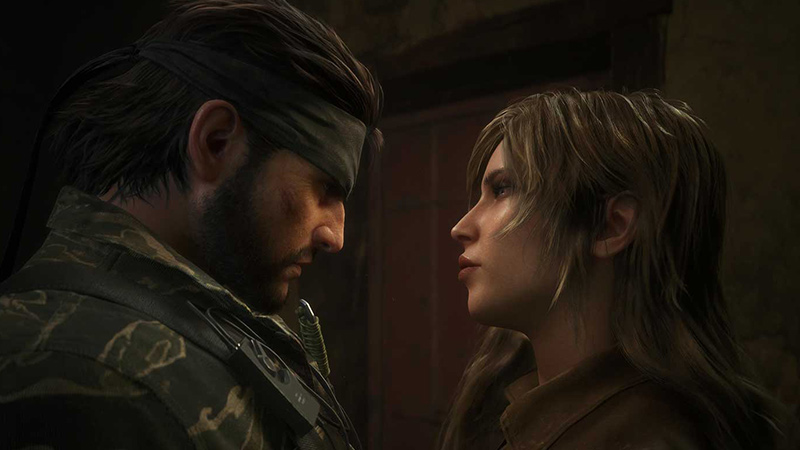
Boss encounters, though familiar, retain their tension and creativity, from the suspenseful duel with The End to the haunting, emotionally charged confrontation with The Sorrow.
The remake also honors the original’s cinematic flair.
Iconic moments, like climbing ladders to the stirring strains of the “Snake Eater” theme, remain intact, while updated cutscenes and visuals amplify their impact.

Supporting characters, like Major Zero, Para-Medic, Sigint, EVA, as well as antagonists like Colonel Volgin, Ocelot, and the Cobra Unit, have all returned, each imbued with enhanced detail and subtle refinements that make their presence feel more vivid than ever.
Konami has even preserved most of the easter eggs, secret mechanics, and playful interactions, allowing players to experiment and revisit the series’ quirky, over-the-top charm.
And one particularly noteworthy element is the return of David Hayter as the voice of Snake.

For many fans, his gravelly, iconic performance is inseparable from the character, and his involvement brings a sense of authenticity and continuity that enhances the nostalgic experience. Alongside Hayter, voice actors Lori Alan and Cynthia Harrell contribute to a soundtrack and dialogue that honor the original while taking advantage of modern recording technologies.
Metal Gear Solid Δ: Snake Eater isn’t just a nostalgic trip; it’s also a subtle reintroduction of the franchise to a new generation.
Konami’s developers, blending experienced veterans with younger talent, approached the remake with care, ensuring that the gameplay and story resonate with both longtime fans and newcomers unfamiliar with the series.
Kojima himself was heavily involved in his projects, like the Death Stranding franchise.
But Metal Gear Solid Δ: Snake Eater, unique in its own terms, serves as a training ground for the next generation of Metal Gear creators, hinting at the potential for new adventures in this storied universe, even if Kojima himself is no longer involved.






















































































































































































































































































