Employees at Microsoft were calling on their employers to cancel a deal with the U.S. military to provide augmented reality technology for war uses.
It was in November 2018 that Microsoft agreed on a $479 million contract to develop a platform that would involve soldiers using about 100,000 HoloLens headsets.
Developed using Kinect that was part of Microsoft Xbox video gaming platform, HoloLens' engineers believe that the technology can "help architects and engineers build buildings and cars, to help teach people how to perform surgery or play the piano, to push the boundaries of gaming, and to connect with the Mars Rover (RIP).”
However, under the terms of the contract with the U.S. military, the devices are meant to be used to "increase lethality by enhancing the ability to detect, decide and engage before the enemy," according to Bloomberg.
“While [Microsoft] has previously licensed tech to the U.S. military, it has never crossed the line into weapons development,” the letter from the employees states.
“With this contract, it does. The application of HoloLens within the IVAS system is designed to help people kill. It will be deployed on the battlefield, and works by turning warfare into a simulated ‘video game,’ further distancing soldiers from the grim stakes of war and the reality of bloodshed.”
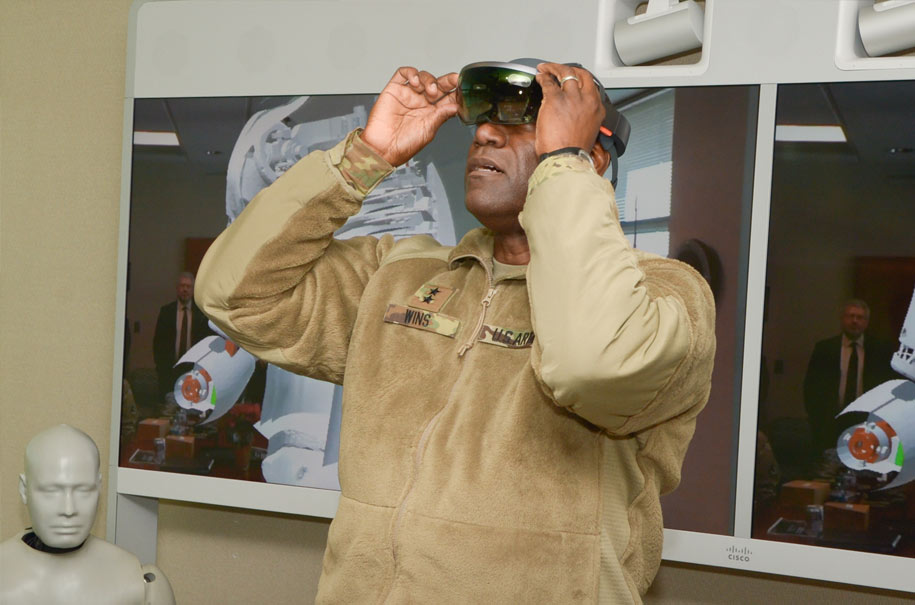
“We did not sign up to develop weapons, and we demand a say in how our work is used,” reads a petition that has been circulating internally inside the company.
The employee protest is the latest manifestation of a growing labor movement in the U.S. technology industry. Tech companies' employees from Microsoft, Google, Amazon and Salesforce have been speaking out about working conditions and about the uses of products their employers put to use.
In this HoloLens case, the people at Microsoft "do not want to become war profiteers."
The letter also calls on Microsoft to cease any projects related to "any and all weapons technologies", to create a public "acceptable use policy" codifying such a commitment, and to create an "independent, external ethics review board" to enforce compliance with such a policy.
Related: Google Project Maven In Helping Pentagon Create AI For Drones
The news follows previous petition that happened in June 2018.
At that time, more than 100 employees at Microsoft signed a petition protesting the company's contract with the U.S. Immigration and Customs Enforcement. This followed another one in October, where anonymous employees published an open letter, calling on Microsoft to not bid on a contract to build cloud services for the U.S. Defense Department.
At the time, Microsoft president Brad Smith defended the company’s decision to support the U.S. military.
In a blog post, he said that "We want the people of this country and especially the people who serve this country to know that we at Microsoft have their backs."
He also said that Microsoft would advocate for policies and laws to ensure that technology it created is used “responsibly and ethically”, and that the company would "support talent mobility" for employees who did not want to work on certain projects "for whatever reason."
Here, Smith said the he would allow them to work in other departments.
"We always appreciate feedback from employees and have many avenues for employee voices to be heard."
In 2016, Ukrainian company LimpidArmor have been testing military equipment that includes a helmet with Microsoft's HoloLens headset integrated into it.
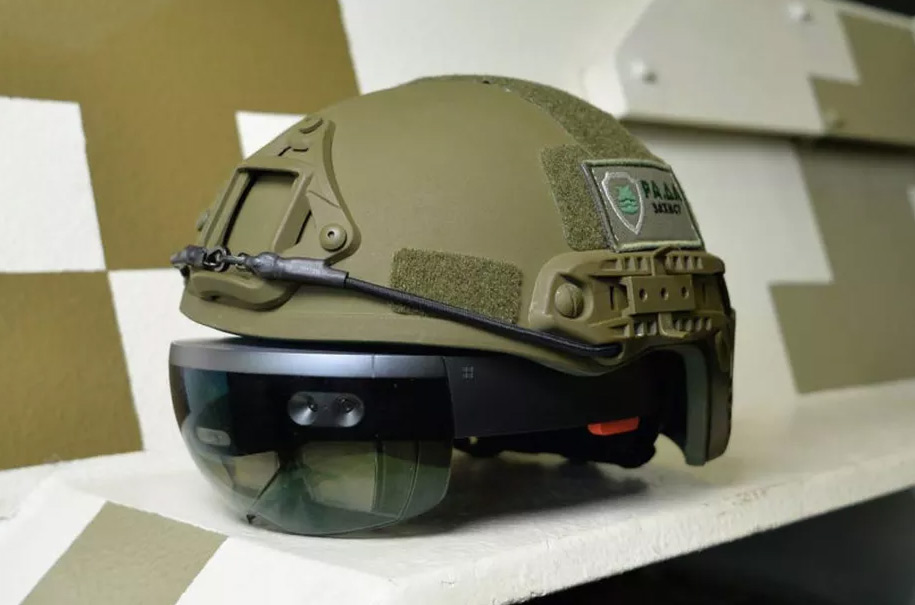
It was meant to be used by tank commanders, alongside a Circular Review System (CRS) of cameras located at the sides of armored vehicles.
Here, the HoloLens gathers feeds from the cameras outside to display them in the headset as a full 360-degree view. The system even includes automatic target tracking, and the ability to highlight enemy and allied soldiers and positions.
LimpidArmor demonstrated this headgear at the Arms and Security show in Kiev in October 2016, presented in front of the attendances that included Ukrainian military officials.
At that time, the system was only a concept, but highly anticipated..

























































































































































































































































































