The entertainment industry is worth billions of dollars and also glamorous, as it's always under the spotlight, towering itself from other industries with its limelight privilege.
The industry is extremely extravagant, and is exceptionally demanding.
And in South Korea, in the land where K-Drama and K-Pop were born, things can be unforgiving.
Lee Sun-kyun’s sudden death is a result of an industry that demands perfection.
Lee failed to deliver that expectation, and this resulted to his suicide.

Lee Sun-kyun, born in March 1975, was a South Korean actor, best known for his role in the Academy Award-winning dark-comedy thriller film Parasite in 2019.
The film became the first non-English language movie to win the best picture award, and Lee who won a Screen Actors Guild Award, as well as several other awards and accolades, including a nomination for an International Emmy Award, swiftly became an international sensation.
And this earned him both fame and fortune.
Lee was a person many people adore and looked up upon.
He was the star, and the face of South Korean entertainment industry.
Lee was living a life on a different level, which was practically unmatched by many of his peers.
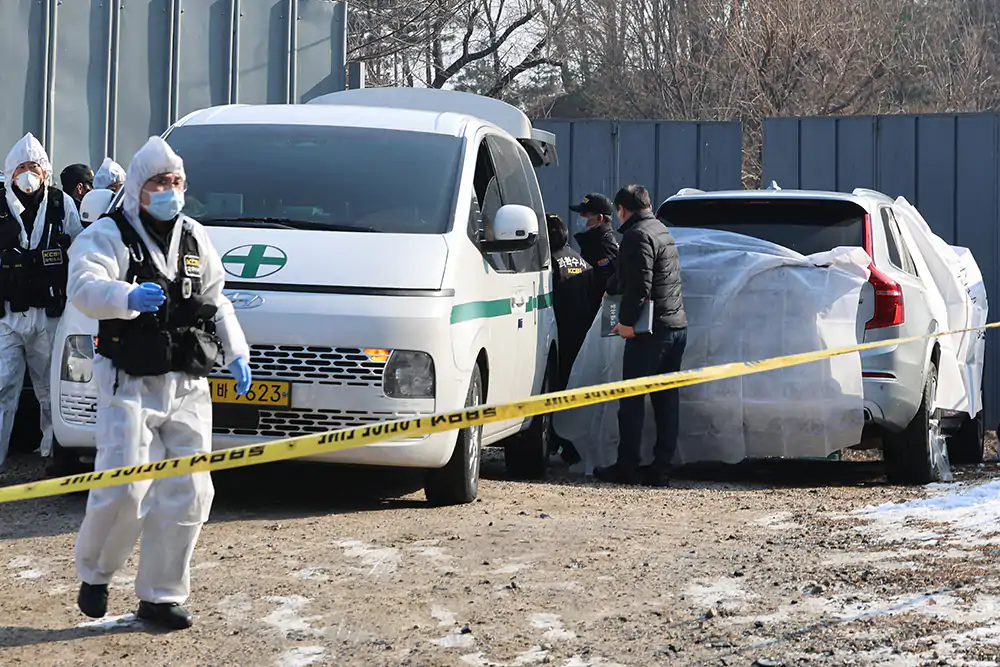
All that until one day, he was found dead in his car on Wednesday morning in what police said was a suspected suicide.
The 48-year-old father of two died from carbon monoxide poisoning.
On the passenger seat of the car he was in, which was parked in a park in Seoul, the police found a charcoal briquette, which is commonly used in suicide via carbon monoxide poisoning in South Korea.
Right before finding Lee's lifeless body, the police received a report from his wife that Lee had left home after "writing a memo akin to a suicide note".
The thing that led to his death, was the result of the expectations the industry had on him.
Lee was at the peak of his career, when suddenly, allegations of illegal drug use dragged his name down.
Lee had been through multiple rounds of lengthy questioning, after reports suggested that the actor was tricked into taking drugs by a bar hostess, who then tried to blackmail him.
Infringements of South Korea's tough drug laws can lead to six months in jail, or up to 14 years for repeat offenders and dealers.
For Lee, who was an influential figure, a scandal like this would effectively end his career.
From day one, he was under heavy scrutiny by both the police and the media.
Lee, who was previously praised, quickly had his world turned upside down.
Everything he worked so hard for, crumbled.
One of Lee’s lawyers said that the actor felt "aggrieved” on the way the police handled the drug investigation.
Making things worse for Lee, the case was based on accusation only, not on facts.
South Korea has some of the world’s strictest drug laws with lengthy prison sentences and an intense social stigma attached to drug use.
Lee’s drug tests had all come back negative, Lee was off the hook.
But not off the hook of the public.

His management company blamed him, his fans were angry at him, brands accused him of breaching contracts.
While the actions of some South Korean fans on social media don't define an entire group of people, and that South Korea is a country with a rich culture, history, and traditions, sometimes, netizens in the country are known for their cyberbullies.
No one can escape them, and Lee, which was at his most vulnerable state, became a prime target for these people.
After all, the media always has an eye on the juiciest topics to tell.
And the entertainment industry has always been one of the most interesting topics to cover.
And Lee's case was no doubt the highest in demand.
Lee was at his lowest point in life.
In South Korea, mental health crisis stretches across class divides and touches all parts of society.
In 2021, the suicide rate in South Korea was 26 out of every 100,000 people, according to the country’s Health and Welfare Ministry. South Korea also has the highest rate of youth suicide among the Organization for Economic Co-operation and Development (OECD) nations.
In comparison, Japan's OECD is 15.7 per 100,000 people while in the U.S. it is 14.1 per 100,000.
In September, hundreds of thousands of teachers across the country held mass protests after the suspected suicide of a teacher that was widely blamed on South Korea’s high-pressure education system and the burden it places on teachers.
Government data shows 100 public school teachers in South Korea - mostly elementary school teachers - took their own lives from January 2018 to June 2023.
South Korean politics has also seen high-profile cases.
In 2009, for example, former president Roh Moo-hyun took his own life amid an investigation into a bribery scandal that had tarnished his reputation.
And Lee's death here, came amidst multiple suspected suicides among South Korean celebrities, many of whom died while at the peak of their career, and were still relatively young.
Lee, just like all professionals in the entertainment industry, was forged to be able to express emotions more vividly, and smile and sad.
Celebrities are known for this trait because their job is being loved by the public.
They cannot help but be more sensitive to public views, and portray themselves at their best, at anytime and anywhere.
And making things worse, many celebrities cannot really expose their mental health issues due to fear of public shame. And particularly in South Korea, an average day for a megastar can be 16 hours or longer, filled with everything from practice, language class and camera training.
The internet has a huge role because not only it gathers fans into one common ground, but also because it allows people to indirectly impose stricter moral standards on actors and singers in Korea.

Each time, deaths caused by suicide reignite conversations about the mental well-being of South Korean celebrities and public figures, casting a spotlight on the pressures they face in the competitive and stressful Korean entertainment industry and the pitfalls for those deemed to have made transgressions.
In South Korea, scandals involving celebrities drinking or taking drugs, or even dating, can send waves throughout the industry, and that they can have huge effect to the country's management companies.
Many of these companies are publicly traded, and scandals involving celebrities under their umbrella can affect stock price in the Korean stock exchange.
Not only because of fans who expect their idols to be "perfect," because South Korea’s entertainment industry is a high-pressure environment with intense training regimens and expectations from power brokers alike.
While "normal" people committing illegal activities would be punished by law and that's it, celebrities have the burden, in which they will attract both criticism or shameful comments on the internet.
Following Lee's death, a woman was arrested following allegations she had blackmailed him.
Local media cited a statement by the agency that expressed sadness at the death, while urging restraint regarding false information, speculation, or malicious reports.
Lee's funeral was held at the funeral hall of Seoul National University Hospital, and the burial of Lee was carried out on the 29th in Yeonhwajang, Suwon.






















































































































































































































































































