Cloud storage is how data is saved inside a logical pool, where they're scattered in many locations, in multiple servers, in order to make them readily accessible.
And Google, the tech giant of the web, has what it calls Google Drive. Users can use the service to store files for safe keeping, and/or share them to different users, and/or across the web.
Due to Google Drive being ubiquitous, and readily available for all Google and Android users, one particular person managed to utilize this cloud storage service, to steal valuable trade secrets from the company where she worked.
Xiaorong ‘Shannon’ You, an engineer at The Coca-Cola Company, allegedly conducted espionage and data theft for her own benefits.
The theft is related to a particular technology, which is used as "coating for use inside cans […] that prevents the contents of the can from interacting with the metal surface of the can over time."
Because she had high-privilege access, Xiaorong managed to ran away with data worth more than a hundred million U.S. dollars.
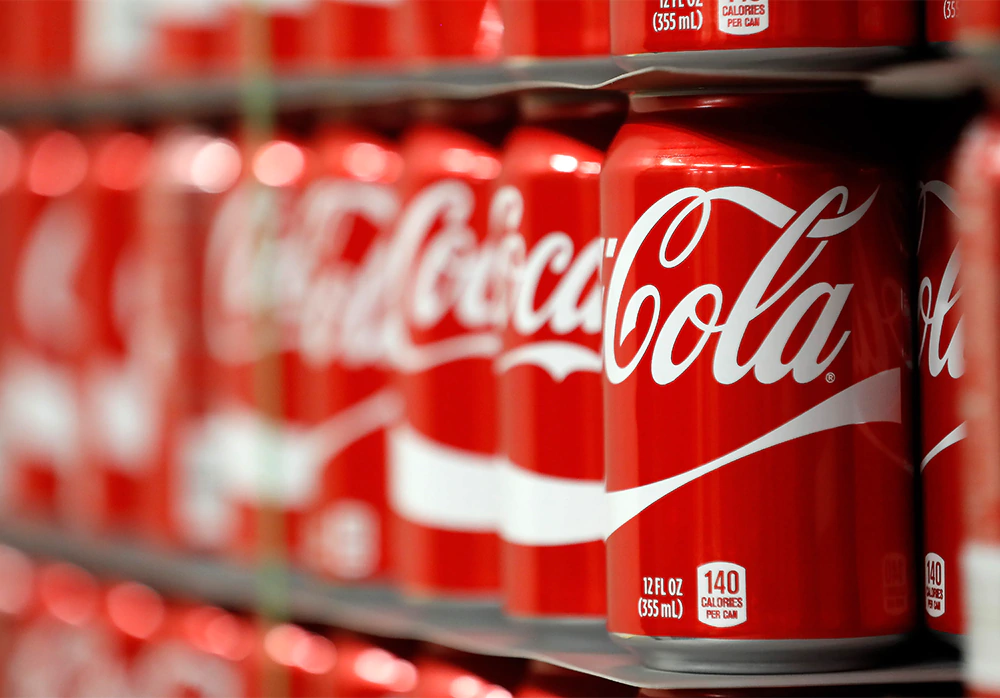
Xiaorong You, a Michigan woman, worked for The Coca-Cola Company for 5 years from 2012 to 2017 as a principal engineer for global research.
As a chemist, and a person at her position, she was one of the very few people at the company given access to trade secrets, that is said to have cost $119 million dollars to develop.
But stealing wasn't an easy task, even for someone with such a high-level access.
This is because the computers are protected and were tampered with. Also, because she couldn't copy anything out of the system, she had no way of using external storage of any sort.
So instead, she logged in into her Google Account on her work computer, and uploaded all the data she needed to her personal Google Drive. Then, she used her phone to take photos of sensitive files displayed on screen.
She also allegedly used her phone to take photos of laboratory equipment at The Coca-Cola Company, in order to assist her "clients" to develop their own lab.
Then, in 2017, Xiaorong applied for Chinese government-backed Thousand Talents Program, an award used to identify and recruit experts in science and innovation around the world. It's reported that the underlying motivation of the program is "to facilitate the legal and illicit transfer of U.S. technology, intellectual property and know-how” to China.
Winners can earn benefits that include a prestigious title, as well as financial gains, and Visa privileges.
According to the filing, "the indictment alleges that Xiaorong You, Liu, and a third co-conspirator formulated a plan in which You would exploit her employment with the two American employers to steal trade secrets and provide the information for the economic benefit of trade secrets the Chinese company that Liu managed, which would manufacture and profit from products developed using the stolen trade secrets."
In exchange for the highly-classified, and sensitive data, Liu would have the Chinese-backed program to reward Xiaorong You for her theft.
The rewards include the Thousand Talent, financial award, and an ownership share Weihai Jinhong Group, a new company that would "own the stolen trade secrets in China."
Chemist Sentenced for Stealing Trade Secrets, Economic Espionage and Wire Fraudhttps://t.co/ew6nbDEnFV
— Justice Department (@TheJusticeDept) May 9, 2022
The data she stole relates to Bisphenol-A- Free (BPA-free), a can lining type that can be found inside beverage cans used by The Coca-Cola Company and some major chemical and coating firms.
Whereas BPA is an industrial chemical has been used to make certain plastics and resins since the 1950s, used to help lessen flavor loss and prevent cans from corroding. BPA-free chemical has no Bisphenol-A.
BPA is found in polycarbonate plastics and epoxy resins, and best known for being used as a coating on metal products.
BPA-free linings are used because BPA poses health effects on the brain and prostate gland of fetuses, infants and children, and has a possible link between BPA and increased blood pressure, type 2 diabetes and cardiovascular disease.
Because of this, a number of companies have began developing BPA-free alternatives.
And the data Xiaorong stole, is related to this kind of technology.
The information she stole belonged to major chemical and coating companies such as AkzoNobel, BASF, Dow Chemical, PPG, Toyochem, Sherwin-Williams and Eastman Chemical, according to the U.S. Department of Justice. The agency also asserts that the Chinese government supplied millions in funding to Xiaorong and her Chinese corporate partner, Weihai Jinhong Group, to establish a new BPA-free coatings firm in China.
Besides stealing trade secrets, she is also charged with attempting to destroy evidence.
According to the filing, Xiaorong You was caught in possession of the sensitive files on June 22nd 2018.
Because of what she did, according to the U.S. Department of Justice in a statement, Xiaorong was convicted in April 2021 of stealing eight trade secrets owned by various entities, economic espionage, and wire fraud.
In an announcement by the U.S. Department of Justice, she received a 168 months in prison, or an equivalent of a 14-years sentence, on May 9th, 2023.
The defendant was also ordered to serve three years of supervised release and pay a $200,000 fine.
Xiaorong motivation is both financial and reputational.
"As the evidence at trial showed, the defendant stole valuable trade secrets and intended to use them to benefit not only a foreign company, but also the government of China," said Matthew G. Olsen, Assistant Attorney General of the Justice Department’s National Security Division.
According to reports, this kind of spying has long been noted by intelligence experts to be much more cost-effective for a country than to develop themselves what it is they’re stealing.
This kind of espionage is extremely common, and that it has long been a delicate game all nations play, and can span across all industries where money is involved.
Hundreds of billions of dollars worth of research and development data can be stolen from a country in any given year.
“When companies invest huge amounts of time and money to develop world-class technologies, only to have those technologies stolen, the results are devastating,” Assistant Attorney General Kenneth A. Polite Jr. of the Justice Department’s Criminal Division said.
"Here, the defendant intended not only to enrich herself and her China-based partners, but also the government of China. Crimes like the defendant’s threaten both victim companies and the economic security of the nation as a whole. This case should serve as a warning to those entrusted with valuable trade secrets: if you break the law, you will be punished."
"Stealing technology isn’t just a crime against a company," Acting Assistant Director Bradley S. Benavides of the FBI’s Counterintelligence Division said in a release.
"It’s a crime against American workers whose jobs and livelihoods are impacted."






















































































































































































































































































