The Polestar 2 is an all-electric 5-door fastback by automaker Polestar, the automotive brand jointly owned by Swedish company Volvo and Chinese company Geely.
The concept car was originally called Volvo Concept 40.2, designed by Thomas Ingenlath along side with Volvo Concept 40.1 which later became the basis of the XC40.
While the two concept cars were both unveiled in 2016, Volvo decided to shift more focus on small crossovers later that year.
With that in mind, Polestar took the 40.2's design as their basis for the Polestar 2's design.
The Polestar 2 was first unveiled on 27 February 2019 during an internet livestream, and made its first public appearance at the 2019 Geneva Motor Show, also in February.
What makes this car not like any other electric vehicle is because the car has its brain provided by Google.
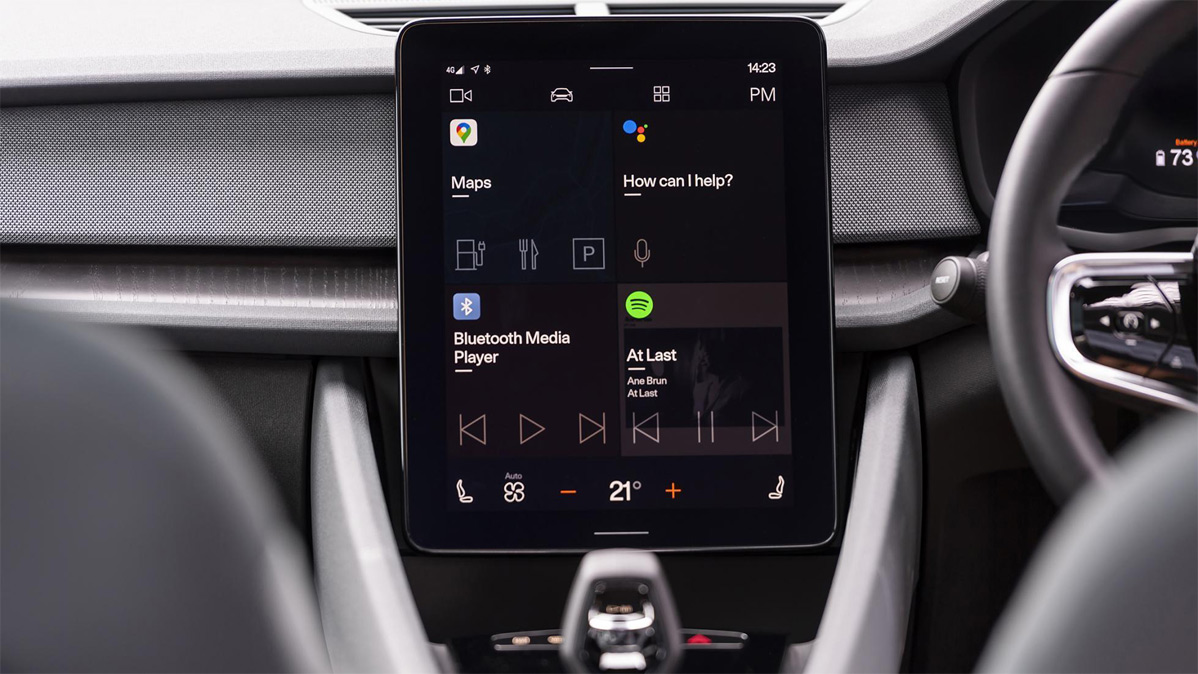
Aside the computers and software needed to run the electric motors, the Polestar 2 is powered by Android Automotive, an operating system that is a variation of Android operating system.
Introduced in March 2017, and developed jointly by Google and Intel, the operating system provides the codebase for vehicle manufacturers to develop their own custom version of the operating system.
Besides infotainment features, Android Automotive also powers features like messaging, navigation and music playback, as well as handling functions like controlling the car's heating and air conditioning, and adjusting mechanical things like steering, braking, and others.
In contrast to Android Auto, Android Automotive is a full operating system running on the vehicle's device, not relying on an external device to operate.
The whole system is also intuitive in a way that goes beyond Android Auto
And all that can be controlled via the center system and via voice, thanks to Google Assistant.
Polestar is not a household name, despite created back in 1996, following the foundation of Flash Engineering, a Swedish racing team competing in Swedish Touring Car Championship (STCC).
With the Polestar 2, Volvo is showing a glimpse into the future of the Swedish car company’s approach to battery-powered propulsion.
It is its way to compete in the electric vehicle market.
In the ever-connected world where devices can be connected to the internet, cars are becoming the Internet of Things that involve data streams going in and out of the car. And Volvo here, is allowing Google to be under its hood.
Following Android Automotive’s launch with the Polestar 2, Google released a support page for car owners. It specifically focuses on how to use Google Assistant, Maps, and the Play Store, starting with the setup process.
By offering Android Automotive to Polestar 2, Google has also optimized its Play Store, to make it accessible through the infotainment screen. The apps that can be downloaded to the Polestar 2 must follow the driver-distraction guidelines and other restrictions, with media app templates available.
And to make internet access possible, Polestar 2 purchase includes a three year internet connectivity.






















































































































































































































































































