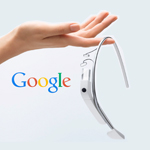
 Innovation is making a dream a reality. People behind each project may have unlimited imagination, but no power to control the market and trends. The same goes with Google with its Glass project. The company is stopping the sales of the device, "rebooting" it into something that is more preferable.
Google Glass, the internet-linked eyewear with head-mounted display, has been a ongoing marketing headache for Google. The device that is conceptually presented as a greater leap than smartphones or smartwatches. The device that made its debut in 2013, has cynicism peaked in early 2014 as it was 'hated' more than it was 'loved.
Forrester Research, the independent technology and market research company, concluded that 43 percent of consumers are interested in Glass, even more have worries about privacy problems caused by the eyewear.
Google Glass was banned it many places, and was also daunted by the sentiment that it was ushering in the age of the surveillance state due to fears users could covertly record video. These occurrences has prompted Google to publish a list of etiquette guide for users, with a list of "Top 10 Google Glass Myths".
To boost its audience, making them think that a 'computer on the face' is something of a cool factor, Google has tried partnering with designers including Diane von Fürstenberg and the largest eyewear company Luxottica that brands include: Oakley, Alain Mikli, Ray-Ban and Vogue-Eyewear.
Google may have the idea and brains to create such technology device, but It turns out that consumers were unprepared to wear computers on their faces. Or perhaps, people just weren't really quite sure how or why do they have to use it. Glass was hotly anticipated by some, but continuously mocked by others.
The device that put a persistent layer of technology between users and the real world, halts as the "Explorer" program that let people interested in dabbling with Google Glass buy the eyewear for $1,500 a piece, stops.
"Glass was in its infancy, and you took those very first steps and taught us how to walk," said the team about its Explorer clients in a Google+ post. "Well, we still have some work to do, but now we're ready to put on our big kid shoes and learn how to run."
The Explorer program that received many criticisms, expanded to the broader public in April. The the hopes for a big sale wasn't happening. Google Glass was not well accepted and its sales were notably weak.
As an eyewear that is put near the eyes of the user, it is an invasive device. Since others can't control what the others' eyes see, by seeing someone using Google Glass, people think that the person using it is a surveillance camera with unpredictable movement that can connected to the internet to broadcast everything it sees.
As a tech company, Google priority is its users. The company thinks more of its users rather than thinking the outcome of a technology when it becomes more social. There was never a time in history which an extreme technology innovation became immediately mainstream. It seems like Google tried to skip a step.
Virtual reality and augmented reality aren't new, but they still need time to achieving the wanted ubiquity.
For further development and to reboot, Google Glass is moving out from Google X labs to be on their own.
"As we look to the road ahead, we realize that we've outgrown the lab and so we're officially graduating from Google X to be our own team," said a Google Glass post. "We're thrilled to be moving even more from concept to reality."
Instead of being part of the Google X lab working on innovations such as self-driving cars, the Google Glass team will become a separate unit answering to Tony Fadell, co-founder of Nest.
Further reading: Smarter Wearable Computers as Fashions
The Struggling Giant
Google is big, and it moves quickly to implement technology in more places to aid people in more things than imaginable. The company that has most of its power on the internet as a search engine, is struggling in more than a few places as the company tried to leap forward.
Google, just like some others technology giant, are keen for innovations. But to leap forward, one must have a strong ground for the feet to move. Google understands this more than anything, but the company is having a hard time where to have its feet planted.
Google's stock has fall several points in 2014, despite the company's performance and sales are improving. Because Google's employees are often compensated as much or more in stock as they are in cash, some brilliant talents working for the company are expecting to flee unless the company is able to get its stock growing again.
In 2014, Google have had improvements in many places. Not to mention the growing power of Android devices in the market. But the pace of innovation has been a frustration. CEO Larry Page realized this and took a big step back from day-to-day operations, turning over the control to Sundar Pichai.
Google Search is performing well. In fact, there are many improvements that were very much pleased. But online advertisements, the company's core business is looking shakier. One of the problem was the competition with Amazon. People are searching for products straight to Amazon, rather than using Google.
The only time Search makes money is when people use it to search for products they would like to buy on the internet, and Search shows ads for those products. Increasingly, however, people are going straight to Amazon to search for products. Desktop search queries on Amazon increased 47 percent between September 2013 and September 2014, according to ComScore.
Google may have the power of over internet search traffic, but the company is yet to develop a strong ground in mobile advertising. People are using more of their mobile devices to search than ever before, and Google's weakness in the medium is making it struggle to compete with the likes of Facebook.
In last quarter of 2014, Google's advertising business grew at its slowest rate in six years.
The competition against Facebook doesn't stop there. The social giant is also developing its own search engine. Although the company wasn't aiming to compete directly against Google, the traffic Facebook has can drive more searches away from Google Search. Furthermore, Facebook has also decided to compete with Google's YouTube for video-advertising dollars by hosting user's video on its own servers to have more control of them.
Additional pains come from Google being knocked around overseas. The company just pulled its engineers out of Russia, shut down its news aggregator in Spain, the European Union wanting to 'break up' the company, and several more.

















































































































































































































































































