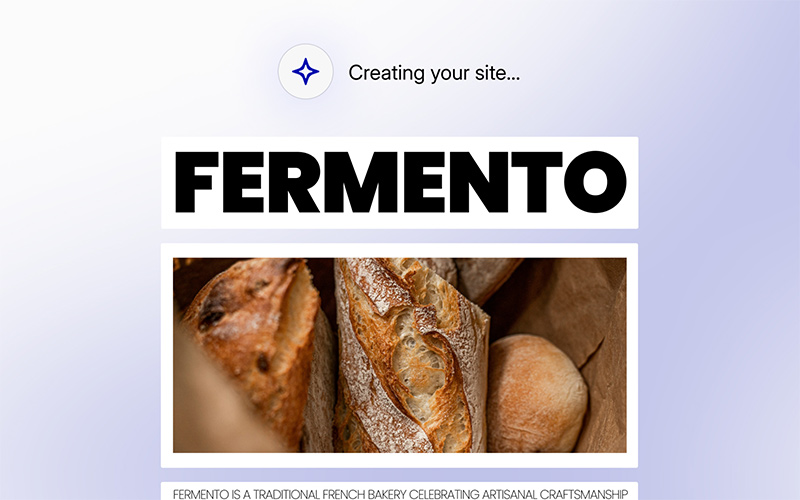
The process of creating websites has evolved for the years and decades.
Once a task reserved for coding experts and professional designers, building a website used to mean long hours spent crafting HTML by hand, fiddling with tables. After CSS came into play, and JavaScript, website design gets more complex, but websites become a lot powerful, and also engaging.
Later came the rise of content management systems (CMSs) like WordPress, Joomla, and Drupal, making it easier — but still requiring a fair share of technical finesse and time.
Fast forward to today, and the landscape has shifted dramatically.
Drag-and-drop builders, pre-designed templates, and one-click hosting solutions have opened the doors for anyone with a dream and a little patience. Yet even with these advances, truly setting up a website — one that looks polished and feels personal — can still consume far more hours than many busy entrepreneurs, freelancers, and creatives can spare.
That’s where AI steps onto the stage.
And WordPress has a lot to say, and offer.
Just dropped: The new, free AI website builder on https://t.co/eRvNKWaolr!
Tell AI what you need + get a fully built website in minutes:
No coding. No drag-and-drop. No stress.
AI handles the layout, images, and text.
You can tweak anything—just ask AI! pic.twitter.com/oU8RVJn85c— WordPress.com (@wordpressdotcom) April 9, 2025
As one of the most popular CMSs out there, as of 2025, WordPress powers approximately 43.5% of all websites on the internet, translating to around 478 million sites.
Among websites utilizing a CMS, WordPress holds a dominant 62.5% market share, significantly outpacing competitors like Shopify, Wix, and Squarespace, thanks to its flexibility, scalability, and robust community support, which makes ita preferred choice for businesses, bloggers, and developers worldwide.
While WordPress has long given battle-hardened and novice web developers an easy way to create websites, they still have to undergo a long process of creation.
With AI, these people can have the heavy tasks done and accomplished by automation.
Rather than starting from a blank page or a maze of templates, they can now simply describe what they want — a portfolio, a blog, a personal brand site — and watch as the AI spins a rough but promising first draft. It’s a major step toward removing the barriers between an idea and its online reality, offering speed without demanding deep technical know-how.
WordPress AI Website Builder is designed to help people create websites in just minutes, as oppose to hours.
In the announcement, WordPress said that the tool can be useful for entrepreneurs and small business owners who want an online presence but do not want to develop it from scratch; freelancers and creators who need an online portfolio that looks good; bloggers and side hustlers who want to share their ideas on the web; and developers who would like to present ideas to clients without much hassle, the tool is available for free.
But there are some weaknesses in this AI-powered feature.
Try it today! https://t.co/91uGseEwoj
— WordPress.com (@wordpressdotcom) April 9, 2025
First of, it only allows a relatively basic website building.
WordPress cautions that the tool is not quite ready to craft e-commerce sites or sites with complicated integrations, though that capability seems to be coming. For now, the Website Builder is geared toward the following people:
While WordPress is offering the Website Builder for free; however, there is always a price to pay. With the free trial you get 30 AI prompts in total to create, expand, and revise your site. Users who pay for a WordPress hosting plan is privileged to get an unlimited supply of prompts.
While users can use the AI-powered website builder to build custom websites as they wish, they are still required to pay for a WordPress hosting plan to actually launch and host it for the web.






















































































































































































































































































