Data connections run through cables and wires, as well as wirelessly, only when travelling through land. When data needs to travel across the sea, it needs to go underwater through undersea cables.
According to a report from the CNN back in 2019, there were around 380 underwater cables in operation around the world, spanning a length of over 1.2 million kilometers. These cables are "the invisible force driving the modern internet, with many in recent years being funded by internet giants such as Facebook, Google, Microsoft and Amazon."
Those companies are the powerhouses of tech from the West.
From the East, is China. And the Chinese government is said to support a private investment in underwater cable projects in the Pacific Ocean, in order to spy on other countries and steal data from them.
According to Joanne Ou, a spokesperson from Taiwan's Foreign Ministry, China was planning to "monopolize" communication networks in the Pacific to steal valuable data from its rivals.
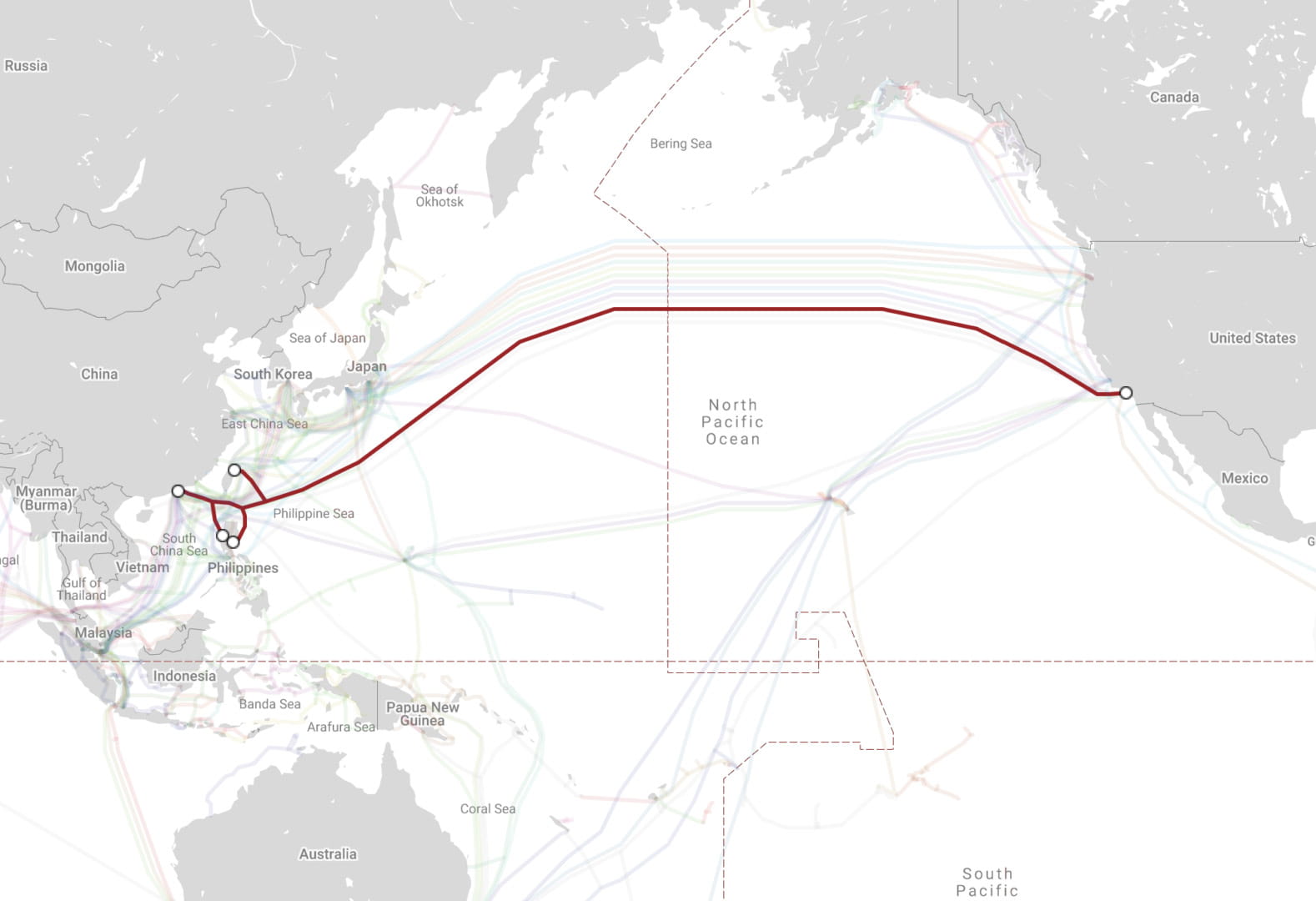
The reports come months after Google and Facebook withdrew their plans to connect Los Angeles and Hong Kong with a 12,000 kilometer-long internet broadband cable to boost internet speed and capacity, following a U.S. Department of Justice committee who formally recommended that the project should canceled due to national security.
This is the first time that an undersea cable project was rejected because of U.S. national security concerns, amid the tension between the U.S. and China.
The news also came days after Reuters investigation reported that U.S. government officials had warned Pacific island nations against granting underwater cable contracts projects to Chinese state-backed companies.
Reuters' report concerned about possible Chinese involvement in the Kiribati Connectivity Project (KCP), which was signed back in 2017 to improve communications to the island nations of Nauru, Federated States of Micronesia (FSM), and Kiribati.
As part of the project, the cables are said to connect to a network called HNATRU-1, which serves Guam, a U.S. Pacific territory that has significant strategic value given its proximity to China, North Korea, and the rest of east Asia, and a significant American military presence.
The $72.6 million project is said to be backed by the World Bank and the Asian Development Bank, with bidders that included Japan's NEC, Finland's Nokia, French-headquartered Alcatel Submarine Networks (ASN), and Huawei Marine.
Reuters reported that Huawei Marine and others won the project because their bid 20% cheaper than rivals.
"China's foreign aid strategy has always been to expand its strategic economic influence, and has never been to promote the welfare of the peoples of recipient countries," Ou told Newsweek in response to the Reuters report.
"Chinese companies violate international market norms by competing for international development bids using cut-rate prices and government subsidies. These are not normal or legitimate trade and investment practices, but an extension of China's wolf warrior diplomatic strategy."
"The Chinese government claims to be concerned about the information and communication infrastructure of Pacific nations, and then invests in the construction of undersea cables in the Pacific."
"Huawei—including its current and former subsidiaries such as Huawei Marine—presents economic and national security risks, and we urge all countries to carefully assess the long-term impact of allowing untrusted companies such as Huawei Marine to build, and have regular maintenance access to, strategic infrastructure—infrastructure that carries intellectual property and sensitive information," added a State Department spokesperson to Newsweek.
Newsweek that has in turn contacted the Chinese government to request comment on its Reuters report and the U.S.-Taiwanese assertions, received a respond from Chinese foreign ministry spokesperson Wang Wenbin.
Reporting to Reuters, and in response to the accusation, the spokesperson said that the U.S. and its allies are trying to smear Chinese companies.
Undersea cables are the essential parts of connection and data transaction across countries and continents. But despite their importance, little is being done to guard and protect those deep-sea cables.




















































































































































































































































































