The intersection of Hollywood and AI has long been defined by a tense push and pull between creative panic and technological curiosity.
For months, the entertainment industry has watched in a mix of awe and skepticism as prominent figures cross the aisle from the silver screen into actual software development.
Earlier this year, actress Milla Jovovich made waves by co-creating an open-source AI memory system called MemPalace to address the persistent problem of context loss in machine learning tools.
While her project ignited immense hype and immediate community backlash over its benchmark claims, it highlighted a growing trend of cinematic storytellers refusing to remain passive observers in the tech revolution.
Now, Ben Affleck has completely reframed the conversation by pulling back the curtain on his own deeply technical background.
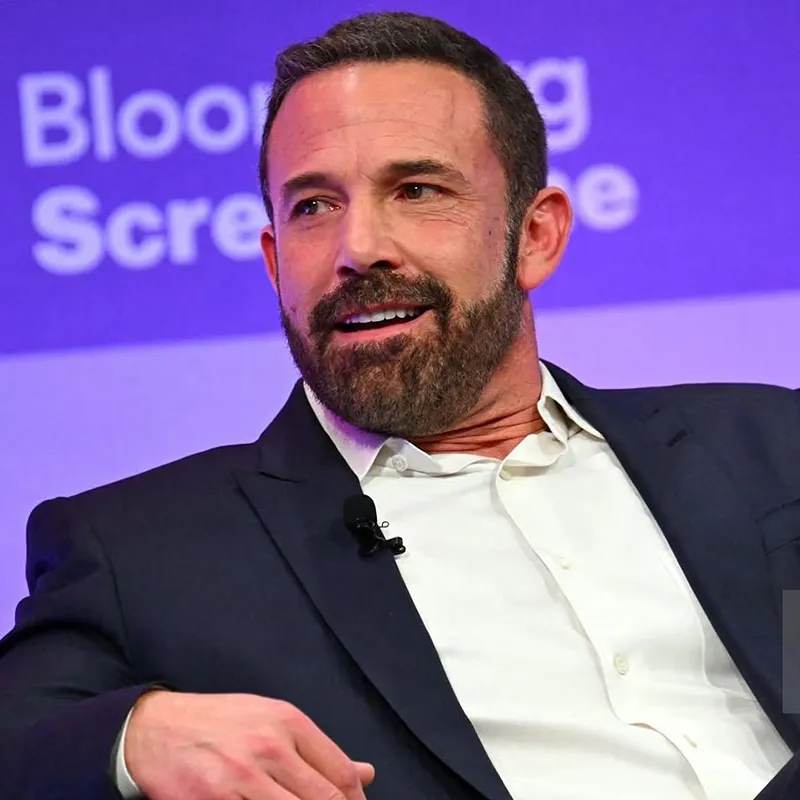
In a series of recent high-profile interviews, the Oscar-winning filmmaker stunned both fans and the developer community by confirming that he can write basic Python code and fundamentally understands the inner workings of neural networks.
The revelation went viral on the heels of the massive news that Netflix acquired his AI filmmaking startup, InterPositive, for a staggering $587 million in cash.
Rather than approaching the technology as an abstract concept or an existential threat to his livelihood, Affleck treated it as a mathematical reality he felt compelled to master.
This fluency did not happen overnight.
In fact, it can be traced back to Affleck's early fascination with digital evolution during the 1990s.
As the film industry shifted away from traditional analog tape toward computer-based editing suites, he realized that moving images on a screen were essentially just massive arrays of numbers known as tensors.
To comprehend how machine learning could manipulate visual effects workflows, he quietly taught himself Python, and worked with GPUs. And on top of that, he allegedly used his celebrity status to get private, inside looks at Google and OpenAI's video models.
However, his initial reaction to modern generative tools was pure panic.
Reflecting on the first time he saw what the technology could do, Affleck admitted, "I kind of had a heart attack because I was like, holy shit. I called Matt, and I was like, 'Dude, we have to do, like, as many movies in the next few years… we're finished.'"
Instead of just renting standard, commercial base models, Affleck and his team at InterPositive took open-source video weights and spent months training them on custom footage captured on controlled soundstages.
This customized data explicitly taught their neural network how specific lens choices, camera movements, and lighting setups translate mathematically.
The choice to shoot original material came from an ethical standpoint regarding existing models.
Affleck noted that "most of the models being used had trained on my peers, people I know's work, and I was uncomfortable with that, and I thought, that's not really a viable business."
He realized a gap existed because he "was dealing with researchers and scientists who were so incredibly smart in this one way had so little information about video and how it's created, or how it's defined and how it's captured and how it needs to be organized."
To fix this, his startup aimed "to do something ethical, to do something that did not displace people, but that allowed people in this economy and this world to benefit from this technology."
Speaking at the Bloomberg Screentime conference, Affleck explained that he used these fine-tuned AI tools extensively during post-production on his new thriller, Animals.
However, he intentionally keeps the exact applications a secret to protect the magic of filmmaking and avoid audience backlash.
He noted that "it's sort of like if you went to a magic show and the magician walked out and said 'Just before I start I want you to know there's another bunny under here this guy's a plant.' You know it sort of ruins it right."
Addressing internet cynicism that Netflix bought his startup as PR cover for future labor cuts, Affleck defended the streaming giant, stating, "they’re not really in a position to just sort of go ahead and do despicable things and alienate artists because they understand that they need to be in business with people."
Ultimately, he views AI as a highly sophisticated post-production asset rather than a substitute for human intuition.
He flatly rejects the idea of automated cinema, stating, "I don’t believe that there will ever be just sort of type it in and make a movie that people want to see."
As he confidently told the audience, "I don't worry about Skynet. And I don't think that it's going to take over this business in any meaningful way. I feel this is one of the least likely domains to be intermediated by AI."
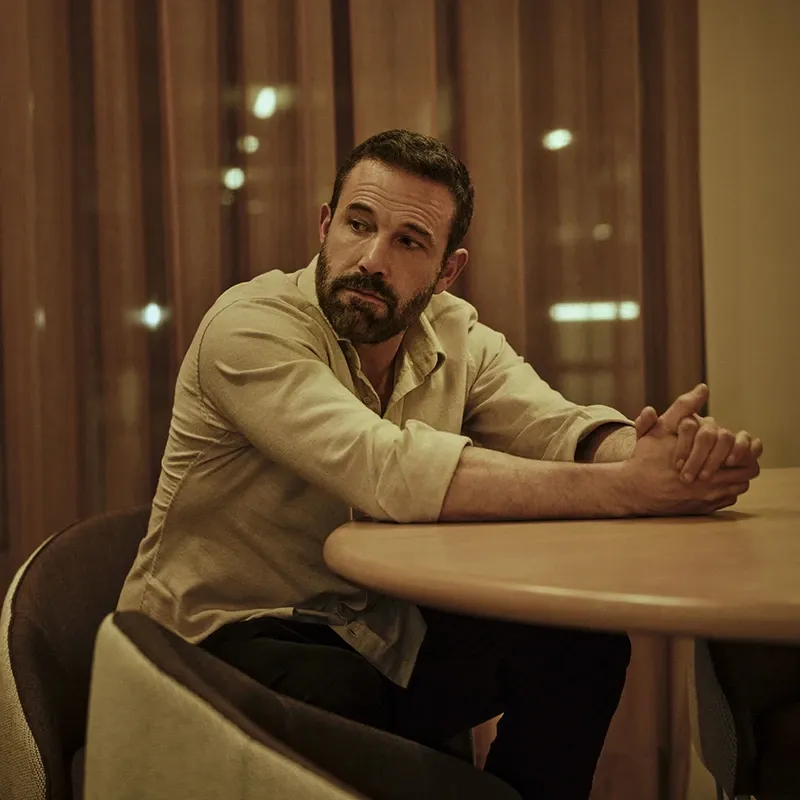
Instead, he suggested the technology "may end up being bounded by the constraints of physics and energy before you reach a place where it could actually do that."
For filmmakers, the key is directly confronting the shift rather than ignoring it.
"Once they sit with it and have a sense of control and a sense of understanding what’s happening… it’s like another form of computing that does tools and is a technological advancement," Affleck concluded, "I think it’s going to be additive. You can’t just bury your head in the sand… it needs to be incorporated."
In other words, Affleck considers filmmaking one of the absolute least likely domains to be disintermediated by AI, firmly believing that while an algorithm can mimic complex structural patterns, it will never possess the taste or soul required to tell a truly meaningful human story.
Rather than fearing the inevitable digital transition, he prefers to demystify the tech, putting it to practical use on set while turning it into highly profitable enterprise.






















































































































































































































































































