In mid-October 2026, France experienced some of its biggest protests in years.
People were angry about the rising cost of living, poor public services, and problems in schools.
What started as a student protest in the Paris suburbs early in the month quickly grew.
High school and university students taking to the streets over underfunded classrooms, teacher shortages, and educational inequalities were soon joined by teachers, public sector unions, and former Yellow Vest movement activists, expanding the rallies nationwide.
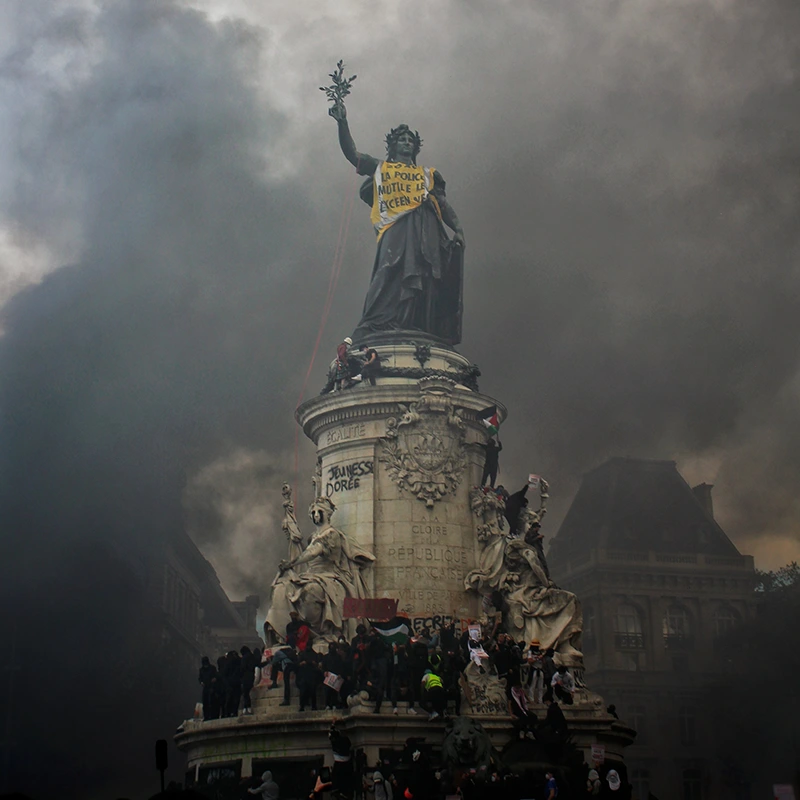
On Saturday, October 17, government officials estimated that roughly 550,000 people marched in over 100 cities, while protest organizers put the total turnout closer to 800,000. In Paris alone, around 110,000 people took to the streets.
While the majority of demonstrators marched peacefully to demand lower inflation, fair wages, and better public education funding, smaller splinter groups of masked individuals quickly turned several rallies chaotic.
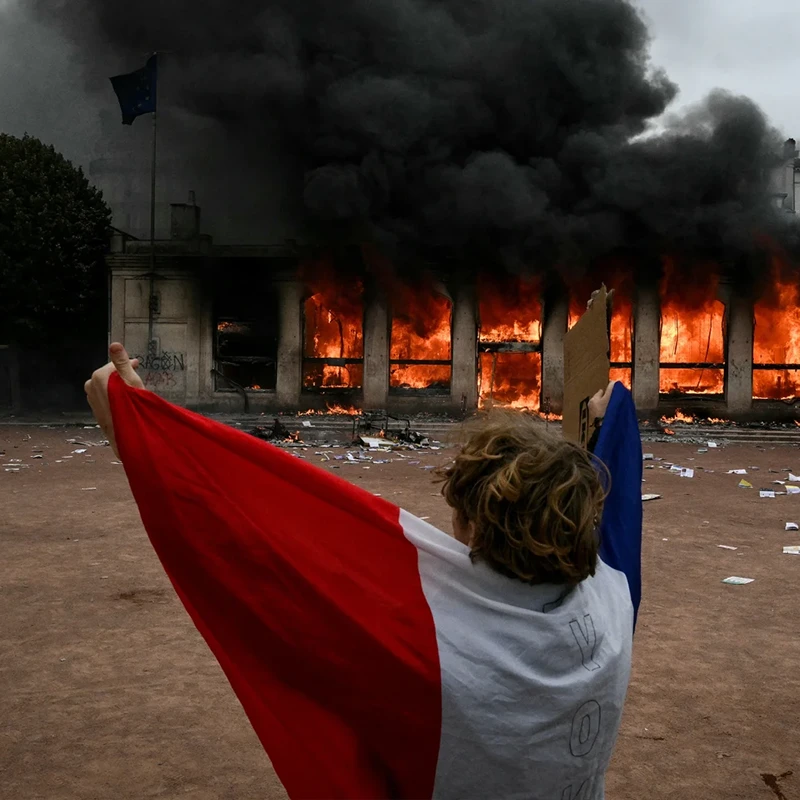
Radical groups and opportunistic rioters set fires to trash bins and vehicles, looted retail stores, damaged public infrastructure, and threw projectiles at law enforcement.
French law enforcement responded with heavy tear gas and water cannons, arresting more than 2,000 people nationwide.
Over 600 police officers sustained injuries during the clashes, and one protester in Paris tragically died after suffering a cardiac arrest amid the commotion.
In Limoges, protesters set fire to the historic city hall, damaging a building that was over 100 years old. People also burned a tourist center in Lyon and damaged shops in Marseille, Lille, and Bordeaux.
French leaders blamed the worst violence on radical groups and criminals. President Emmanuel Macron spoke to the country, promising that people who destroyed property would be punished.
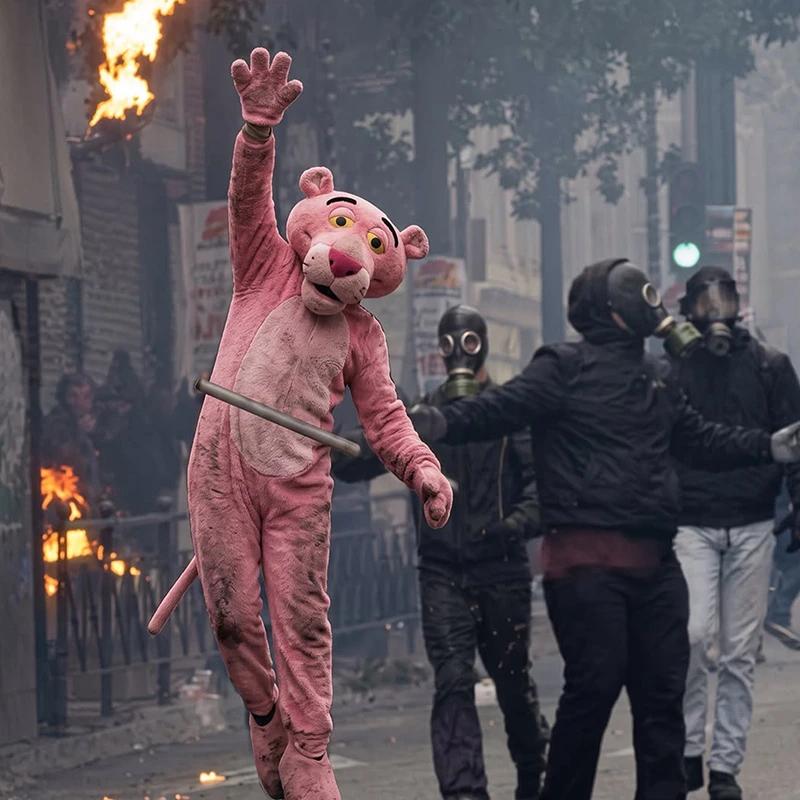
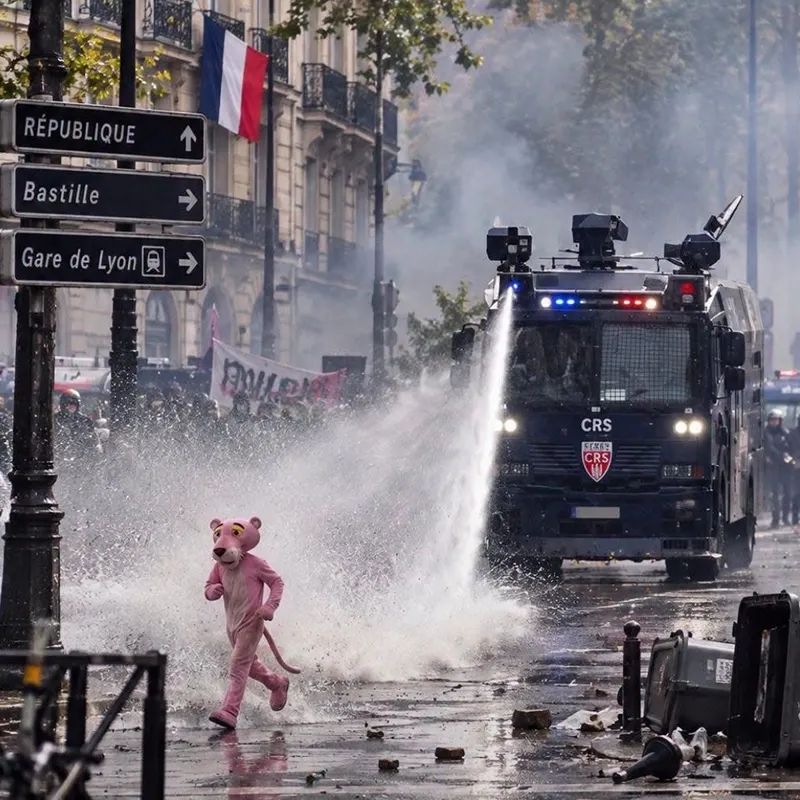
During the chaos, a fake image went viral on the internet.
It showed a person wearing a full Pink Panther costume standing in front of water cannons and being held by riot police.
One popular photo showed two police officers in full riot gear holding the costumed figure down. The image received thousands of likes and views within hours, with many people calling the scene funny or amazing.
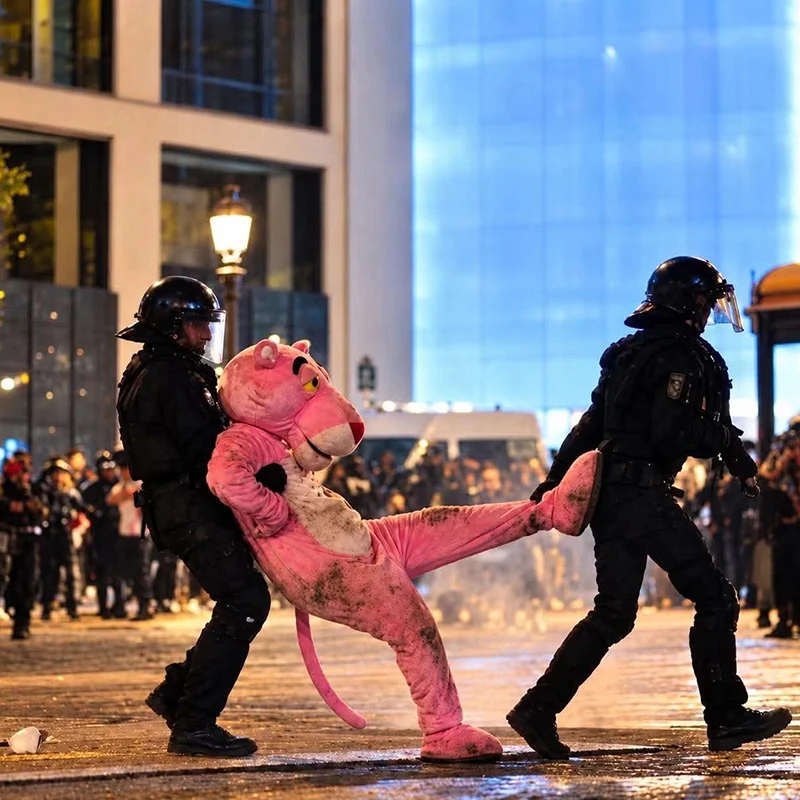
The photo stood out because of who the Pink Panther is.
Created in 1963 by animators Friz Freleng and David DePatie, the Pink Panther is a famous cartoon character known for being calm, cool, and quiet. He never speaks and prefers to live a simple, peaceful life.
He likes to relax, take walks, and play harmless pranks.
He is a good character who does not like violence, war, or fighting.
Seeing such a calm, cartoon character in the middle of a dangerous riot made the photo seem interesting and unusual.
However, fact-checkers at Newtral and SIC Notícias examined versions of the Pink Panther scenes using AI detection tools, including SynthID and OpenAI's own detector.
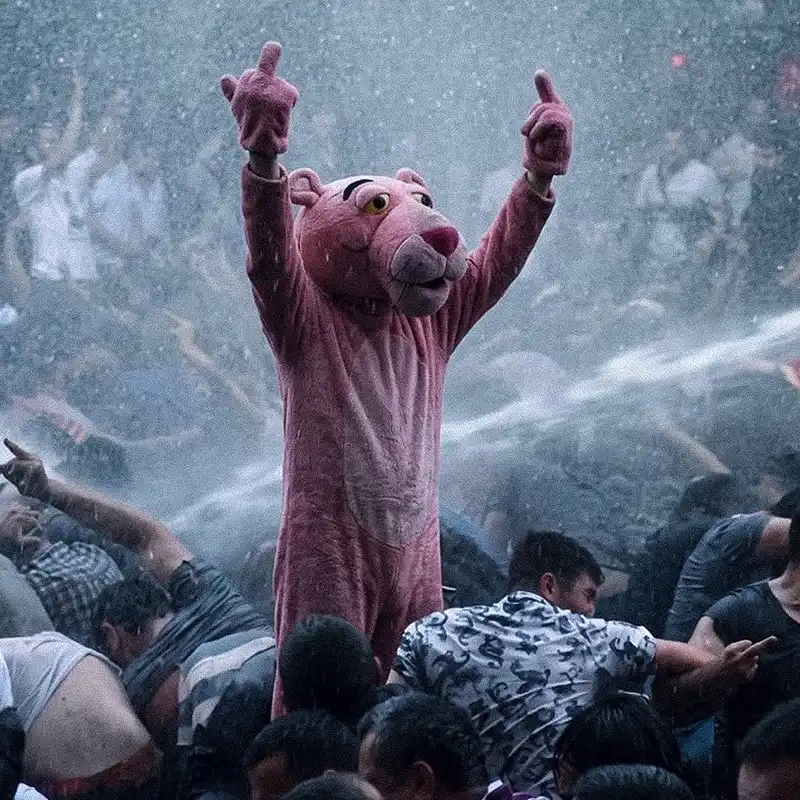
The tools identified the images as generated or edited with AI, and visual analysis revealed supporting anomalies: garbled or illegible text on police insignia, unnatural water effects that turned into foam rather than flowing liquid, missing or blank license plates, and distorted street signs.
Some versions appear to have been created by taking a well-known 2015 photograph from the Electric Yerevan protests in Armenia, captured by Vahram Baghdasaryan and showing a real protester standing under a water cannon, and replacing the individual with the Pink Panther while changing the setting to Paris.
No major news organizations or photographers covering the French demonstrations reported seeing any such costumed figure, and reverse image searches turned up no earlier credible sources for the specific scenes.
While the Pink Panther images were synthetic, they spread rapidly in part because real theatrical elements did appear at the protests.
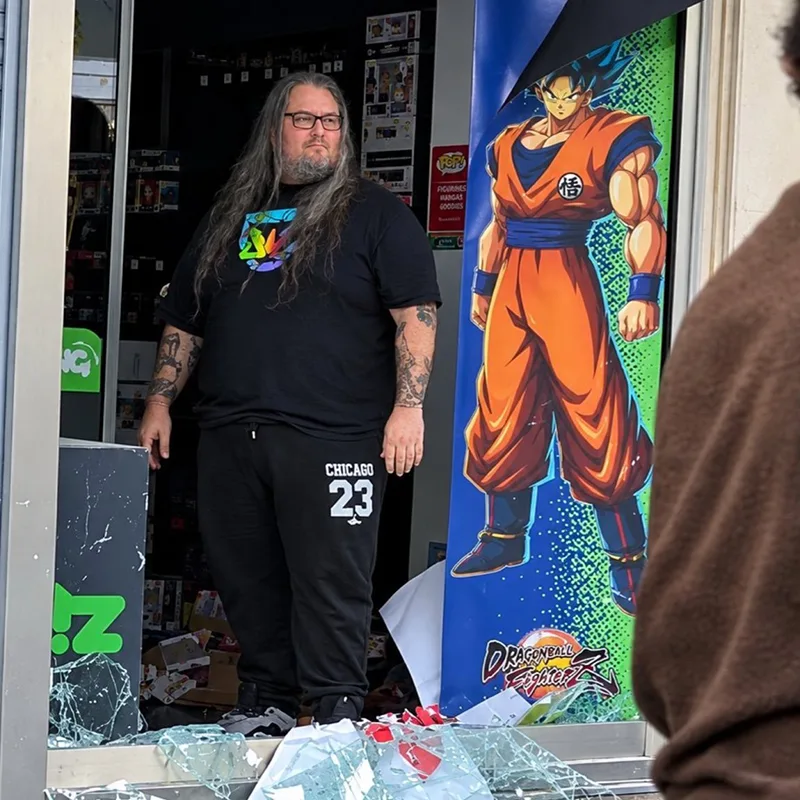
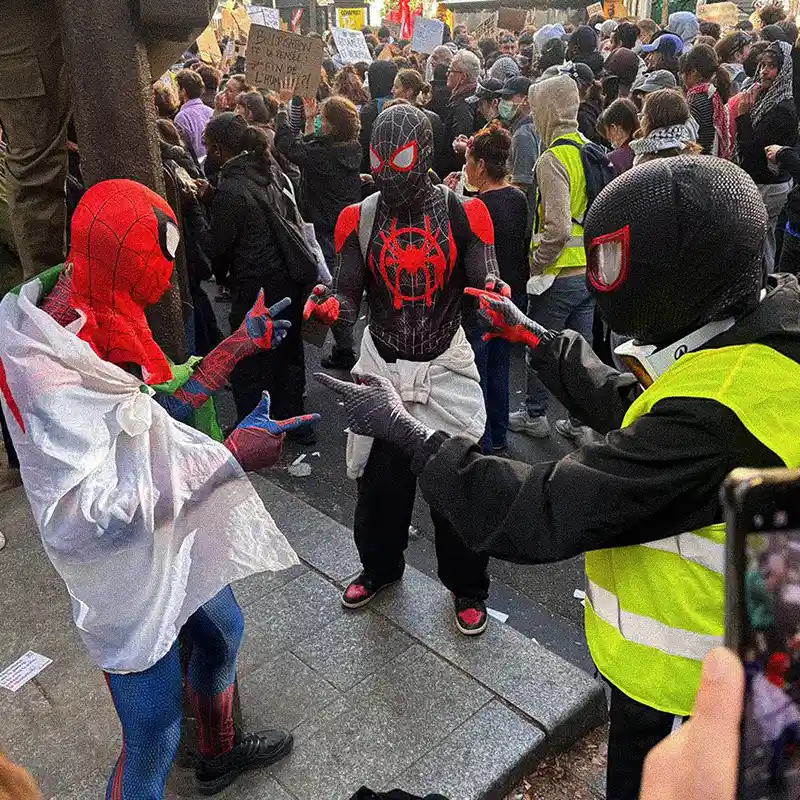
Students and other participants wore anime-related outfits, inflatable costumes, and other eye-catching attire that reflected a Gen Z style of visual protest.
That context made the AI creations feel plausible to many viewers.
The result was a widely shared visual that became one of the most recognized images associated with the unrest online, even though it did not depict an actual moment from the streets.
The protests themselves highlighted deep frustrations over inequality, education, and the cost of living, while the viral AI images illustrated how quickly synthetic content can attach itself to real events and shape public perception of them.
While the Pink Panther images were synthetic, they spread rapidly in part because real theatrical elements did appear at the protests.
Students and other participants brought internet culture and pop iconography directly into the streets.
Confirmed costumes protesters used, include anime-related outfits, including the iconic Straw Hat from One Piece alongside cosplay of characters Power Rangers, as well as from Dragon Ball and Jujutsu Kaisen.
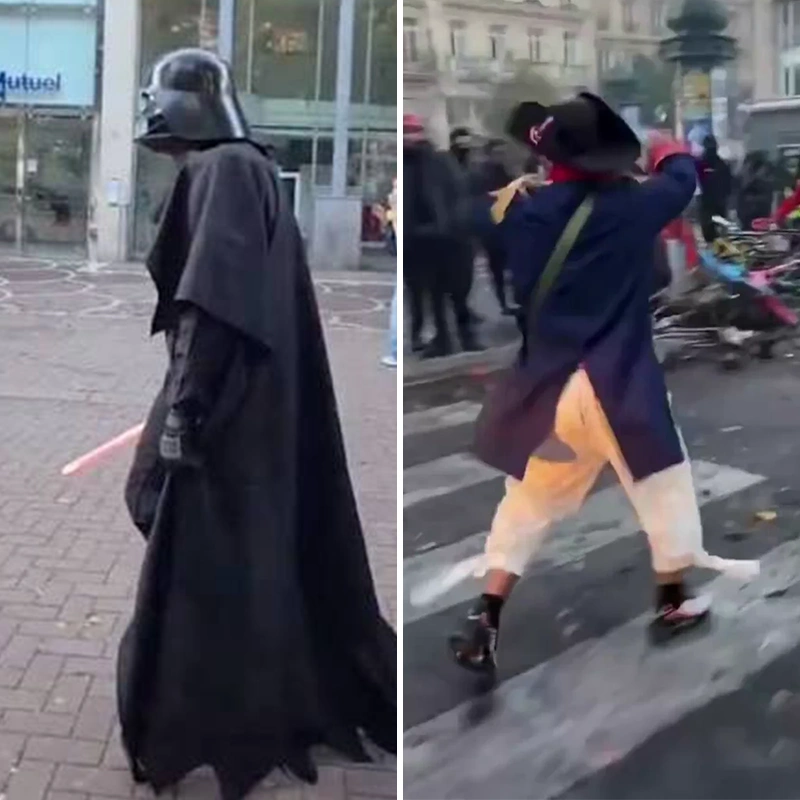
Clash Royale goblins were present. Others wore full inflatable suits, like a giant two-meter frog, or put on masks of famous pop culture characters such as Batman, Captain America, Deadpool, Spider-Man, Darth Vader, Chucky, and Jigsaw.
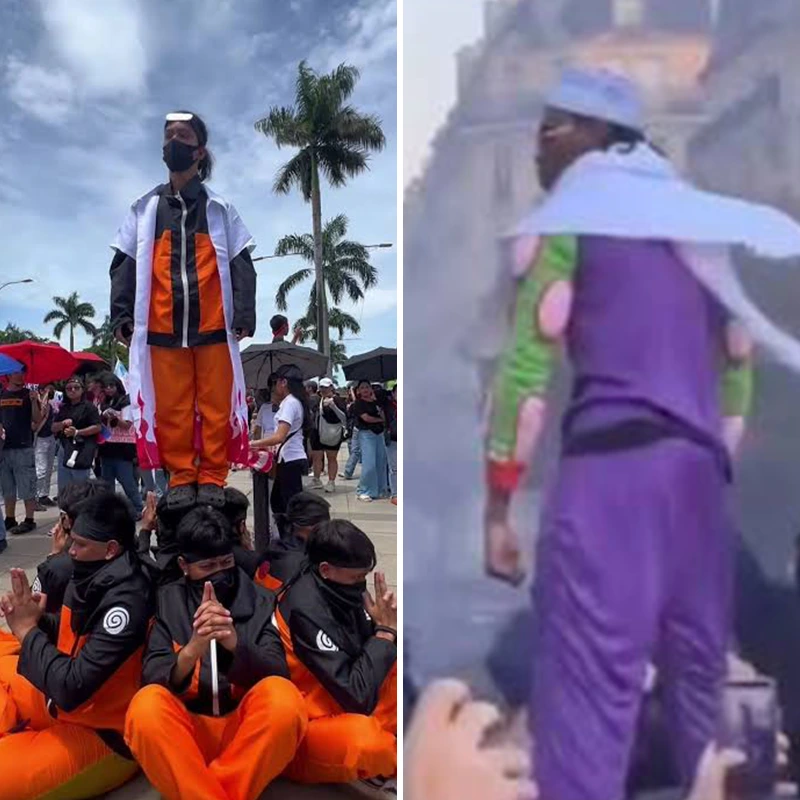
Most notably, there are people who wore the infamous Guy Fawkes mask, and at least one person using Napoleon Bonaparte's outfit.
That real-world context of Gen Z visual protest made the AI creations feel plausible to many viewers.
The result was a widely shared visual that became one of the most recognized images associated with the unrest online, even though it did not depict an actual moment from the streets.
The protests themselves highlighted deep frustrations over inequality, education, and the cost of living, while the viral AI images illustrated how quickly synthetic content can attach itself to real events and shape public perception of them.
It's worth noting that, the timing of the mid-October protests and the presence of pop culture costumes was both a seasonal coincidence and a deliberate choice by younger demonstrators.
Because the demonstrations reached their peak in mid-October, just weeks before Halloween, masks and costumes were easily accessible in local shops and already on the minds of high school and university students.
This made it natural for younger participants to integrate these items into their outfits as they took to the streets.
Beyond mere timing, the costumes served a practical function while reflecting Gen Z protest culture.
Wearing masks of horror figures like Chucky and Jigsaw, along with anime character gear, allowed students to hide their identities from police surveillance while making a loud visual statement.
Rather than using traditional political banners, demonstrators used recognizable pop culture icons to stand out on social media, mocking authority through humor and theatrical style while maintaining personal privacy against heavy police presence.