People can be from anywhere, and be anyone on social media. And this time, an Israeli soldier learned his the hard way.
He sent dozens of sensitive photos related to the Israeli's Iron Dome air defense system to an Iranian intelligence agent who was posing as a woman on Facebook.
According to reports, the soldier voluntarily documented the Iron Dome batteries and their locations and sent them to the woman.
It appears that the Israeli soldier had developed feelings for her.
After the violation was discovered, the soldier, who was also assigned as a driver, received a 10-day prison sentence.
The Israeli military spokesperson stated that this incident was part of ongoing efforts to monitor and prevent inappropriate behavior by IDF personnel on social media.
"As part of the ongoing activity to monitor and thwart IDF officers’ misbehavior on social networks, an enemy infrastructure was exposed that operated with the aim of extracting information about IDF forces and activities," an Israeli army spokesperson told the media.
"This is an infrastructure that activated dozens of profiles by the [Resistance] Axis countries with the aim of providing intelligence to Hamas," the spokesperson added, before calling on soldiers to "show responsibility for vigilance and adhere to instructions, the intelligence security system continues to expose and thwart this type of enemy infrastructure."
The exposed infrastructure operated by the enemy aims to extract information about IDF forces and activities.
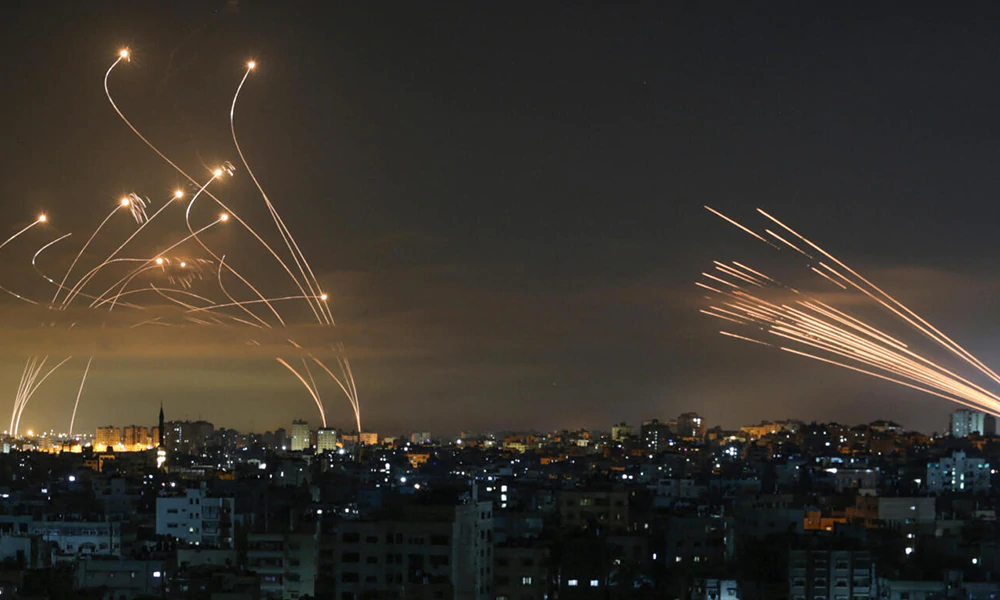
Iron Dome consists of strategically distributed missile batteries around occupied territories.
The Israeli mobile all-weather air defense system, developed by Rafael Advanced Defense Systems and Israel Aerospace Industries. is designed to intercept and destroy short-range rockets and artillery shells fired from distances of 4 to 70 kilometers away and whose trajectory would take them to an Israeli populated area.
The system does this by first detecting incoming projectiles, and then fire interceptor missiles, each valued between $100,000 and $150,000.
Reportedly, each Iron Dome battery is capable of protecting an urban area of approximately 150 square kilometers.
According to its manufacturer, Iron Dome, which has three central components, can operate day and night, under adverse weather conditions, and can respond to multiple threats simultaneously.
Iron Dome was declared operational and initially deployed on March 2011, and that the U.S. has contributed much to the funding of the system.
While a lot of of this data has been made public, military information is always confidential.
This is why no matter how much information there is about the Iron Dome, the Israel should keep a bunch of other information to itself.
And Iran wishes to get its hands on them.
This information should be useful, especially during the 2024 Iran-Israel conflict.

In the past, Israel said that Iran has been recruiting women online to work as at their spy network.
At least since 2022, Iran has been operating an "espionage network" through Facebook, and used it to attract those from Israel.
The network is also said to recruit Israeli women who were manipulated into photographing the U.S. embassy in Tel Aviv, taking pictures inside the interior ministry, and other activities that also include, and not limited to, getting close to at least one member of the Israel’s Knesset, or parliament.
There was another instance, when Israel indicted a man employed as a cleaner in the home of Defense Minister Benny Gantz, for attempting to spy for the Black Shadow hacking group, which is purportedly linked to Iran.
Black Shadow hacks are seen as part of a years-long covert war between Israel and Iran, including physical attacks on ships and cyber offensives.
"The State of Israel is in an ongoing campaign with Iran. It is clear: We see never-ending efforts and attempts by the Iranian Revolutionary Guard Corps to recruit Israeli citizens," Prime Minister Naftali Bennett said at the time.
"These attempts go beyond security and intelligence. They are expanding to efforts to influence the citizens of Israel and Israeli society, sow discord and polarization, undermine political stability in Israel and damage the public’s trust in the government,"
Bennett urged Israelis to be cautious.
"It is possible that behind the information that you consume or share on social media are the Iranians."






















































































































































































































































































