The volcano Krakatoa may not be the planet killer. It has never produced the kind of eruption capable of triggering a global catastrophe or an extinction event.
Yellowstone's Lava Creek and Huckleberry Ridge eruptions, Toba's Youngest Toba Tuff, Tambora, the Wah Wah Springs eruption, the enormous eruption associated with Taupō Volcano, and even the long Deccan flood basalt outpouring were all larger than Krakatoa in scale.
Some reached VEI 8, the highest category on the Volcanic Explosivity Index. Others produced volumes of material far beyond the threshold used to classify a VEI 8 eruption.
Even Krakatoa's famous 1883 eruption, which bruised the global climate and produced one of the loudest sounds ever recorded, was "only" considered VEI 6.
It was still powerful enough to be heard thousands of kilometres away, reportedly as far as the island of Rodrigues in the Indian Ocean. In the months that followed, volcanic particles injected high into the atmosphere produced spectacular blood-colored sunsets across the world, including Europe.
But Krakatoa was not one of those Earth's ancient supereruptive monsters.
It was smaller. Younger. Far less powerful.
And yet it has something those giants do not have on a human timetable: it keeps coming back.
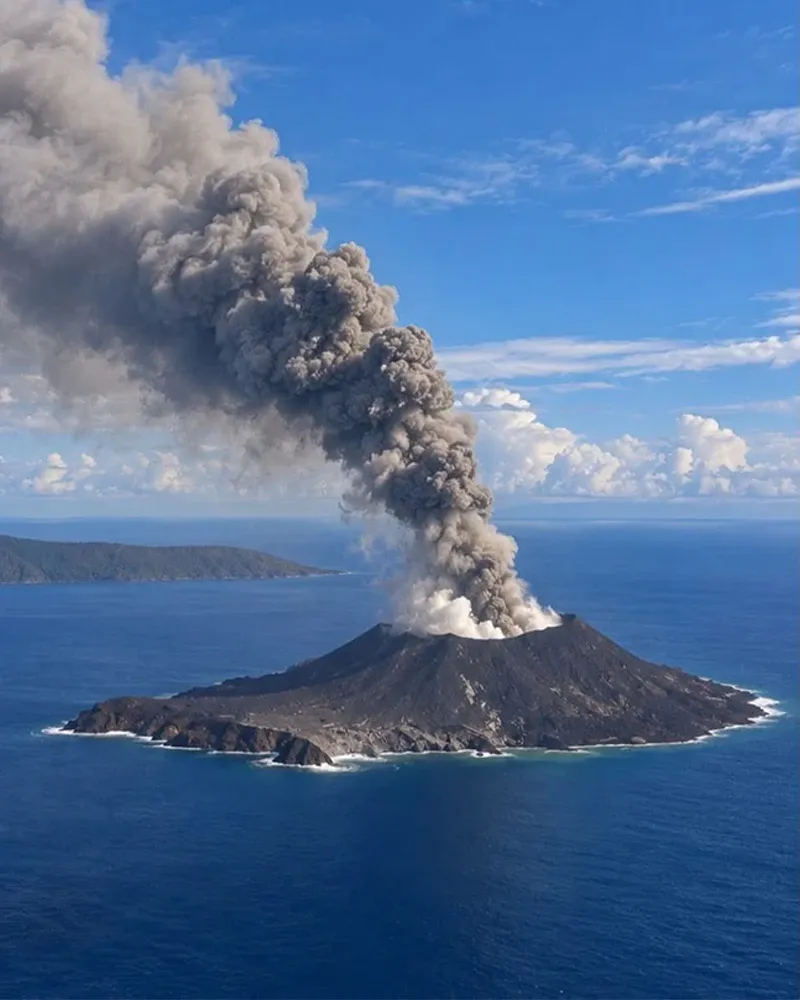
Anak Krakatau (or "Child of Krakatoa") keeps erupting.
Since its emergence in 1927, it has gone through dozens of eruptive episodes. One of the most devastating in recent history came in 2018, when its flank collapsed into the Sunda Strait, generating a tsunami that killed more than 400 people.
In other words, Krakatau does not sleep. This volcano remains active.
Whereas other volcanic giants can turn dormant for millennia or even millions of years, this volcano is, by comparison, pretty much always awake.
Part of the reason is its location. Krakatau sits in the Sunda Strait, along the Sunda volcanic arc, where the Indo-Australian Plate is being forced beneath the Eurasian Plate. That subduction feeds magma into the volcanic system, keeping the machinery underneath Krakatau supplied.
Then is its plumbing system, which suggests that the magma can be stored and processed at multiple depths.
As a result, when its magma rises, it stalls. When the two properties mix, they will generate gas. When gas accumulates, it gains pressure, and this forces nature to find new pathways toward the surface.
Sometimes the process produces quiet lava and steam. Sometimes it produces ash. And sometimes, when enough pressure and gas build up, it produces the kind of eruption that sends a plume high above the Sunda Strait.
That helps explain why Krakatau can keep coming back.
And this is why Krakatau, which is considered as Indonesia's most active volcanic systems, has a history that practically writes its own plot.
And on September 4, 2026, it added another chapter, one that the internet immediately took an interest in.
This week's plot for Krakatau was ash and airplanes.
A sustained eruption with lava fountains began late Friday and continued for roughly 25 hours before breaking into shorter bursts through Sunday, including a 30-second event before dawn and another after dark.
The eruption column split into two layers.
One rose to about 20,000 feet and drifted toward Banten, West Java, and Jakarta. The other reached about 50,000 feet, roughly 15 kilometres high, before moving west and southwest across Lampung, Bengkulu, the southern Sunda Strait and out toward the Indian Ocean.
Officials said volcanic ash had been detected across five provinces.
Jakarta is only about 160 kilometres from the volcano, close enough that the capital's airspace was inside the ash cloud, not some distant plume reported from far away.
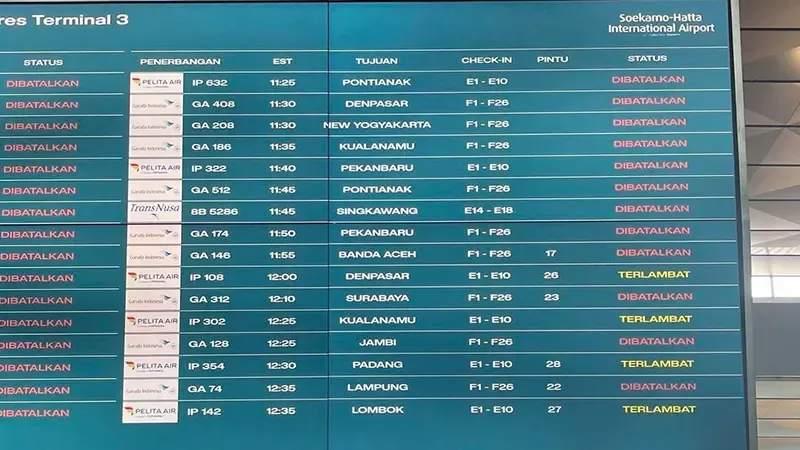
Runway checks at Soekarno-Hatta came back dirty. Operations stopped. Halim, airports in Lampung, and other fields followed.
Early counts spoke of a little more than 200 disrupted movements and about 23,000 passengers. Later figures put cancelled and disrupted flights in the high hundreds to more than a thousand, while one official tally estimated that around 170,000 people were affected across eight airports.
Singapore Airlines, Scoot, Qantas, AirAsia and Garuda all had to rewrite their Sunday schedules.
Schools in the haze-affected areas cancelled programs after students complained of stinging eyes. Fishermen stayed in. Cars in Serang were filmed with a gray film of ash on their hoods.
That is not Toba ash crossing oceans.
It is a capital city under a named volcanic plume.
And that is enough.
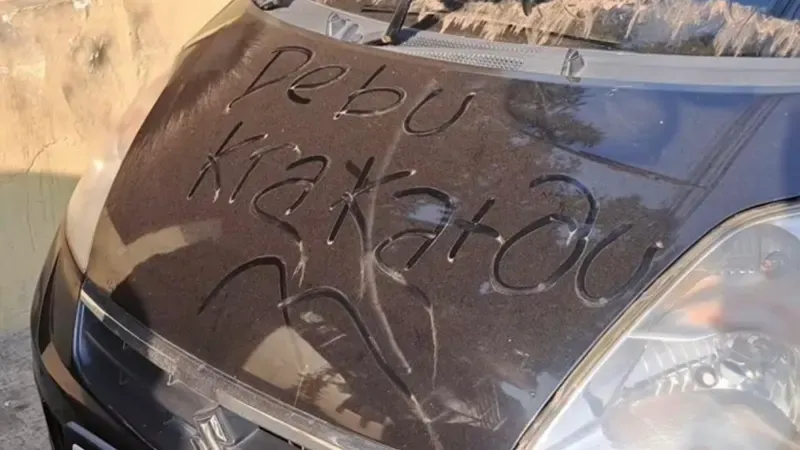
The virality lies in the gap between what the volcano actually did and what the word "Krakatoa" does when it appears in a feed.
The volcano itself is insanely famous in Indonesia, so well-known that it was printed in an old bank note.
And now, videos of that volcano emitting white and burning red-hot lava fountains against a purple sky look like disaster movie stills. Drone footage of the gray island leaking a white river of steam into blue water looks like a postcard from the end of the world.
Someone in West Java posts a boom that shook the window.
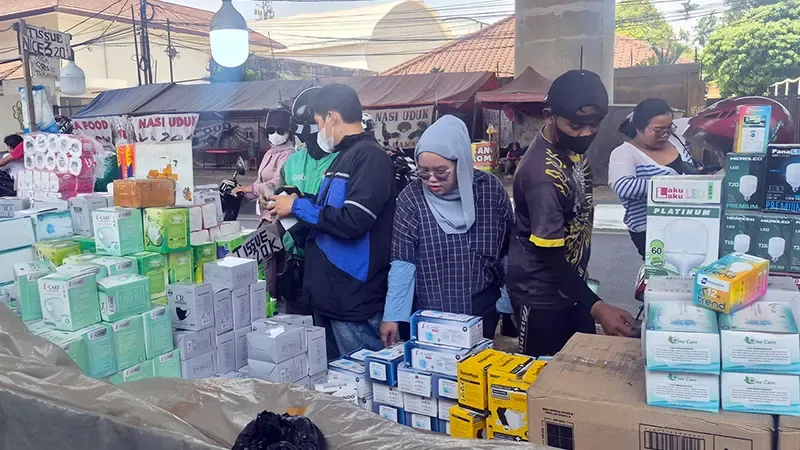
Someone in Jakarta posts a sky that is not the usual brown pollution. People began buying face masks, which are probably highest in demand since COVID-19.
Someone in an airport hall films a departure board filled with cancelled flights.
Those clips do not need a VEI number.
They need the caption.
Krakatoa. 1883. Loudest sound. Tsunami. 2018 again.
The algorithm treats the name like a sequel announcement.
Comments fill with Yellowstone, Toba and the Deccan Traps. Someone writes "this is how it starts." Someone posts maps of the 1883 ash cloud circling the globe, as if Sunday's 15-kilometre plume were already becoming that older, planet-spanning cloud.
Fine ash from the 1883 eruption did travel thousands of kilometres and produced atmospheric effects around the world. The explosion itself was heard an extraordinary distance away.
This time, the eruption is significantly smaller.
But its ash still travelled far enough to disrupt Jakarta's aviation network and to be tracked over the Indian Ocean.
Those two facts get mashed together until a regional aviation emergency reads like a global winter trailer.
And that mash is the product.
A Level III alert and a three-kilometre exclusion zone are dry. "Ash detected over five provinces" is dry. "Magma is still feeding the cone" is dry.
Those sentences travel slower than a 15-second lava fountain.
But a glowing Anak Krakatau erupting against the night sky? Ash on a capital? 170,000 disrupted journeys? Cancelled flight? Those are content.
By Monday morning, the continuous eruptive phase had stopped and seismic activity had eased, but the story continues.
Airports were still sorting passengers and bags. Airlines were still cancelling flights. People were still filming the sky. Social media was still turning a real volcanic event into something much larger in the public imagination.
Krakatoa does not have to bury a continent to own a weekend.
It only has to dust a megacity, ground a major aviation hub, and make millions of people use the internet to let its old name do the rest.
Krakatau's story is one of destruction, renewal, and constant change.
The catastrophic eruption of 1883 destroyed most of the original island and killed more than 36,000 people. In 1927, Anak Krakatau emerged from the same caldera. In 2018, another collapse produced a deadly tsunami across the Sunda Strait.
The volcano keeps rebuilding itself, only to tear itself apart again.
And now, every eruption comes with an audience.
More than a century after 1883, Krakatau is still writing new chapters.
But this time, the ash reached cities, cancelled flights, and cameras were already running for social media feeds.
And the internet did what it always does with Krakatau.
It made the eruption bigger than the plume.
Anak Krakatau is still young, millennia younger than other volcanoes that created global events but remained dormant afterward. But Krakatau is like a very temperamental child that keeps chaos in its wake.




















































































































































































































































































