In the quiet hours when people scroll through their feeds seeking distraction or connection, certain posts cut through the noise with a force that lingers long after the screen goes dark.
They force a confrontation with questions about human capacity for cruelty and the systems meant to respond to it.
Japanese society has long prided itself on low crime rates and a justice framework that balances punishment with rehabilitation, particularly for younger offenders, yet every so often a case emerges that tests those assumptions and sparks widespread discussion about where the line of accountability should fall.
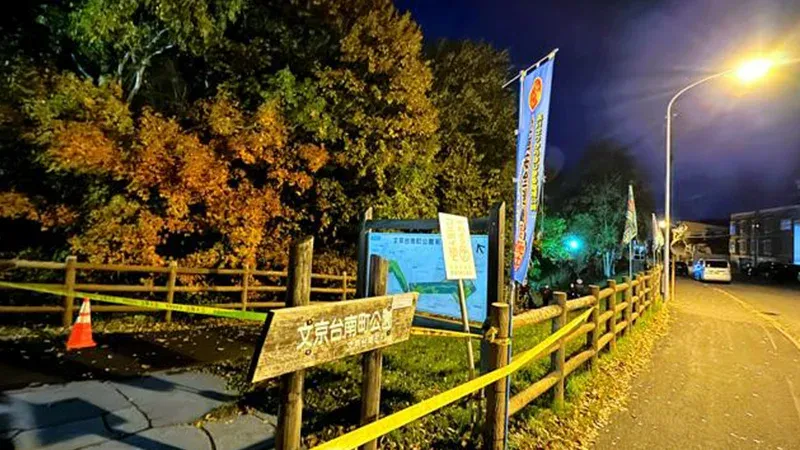
One such episode unfolded in the autumn of 2024 in Bunkyodaiminamicho Park in Ebetsu, Hokkaido.
A twenty year old university student named Tomoya Hase found himself drawn into a confrontation that began with personal relationship tensions.
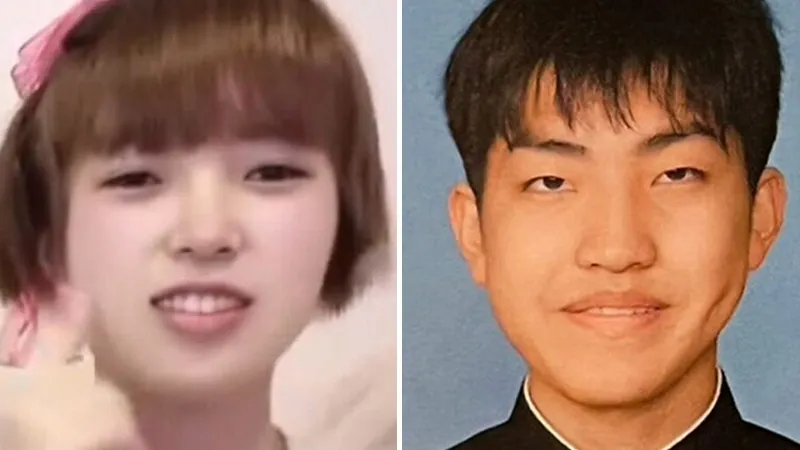
According to the court and prosecutors, Tomoya Hase had told his girlfriend, Ama Yagihara, that he wanted to end their relationship.
Yagihara went furious.
She contacted her friend, Haoto Kawamura, about the dispute. Kawamura responded by gathering some other people, who subsequently went to the park where Hase was with Yagihara.
What followed involved a group of six young people, ranging in age from 16 to 21, spending the course of several hours stretching into the early morning of the 26th, to a prolonged and severe physical assault combined with robbery.
Court proceedings and forensic testimony later established that Hase sustained injuries consistent with repeated blows to the head and face numbering in the dozens, along with trauma across much of his body.
Medical experts who examined the remains determined that roughly 30% of his total blood volume had left the circulatory system and collected in subcutaneous tissues and muscles.
Of that blood loss, approximately 60% concentrated in the head and facial regions, leaving virtually no undamaged area on the face or scalp.
Additional findings included brain hemorrhages, damage that impaired neurological function, and other internal injuries.
The temperature that night hovered near 3°C, and Tomoya Hase was left unclothed in the empty park.
He was discovered the next morning in a state of cardiac arrest and did not survive.
Pathologists indicated that timely medical intervention with transfusion might have preserved his life, though lasting effects on the brain remained possible.
Accounts presented in court described specific acts during the assault that aligned closely with details later circulated online.
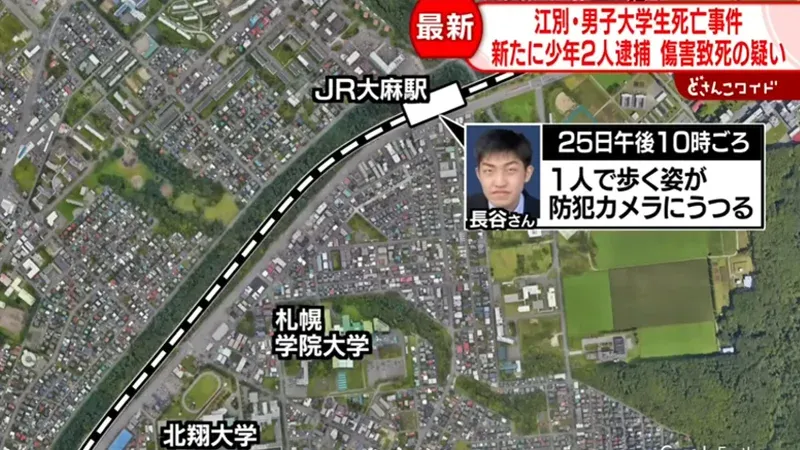
Members of the group used a lighter to set fire to Hase's hair and his public hair, while making comments that treated the burning as entertainment, with phrases such as noting that it was burning well or comparing it to fireworks.
One participant performed running kicks from a slope.
The violence continued even after Hase's face had swollen to the point that his eyes could not open properly and his speech had become difficult.
When he managed to express apology, responses included encouragement to continue the attack.
After obtaining the personal identification number for his bank cards, some in the group expressed satisfaction and proceeded to use the cards for purchases and withdrawals, carefully limiting individual transactions to amounts under ¥10,000 to avoid triggering security measures.
They even destroyed his phone to remove evidence.
Clothing and belongings were removed, and other remaining items were discarded near a riverbed in Sapporo.
One defendant later reflected that a lighthearted group atmosphere may have contributed to the decision to keep using violence.
In June 2026 the Sapporo District Court delivered judgments for three of those involved. Kawamura, then 21, received a 30 year prison term after prosecutors had sought an indefinite sentence.
Takizawa, who was 18 at the time of the events, received 20 years as requested by the prosecution.
The 16 year old participant received an indeterminate term of 9-13 years.
Japanese law for the charge of robbery resulting in death allows for the death penalty or life imprisonment, yet the court weighed each person's degree of leadership and physical involvement, concluding that fixed terms of the maximum available length for ordinary imprisonment were appropriate in these instances.
Subsequent proceedings against others in the group produced a life sentence for the individual identified as taking a primary role in initiating and driving the physical violence, along with another lengthy term.
Public reaction included online commentary that highlighted the medical evidence and the sequence of actions, questioning whether the outcomes fully matched the severity described.
One widely viewed post listed the blood loss percentages, the concentration of injuries to the head and face, the exposure to cold, the use of fire, the continued attacks despite the victim’s condition, the extraction of financial information, and the subsequent spending.
It framed the events as defying ordinary understanding of human behavior and argued that the maximum available penalty should have applied.
This case generated significant viral attention and online outrage, particularly within Japan.
It drew widespread coverage across major Japanese news outlets. Discussions spiked around key moments: the 2024 incident itself, the 2026 trials and testimony revealing graphic details (such as the autopsy findings and specific acts of violence), and especially the June 25, 2026 sentencing of three defendants.
Many reactions focused on perceived leniency relative to the brutality, with phrases like "ネット大炎上" (major online flame/outrage) appearing in reporting.
Online, related posts and news shares routinely reached hundreds of thousands of views.
Individual high-engagement posts about the sentences or comparisons to other cases accumulated thousands of likes and reposts.
The specific post that started this conversation (detailing the medical findings and calling for the death penalty) alone received millions of views shortly after going up.
Coverage and commentary continued, including analyses of group dynamics and psychology.
The case continues to resonate not only because of the documented brutality and the questions it raises about individual responsibility within a group, but also because of how forcefully it seized public attention across Japanese news and social platforms, turning courtroom details into a lasting point of national reflection on justice, youth violence, and the limits of human empathy.

















































































































































































































































































